


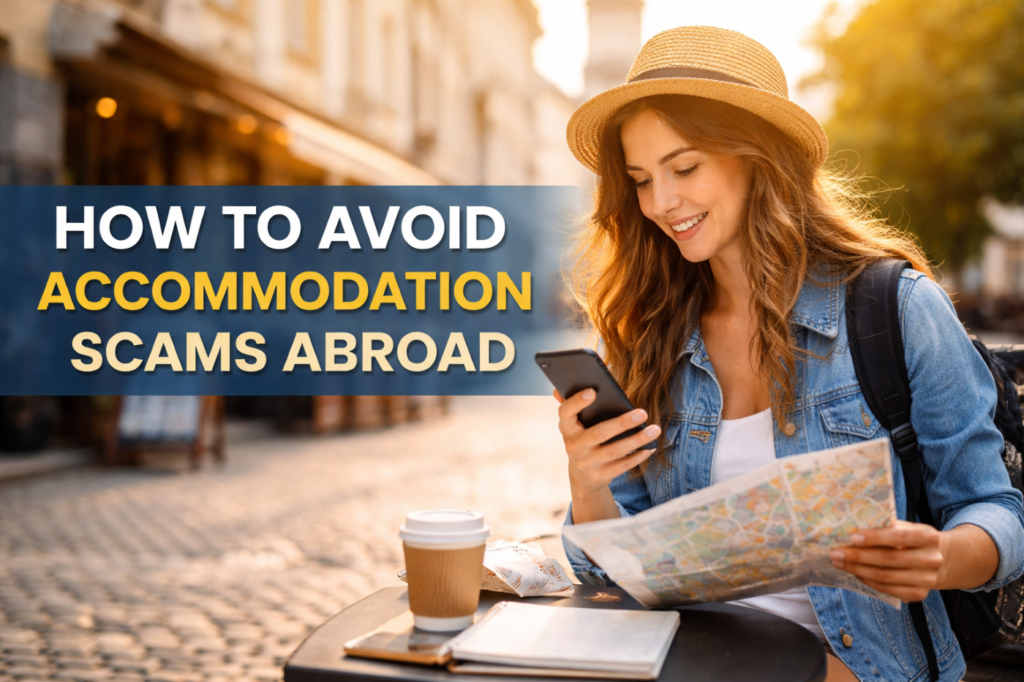
Traveling abroad is an exciting and often carefully planned experience, whether for leisure, education, or business. However, securing accommodation can sometimes expose travelers to serious risks. Accommodation scams can quickly turn a well planned trip into a stressful and costly situation, especially when bookings are made from another country.
With the increasing use of online platforms and social media for accommodation searches, many travelers fall victim to fake listings, dishonest landlords, or misleading offers. In most cases, these scams are only discovered after payment has been made or upon arrival at the destination.
Understanding how accommodation scams work and learning how to avoid them is therefore essential for ensuring a safe, smooth, and stress free travel experience abroad.
Common Types of Accommodation Scams
Accommodation scams take many forms. One of the most common is fake listings, where scammers advertise properties that do not exist at all. These listings often use attractive photos copied from legitimate hotels or apartments. Once payment is made, the scammer stops responding.
Another frequent scam involves properties that exist but are being rented out illegally. In such cases, the person advertising the accommodation is not the owner or does not have the authority to rent it. Travelers may arrive to find the property occupied or locked.
There are also bait and switch scams. Here, travelers are shown photos of a high quality apartment but are given a different, lower quality accommodation upon arrival. In some cases, no accommodation is provided at all.
Be Cautious of Unrealistic Offers
Prices that are significantly lower than the average market rate should raise concern. While discounts do exist, luxury accommodation offered at extremely cheap prices is often a sign of fraud. Scammers use attractive prices to create urgency and pressure travelers into making quick decisions.
If you are told that you must pay immediately or risk losing the property, take a step back. Legitimate accommodation providers allow reasonable time for consideration and do not use fear or pressure to secure payments.
Use Reputable Booking Platforms
Booking through reputable and well established platforms is one of the safest ways to avoid accommodation scams. These platforms usually verify property listings, provide secure payment systems, and allow travelers to read reviews from previous guests. Reviews offer valuable insight into the legitimacy and quality of the accommodation.
When booking directly with hotels or serviced apartments, ensure that you are using the official website. Confirm contact details such as phone numbers and email addresses, and if necessary, call the hotel directly to verify your reservation.
Verify Reviews and Online Presence
Reviews are a powerful tool, but they must be checked carefully. Look for detailed reviews that describe actual experiences rather than short or generic comments. A property with a long history of consistent reviews is generally safer than one with few or recently created reviews.
It is also helpful to search the accommodation name online. A genuine property usually has multiple online references, such as a website, map location, or mentions on travel forums.
Communicate Clearly With the Host
Clear communication is important when booking accommodation abroad. Ask specific questions about the property, including check in procedures, amenities, and exact location. A genuine host will respond clearly and professionally.
If a host avoids answering questions, gives inconsistent information, or insists on moving communication away from official booking platforms, this should be treated as a warning sign.
Use Secure Payment Methods Only
Always use secure and traceable payment methods. Avoid paying through wire transfers, gift cards, or other unprotected channels. These methods are commonly used by scammers because they are difficult to trace or recover.
Secure booking platforms and official hotel websites usually offer protected payment options. Where possible, choose accommodations that allow payment on arrival or provide clear refund policies.
Confirm Details Before Traveling
Before departing, reconfirm your accommodation details. Check your booking confirmation, address, and contact information. Save all communication and receipts in case you need them later.
Using online maps to confirm the location can also help ensure that the property matches the description provided.
Stay Alert to Last Minute Changes
Be cautious if you receive messages about last minute changes to your accommodation. Scammers sometimes claim the property is unavailable and offer an alternative that is not legitimate. Always verify such changes through the official booking platform or directly with the accommodation provider.
Conclusion
Accommodation scams abroad can cause financial loss, stress, and disruption to travel plans. However, they can be avoided through careful planning and awareness. By using trusted booking platforms, verifying listings and reviews, communicating clearly, and making secure payments, travelers can significantly reduce their risk. Taking these precautions ensures a safer accommodation experience and allows travelers to focus on enjoying their journey with confidence.
Fill this FORM to book your hotel today.

Other Articles

Why Some Countries Reject Study Visas More During Certain Months
Why Some Embassies Reject Passport Photos

No Comment! Be the first one.