


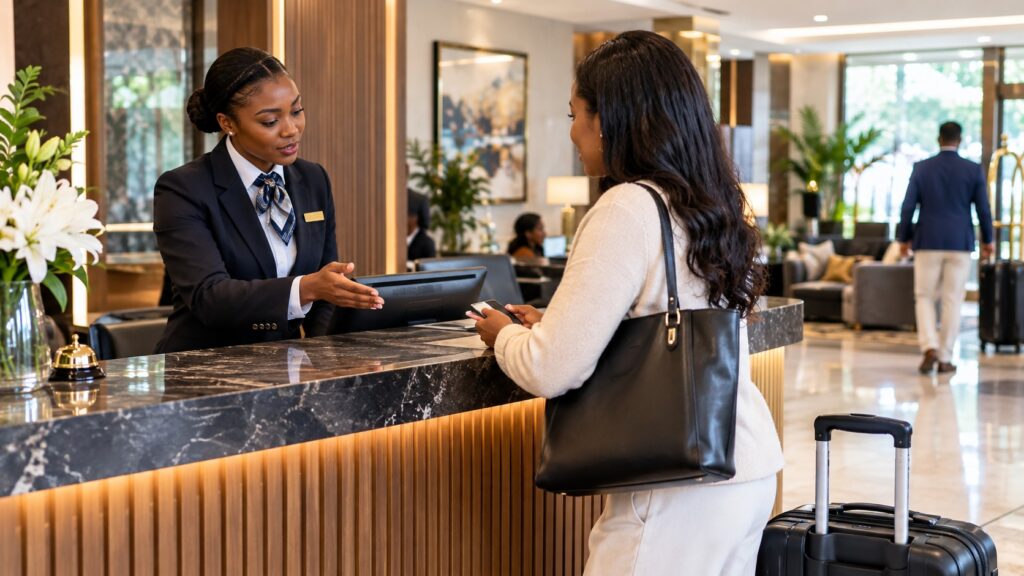
You arrive after a long journey, tired and eager to rest. You hand over your passport, smile at the receptionist, and then see their expression change. “I am sorry, but we are fully booked tonight.” Your confirmed reservation suddenly means very little. Hotel overbooking is more common than most travellers realise, and how you respond in the first few minutes can determine whether you end up in a comfortable alternative or a frustrating situation. This guide explains why overbooking happens, what hotels are expected to do, and the practical steps that protect you.
What Is Hotel Overbooking?
Overbooking occurs when a hotel accepts more reservations than it has rooms available for a given night. It is often described as “walking” a guest, meaning the hotel sends you to another property because it cannot accommodate you.
Hotels do this deliberately, in many cases. A small percentage of guests cancel at the last minute or fail to arrive, and an empty room earns nothing. To protect revenue, hotels use forecasting models to estimate how many no-shows to expect, and they sell slightly above capacity. Usually the calculation is correct. Occasionally, everyone arrives, and some guests are left without a room.
Why It Happens
Overbooking is not always a deliberate strategy. Other causes include:
- Guests extending their stay. Visitors who decide to remain longer can occupy rooms assigned to arriving guests.
- Maintenance problems. A burst pipe, damaged air conditioning, or similar fault can take rooms out of service at short notice.
- System errors. Mistakes between booking platforms and the hotel’s own system can create duplicate reservations.
- Peak demand. During festivals, conferences, and holidays, even careful forecasts can fail.
- Early arrivals and late departures. Delays in clearing rooms can leave no clean room ready when you arrive.
What Hotels Are Expected to Do
Rules differ between countries, and hotels are not governed by one global standard. However, a reputable hotel will generally follow a well-established process when it cannot honour a booking:
- Offer a comparable room elsewhere. The hotel should find accommodation of similar or higher standard at another property, usually nearby.
- Pay for the alternative. The hotel normally covers the cost of the replacement room for the nights it cannot accommodate you.
- Provide transport. Many hotels arrange or reimburse a taxi to the new location.
- Cover communication costs. Some offer a free phone call or message so you can inform family or colleagues.
- Offer to bring you back. If rooms free up the following day, you may be invited to return and finish your stay.
- Offer compensation. This may include a refund for the disrupted night, a discount, loyalty points, a future free stay, or vouchers.
The exact remedies depend on the hotel’s policy, local consumer law, and the terms of your booking. Some countries have strong consumer protections, while others offer little formal guidance. In those cases, your outcome often depends on the hotel’s own goodwill and your approach.
Your Rights and Where They Come From
Your entitlement usually comes from three sources:
- Your booking contract. A confirmed reservation is an agreement. If the hotel cannot provide the room, it is generally in breach of that agreement.
- Local consumer protection law. Some jurisdictions require refunds or compensation when a service is not provided.
- The booking platform’s policy. If you reserved through an online travel agency, its guarantee may require the platform to find you an alternative or refund you.
Check the terms attached to your booking before you travel. Keep the confirmation email, as it is your primary evidence.
What to Do If It Happens to You
Stay calm and polite. Front desk staff did not create the problem, and a courteous approach often results in better treatment. Becoming angry rarely improves your options.
Show your confirmation. Present your booking reference and any proof of payment. Confirm that the reservation is for the correct date and property.
Ask clear questions. Find out what the hotel will offer. Ask where you will stay, whether the standard is equal or better, who pays, how you will travel, and whether you can return tomorrow.
Request a written record. Ask for confirmation of the arrangement, ideally by email. This protects you if you later claim compensation.
Check the alternative before accepting. Ask for the name, address, and star level of the replacement hotel. If it is clearly inferior or far from your plans, say so respectfully and request a better option.
Document everything. Take notes of names, times, and promises. Save receipts for taxis, meals, or other additional costs.
Contact your booking platform. If you booked through a third party, notify them immediately. They may have a team to help rebook you.
How to Reduce the Risk Before You Travel
You cannot eliminate overbooking, but you can lower the chance of it affecting you.
- Book directly or through a reliable agent. Direct bookings and trusted travel agents often provide clearer lines of responsibility.
- Reconfirm before you travel. Contact the hotel a few days ahead to verify your reservation, and again on the day.
- Inform the hotel of late arrival. If you will check in after the usual time, say so. Some hotels release rooms of guests who do not appear by a certain hour unless told otherwise.
- Use a guaranteed booking. A reservation secured with a card or prepayment usually has stronger standing than an unguaranteed one.
- Join loyalty programmes. Members of recognised programmes are often given priority when rooms are scarce.
- Arrive earlier in the day. Early arrivals are less likely to find the last rooms already allocated.
- Keep travel insurance in mind. Some policies cover costs linked to accommodation failures, depending on the terms.
- Read recent reviews. Complaints about overbooking appearing repeatedly can be a warning sign.
Common Mistakes to Avoid
- Leaving without a written confirmation of what the hotel promised.
- Accepting a vague offer such as “we will sort something out.”
- Paying for an alternative without agreeing on reimbursement first.
- Assuming a prepaid booking is automatically refunded without checking.
- Forgetting to claim compensation after the trip.
Seeking Compensation After the Trip
If you were not satisfied with the outcome, you can still act. Write a clear, factual complaint to the hotel’s management, including your booking details, a summary of what occurred, the costs you incurred, and the resolution you expect. Attach receipts and evidence. If the hotel does not respond, escalate through the booking platform, your credit card provider, or the relevant tourism or consumer authority in that country.
Conclusion
Being turned away from a confirmed reservation is unsettling, but it is rarely the end of your trip. Hotels are expected to resolve the problem, and a calm, well-prepared traveller is far more likely to receive a fair outcome. Keep your documents, ask the right questions, and record every agreement. With these steps, an unexpected setback becomes a manageable inconvenience.
Fill this FORM to book your hotel today.

Other Articles

How to Plan a Trip When Traveling With Elderly Parents
Why Hotel Star Ratings Mean Different Things in Different Countries





No Comment! Be the first one.