


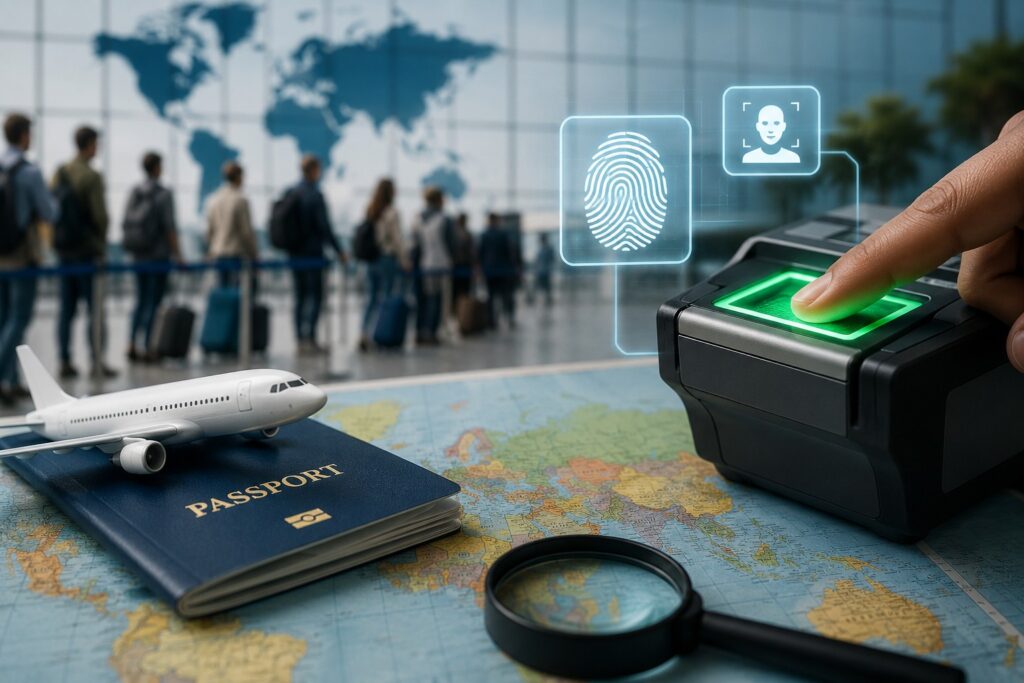
If you have ever applied for a visa, you may have been asked to visit a visa application center to provide your fingerprints and have your photograph taken. However, you may also have noticed that some countries approve visas without asking for biometrics at all. This difference often leaves travelers confused. Why do some governments insist on collecting biometric data while others do not? The answer lies in each country’s immigration policies, security priorities, technology, and international agreements. Understanding how biometric systems work can help you prepare for your next visa application, avoid unnecessary surprises, and make your travel planning much smoother.
What Biometric Screening Actually Means
Biometric screening refers to the collection of unique physical identifiers: fingerprints, facial scans, iris patterns, and occasionally palm prints, to confirm a traveller’s identity. Unlike a passport photo or a visa sticker, biometric data is extremely difficult to forge, which is precisely why an increasing number of countries have adopted it as a cornerstone of their border security systems. But not every country has embraced this technology at the same pace, and understanding why reveals a great deal about how nations balance security, convenience, and cost.
The Case for Biometric Requirements
1. Enhanced Security and Fraud Prevention
The primary driver behind biometric adoption is security. Passports and visas, no matter how sophisticated, can be forged, altered, or stolen. Biometric data, on the other hand, is tied directly to the individual and cannot easily be transferred or faked. Countries with heightened security concerns whether due to terrorism prevention, immigration enforcement, or organized crime often view biometrics as a non-negotiable safeguard. The United States, the United Kingdom, and most of the European Union’s Schengen Area, for instance, require biometric data as part of their visa application and entry processes.
2. Tracking Overstays and Immigration Compliance
Biometric systems make it far easier for governments to track who enters and exits their territory, and for how long. This is particularly important for countries managing large volumes of temporary visitors, students, and workers. By linking biometric data to entry and exit records, immigration authorities can identify overstayers more efficiently and enforce visa conditions with greater precision.
3. Streamlining Future Travel
Ironically, while biometric registration can feel like an added hurdle on a first visit, it often speeds up subsequent travel. Countries like the United Arab Emirates and Qatar use biometric e-gates that allow returning travellers to clear immigration in seconds once their data is on file. What begins as a one-time inconvenience becomes a long-term convenience.
4. International Agreements and Alliances
Some nations adopt biometric requirements not purely out of independent policy choices but because of regional or international agreements. The Schengen Area’s Entry/Exit System (EES), for example, is being rolled out across member states as a unified approach to border management, meaning individual countries within the bloc don’t have full discretion to opt out.
Why Other Countries Don’t Require It
1. Infrastructure and Cost Constraints
Biometric systems are expensive to install and maintain. They require specialized scanning equipment, secure data storage, trained personnel, and ongoing technical support. For many developing nations, particularly those with limited government budgets or lower volumes of international travellers, the cost of implementing nationwide biometric infrastructure simply doesn’t justify the investment, at least not yet.
2. Lower Perceived Security Risk
Some countries assess their security needs differently. Nations that receive fewer international arrivals, or that have historically low rates of visa fraud and overstay, may not see biometric screening as an urgent priority. Traditional passport and visa checks remain sufficient for their current risk profile.
3. Privacy and Data Protection Concerns
Not every government or population is comfortable with the idea of storing citizens’ and visitors’ biometric data. Concerns about data breaches, surveillance, and misuse of personal information have led some countries to delay or avoid biometric adoption altogether, prioritizing traveller privacy over technological convenience.
4. Tourism-Friendly Policies
Some destinations, especially those heavily reliant on tourism revenue, deliberately keep entry processes simple and fast to attract more visitors. Adding biometric checkpoints can be perceived as a deterrent, particularly for short-stay leisure travellers who might choose a more convenient destination instead.
What This Means for You as a Traveller
Understanding these differences isn’t just an interesting bit of trivia, it has real, practical implications for how you plan your trips:
- Check requirements early. Before booking, always confirm whether your destination requires biometric enrollment, and whether this needs to be done at an embassy, visa application centre, or on arrival.
- Budget extra time. Biometric appointments, especially for visa applications, can add days or even weeks to your processing timeline. Build this into your travel planning.
- Keep documentation ready. Some countries require you to bring specific documents to your biometric appointment, such as printed visa forms, passport copies, or appointment confirmation letters.
- Expect faster future travel. If a country has your biometric data on file, subsequent visits are often significantly quicker, thanks to automated e-gates and pre-verified records.
Conclusion
The divide between biometric and non-biometric countries isn’t arbitrary, it reflects each nation’s unique balance of security priorities, financial resources, privacy values, and tourism goals. As global travel continues to grow and technology becomes more affordable, it’s likely that more countries will gradually adopt biometric systems in the coming years.
For now, the smartest approach is simple: research your destination’s entry requirements well in advance, prepare the necessary documentation, and factor in any extra time biometric processes might require. A little preparation goes a long way in ensuring your journey starts as smoothly as it’s meant to.
Fill this FORM to get visa support today.

Other Articles

Airport Transfer Included or Not, Why It Matters
What Changes When You Fly With Children




No Comment! Be the first one.