


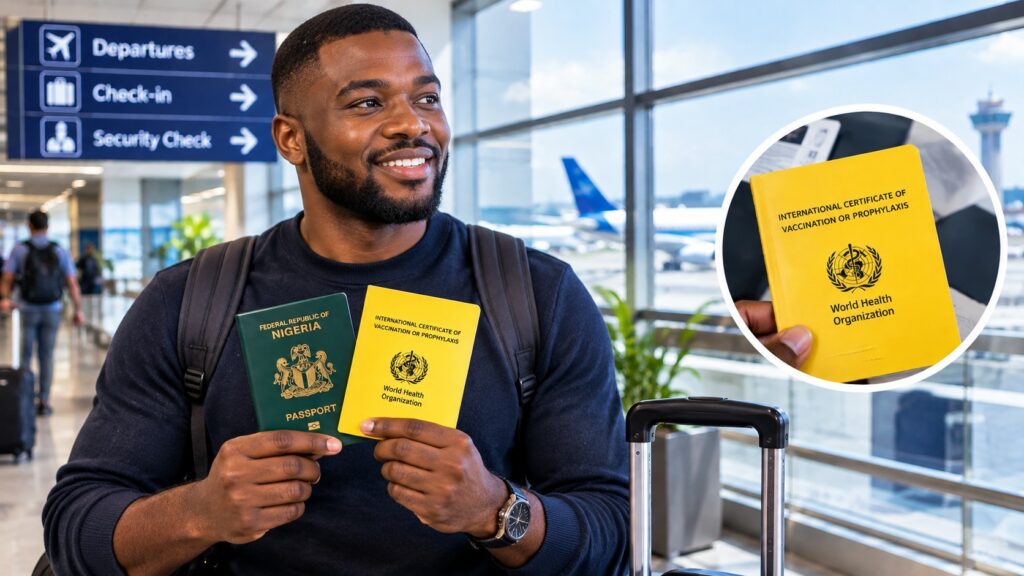
Yellow fever vaccination requirements are an important part of international travel, yet many travellers do not understand why some countries ask for a Yellow Fever Card while others do not. These differences are based on public health risks, the possibility of introducing the yellow fever virus into new areas, and international health regulations. For Nigerian travellers, understanding these requirements is particularly important because Nigeria is considered a country at risk of yellow fever transmission. Depending on the destination, departure country, and transit route, travellers may need to provide proof of vaccination before boarding or entering another country. Knowing the rules in advance helps travellers prepare the correct documents, avoid unnecessary delays, and enjoy a smoother international journey.
What Is the Yellow Fever Card?
The yellow fever card is officially called the International Certificate of Vaccination or Prophylaxis (ICVP). It is a document, usually yellow, that records your yellow fever vaccination. It shows your name, the date of vaccination, the vaccine batch details, and the stamp and signature of an approved vaccination centre.
Yellow fever is a viral illness spread by infected mosquitoes. Many cases are mild, but severe cases can cause fever, jaundice, bleeding and organ failure, and the disease can be fatal. There is no specific cure, which is why prevention through vaccination matters so much.
Two Different Reasons Countries Ask for the Card
Countries do not ask for the card for the same reason. There are two main ones.
1. Protecting Travellers
Some countries in parts of Africa and South America have yellow fever circulating naturally. Health authorities there recommend, and sometimes require, vaccination so that visitors do not fall ill and the disease does not spread locally.
2. Preventing Importation of the Disease
This is the reason travellers often find confusing. Several countries have no yellow fever of their own but have the right mosquitoes and climate for the virus to spread if an infected traveller arrives. To protect their population, they require proof of vaccination from anyone coming from, or passing through, a country with a risk of transmission.
This explains why a traveller may need the card for a country that has no yellow fever problem at all. The requirement is about where you have been, not where you are going.
The Rules Behind the Requirement
Entry requirements are set by each country, but they follow the International Health Regulations of the World Health Organization (WHO). The WHO publishes a list of countries with a risk of yellow fever transmission, and each country decides whether to ask for proof of vaccination from travellers arriving from those places.
That is why the rules vary. Some countries ask for the card from every arriving traveller. Others ask only for those coming from, or transiting through, risk countries. Some, particularly where the mosquito that carries the virus is absent, do not ask at all.
Why Rules Differ From One Country to Another
- Mosquito presence: Places where the mosquito vector thrives are more cautious.
- Climate: Warm, humid regions can support the virus more easily.
- Population vulnerability: Countries with little or no immunity worry about outbreaks.
- Travel patterns: Heavy traffic from risk countries leads to tighter checks.
Who Is Most Affected?
Travellers from countries on the WHO risk list face the most checks, and this includes many travellers from Nigeria and other parts of West and Central Africa, as well as parts of South America. They may be asked for the card even when their destination has no yellow fever of its own. Even those in transit can be affected: some countries apply the requirement to passengers who spend more than a set number of hours in a risk country or airport, so check the transit rules for your route.
How Yellow Fever Vaccination Works
- One dose is enough. Since 2016, the WHO has said a single dose provides lifelong protection for most people, and the certificate is valid for life.- Timing matters. The certificate is generally valid 10 days after vaccination. Do not get vaccinated on the eve of your flight.
- Approved centres only. Vaccination must be done at a recognised centre that issues a properly stamped card.
- Keep it safe. Carry the original, not a photocopy, and make sure the name matches your passport exactly.
Who Cannot Take the Vaccine?
Some people should not be vaccinated, including infants under about nine months, people with certain severe allergies or immune conditions, and some older travellers. A doctor can issue a medical exemption letter, but accepting it is up to the destination country, and some will still refuse entry or require other conditions. Anyone with a health condition should consult a doctor well before travelling.
Common Mistakes Travellers Make
- Assuming the rule applies only to the destination. Your origin and transit points matter too.
- Leaving it too late. The 10-day waiting period catches many people out.
- Using unapproved centres or fake cards. These can lead to refused entry, legal problems and, worse, no real protection.
- Name or detail errors. Errors on the card can invalidate it.
How to Prepare Properly
- Check your route. List your origin, destination and every transit stop.
- Check official sources. Use the destination’s embassy or health authority and the WHO list rather than social media advice.
- Book vaccination early. Aim for at least two to four weeks before travel.
- Check your card. Confirm your name, dates and stamp are correct.
- Carry it with your passport. Keep both together in your hand luggage.
Conclusion
The yellow fever card may look like a small piece of paperwork, but it reflects serious public health reasoning. Countries ask for it either to protect travellers or to stop the disease from entering their borders, and the rules depend on where you have been as much as where you are going. A little preparation, done early, will save you from refused boarding, extra costs and avoidable stress.
Before every trip, check the requirements for your full route, get vaccinated in good time, and keep your original card safe.
Fill this FORM to get visa support today.

Other Articles
What Happens to Your Visa If You Change Your Passport?


No Comment! Be the first one.