


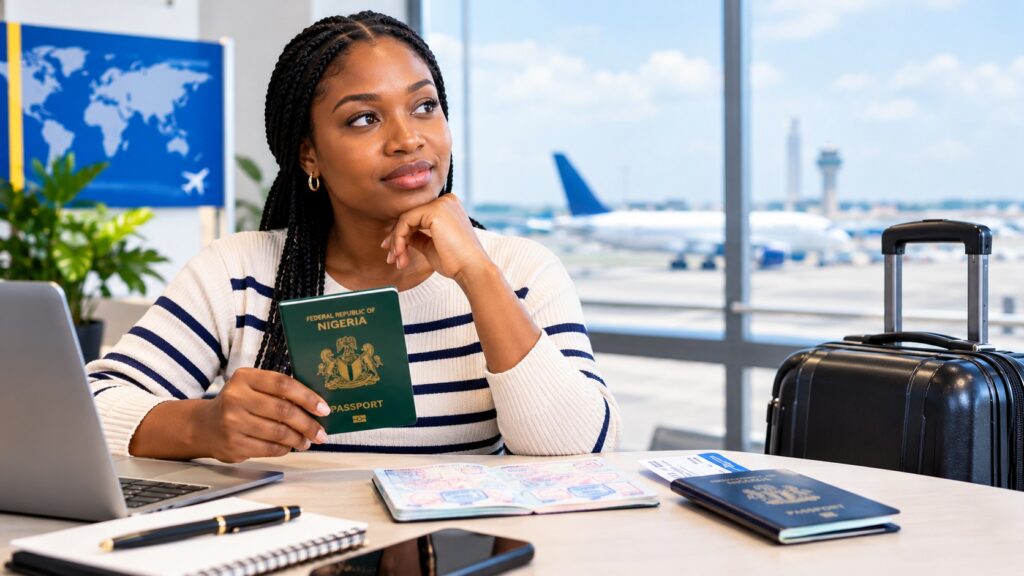
Imagine spending weeks preparing for an international trip, securing your visa, booking flights, and arranging accommodation, only to discover that your passport is about to expire. You apply for a new Nigerian passport, collect it, and suddenly face an important question: Is your existing visa still valid, or must you start the visa application process all over again? This situation can worry students, tourists, business travellers, and Nigerians living abroad. The good news is that getting a new passport does not automatically cancel every valid visa in your old passport. However, the rules depend on your destination and visa type. Understanding what to do before travelling can save you money, prevent airport complications, and protect your travel plans.
Why Your Visa Is Tied to Your Passport
A visa is permission to travel, but it is always linked to a specific passport. Authorities record your passport number, name, date of birth and nationality against the visa. Whether it is a sticker in your passport or an electronic record, the system checks that the document you present matches the one on file.
When you replace your passport, that link can break. This is why a new passport does not automatically carry over your existing visa, even though your identity has not changed.
Common Reasons People Change Passports
- Expiry or near-expiry: Many countries require six months of remaining validity.
- Full pages: No space is left for stamps or visas.
- Damage: Water damage, tears or a worn cover can invalidate a passport.
- Loss or theft: The old passport is cancelled and a replacement issued.
- Change of personal details: A new name after marriage or a legal name change.
- Change of nationality: A different citizenship means a different passport altogether.
What Happens to Your Visa: The Main Scenarios
1. Physical Visa Stickers
Where the visa is a sticker or stamp inside the passport, it stays in the old passport. If that passport is still valid and has not been cancelled, many countries allow you to travel with both passports together: the old one containing the visa and the new one as your current travel document. This is a common arrangement, but it is not universal, so confirm it with the embassy.
2. Electronic Visas and eVisas
Electronic visas are linked to your passport number in a database. If the number changes, the record no longer matches. Some countries allow you to update the passport details online, while others require you to apply again. Never assume your eVisa will transfer without checking the issuing authority’s instructions.
3. Electronic Travel Authorisations
Systems such as the US ESTA, the Canadian eTA and similar schemes are linked to a specific passport. A new passport generally means a new authorisation. Some of these are inexpensive and quick, but travelling without the correct one means being refused boarding.
4. Long-Term Visas, Residence Permits and Work Visas
Residence and work permits are more complex. Many countries require you to report your new passport and have the details updated, or to transfer the permit into the new document. Deadlines can be strict, and delay may cause difficulties with renewals or re-entry. Contact the immigration authority as soon as you receive your new passport.
5. Lost or Stolen Passports
If a passport containing a visa is lost or stolen, the visa is usually lost with it. In many cases you must report the loss to the police, obtain a replacement passport and then apply for a replacement visa. Some embassies can help, but fees and processing times may apply.
The Two-Passport Rule: Carrying Old and New Together
Where allowed, carrying both passports is the simplest solution. Border officials will check the old passport for the visa and the new one for current validity and identity. For this to work:
- The old passport should be valid and not cancelled. Many passport offices punch holes in, or stamp, old passports on renewal, which may or may not affect the visa.
- Both passports must belong to the same person, with matching details.
- You should have proof of the link where possible, such as a letter from the embassy.
Airlines are often the first check, so confirm in advance that your carrier accepts this arrangement.
Step-by-Step: What to Do After Getting a New Passport
- Check the visa type. Is it a sticker, an eVisa, an authorisation or a residence permit?
- Contact the issuing authority. Use the embassy, consulate or official immigration website, not third parties.
- Ask clearly. Can the visa be transferred, updated or must it be reissued?
- Keep the old passport. Do not discard it, and do not accept cancellation until you know the visa’s fate.
- Update airline bookings. Your ticket must carry the correct passport number, name and details.
- Carry supporting documents. Take a copy of the visa approval, the embassy’s reply and both passports’ details.
Mistakes That Can Ruin a Trip
- Assuming the visa transfers automatically. It rarely does.
- Travelling with the new passport only, when the visa is in the old one.
- Name mismatches. A new surname must match your visa, ticket and booking.
- Leaving it until the airport. Airlines can refuse boarding if your documents do not match.
Special Cases to Know About
Change of name. Marriage or a legal name change needs supporting documents such as a marriage certificate. Visas under the old name may still be valid with both passports, but this must be checked.
Change of nationality. A visa issued for one nationality generally does not apply to another, and you will probably need a new application.
Conclusion
Changing your passport does not mean losing the right to travel, but it does mean paying attention. A visa is tied to a document, and when the document changes, the link must be confirmed, updated or renewed. A short email to the embassy or immigration office, sent early, can save you from refused boarding, wasted fares and missed opportunities.
Before every trip, check your passport validity, compare the details on your visa and ticket, and keep your old passport safe until you are sure of what it still does for you. For help with visa support and travel planning, speak to a qualified travel adviser before you book.
Rules vary by country and change often. Always confirm current requirements with the official embassy or immigration authority before travelling.
Fill this FORM to get visa support today.


No Comment! Be the first one.