


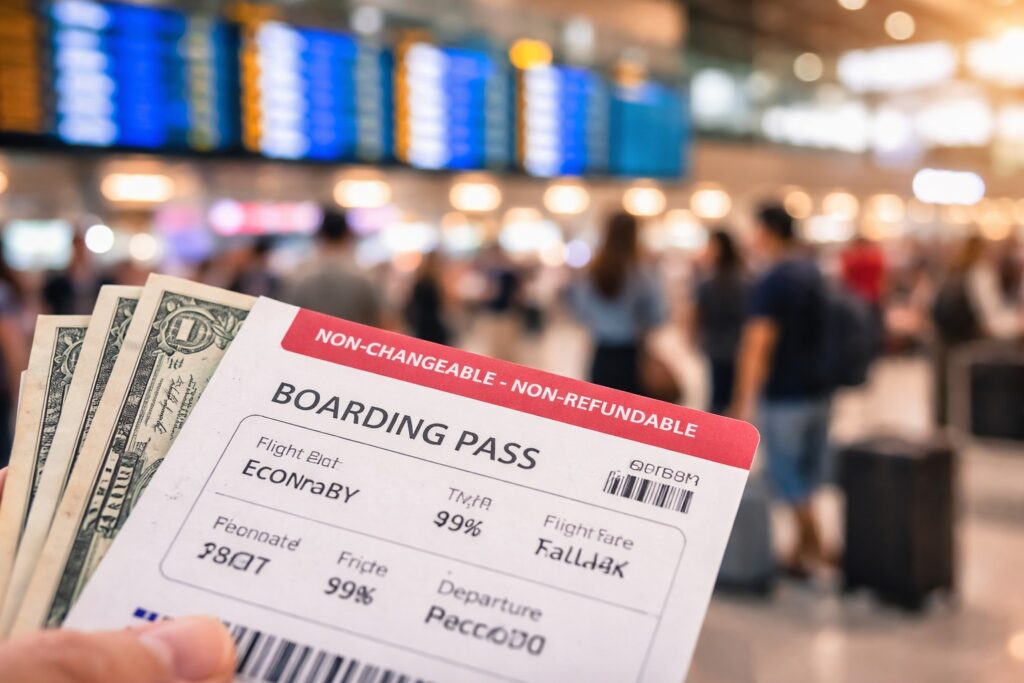
Everyone loves a cheap flight ticket. It feels like a small victory when you find a fare that costs far less than the usual price. For many travelers, that moment comes with excitement and relief. However, what many people do not realize is that extremely cheap tickets often come with strict conditions. One of the most frustrating surprises for travelers is discovering that their ticket cannot be changed at all. Not even for a fee. Not even for a genuine emergency. This situation leaves many passengers confused and sometimes angry. Understanding why this happens can save travelers from disappointment and help them make smarter booking decisions in the future.
The Business Logic Behind Cheap Airline Tickets
Airlines operate in a highly competitive industry where profit margins can be very small. To attract more passengers, they offer different types of fares for the same flight. These fares come with different conditions.
Cheap tickets usually fall under what airlines call restricted or basic fares. These fares are intentionally priced low to fill seats quickly. However, the low price comes with strict limitations. One of those limitations is that the ticket may be completely non-changeable.
From the airline’s perspective, this system helps them manage revenue effectively. When a passenger buys a cheap ticket, the airline assumes that the traveler is willing to accept fewer privileges in exchange for the lower price.
In simple terms, the cheaper the ticket, the stricter the rules attached to it.
Fare Classes and Why They Matter
Every airline ticket belongs to a specific fare class. Fare classes are coded using letters such as Y, B, M, H, Q, K, L, or T. These letters may look meaningless to passengers, but they determine the rules attached to the ticket.
Higher fare classes usually allow:
• Date changes
• Route changes
• Refunds
• Seat upgrades
Lower fare classes often come with heavy restrictions, such as:
• No date changes
• No refunds
• No upgrades
• No cancellation after purchase
Many of the cheapest tickets belong to the lowest fare classes. These fares are designed for travelers who are certain about their travel plans and are willing to accept strict conditions.
The “Use It or Lose It” Policy
One major reason cheap tickets cannot be changed is the airline’s “use it or lose it” policy.
This rule means the passenger must use the ticket exactly as booked. If the traveler misses the flight or wants to change the date, the ticket becomes invalid.
Airlines apply this policy to prevent passengers from abusing cheap fares. If passengers were allowed to freely change very cheap tickets, many people would book multiple flights and adjust them later depending on convenience. This would make it difficult for airlines to predict seat availability.
Strict policies ensure that the airline maintains control over its scheduling and revenue planning.
Inventory and Seat Management
Airlines do not sell seats randomly. They carefully manage how many seats are available in each fare class. This system is called revenue management.
For example, a flight with 180 seats may look like this behind the scenes:
• 20 seats for premium fares
• 60 seats for mid-range fares
• 100 seats for low promotional fares
The cheapest seats are usually limited. Once they are sold, the airline moves to higher fare categories.
Allowing changes on these cheap tickets would disrupt this system. A passenger could buy the cheapest seat today and later move to a flight where only expensive seats remain. That would cause a loss for the airline.
Therefore, many airlines block changes completely on low promotional tickets.
Promotional and Flash Sale Tickets
Some tickets are sold during promotional campaigns or flash sales. These fares are often extremely cheap and heavily advertised.
However, these tickets usually come with the strictest conditions. In many cases:
• Changes are not allowed
• Refunds are not allowed
• Name corrections are not allowed
The airline uses these promotions mainly for marketing and to fill empty seats quickly.
Passengers who buy these tickets must be very certain about their travel plans. Once the booking is confirmed, the airline treats the ticket as final.
Airline Cost Control
Airlines also restrict changes on cheap tickets because managing ticket changes costs money.
Every modification involves administrative work, system adjustments, and sometimes customer service support. If thousands of passengers were changing their cheapest tickets regularly, the airline would face operational challenges.
By limiting changes on the lowest fares, airlines reduce workload and maintain smoother operations.
In other words, strict rules help airlines keep the system efficient.
Travel Agency and Third-Party Bookings
Another factor that sometimes affects ticket changes is where the ticket was purchased.
Tickets bought through:
• Travel agencies
• Online booking platforms
• Discount travel websites
may follow different conditions compared to tickets purchased directly from the airline.
Sometimes the airline allows changes, but the agency’s fare contract does not permit them. In such cases, passengers assume the airline refused the change, while the restriction actually came from the booking channel.
This is why travelers should always read the fare rules before confirming a booking.
Basic Economy Fares
In recent years, many airlines introduced what is called Basic Economy fares. These tickets are intentionally designed to be the cheapest available option.
However, Basic Economy usually comes with several restrictions such as:
• No ticket changes
• No seat selection
• Limited baggage allowance
• Boarding restrictions
These fares exist mainly to compete with low-cost carriers. The airline lowers the price but removes flexibility.
Passengers who want flexibility must upgrade to a higher fare category.
The Risk Travelers Often Ignore
Many travelers focus only on the ticket price and ignore the fare conditions. When plans change later, they realize that the cheap ticket is completely locked.
This situation leads to frustration, especially when emergencies happen.
However, the airline’s conditions are usually stated clearly during booking. The challenge is that many passengers skip reading the details.
A cheap ticket can save money initially, but it also carries risk if travel plans are uncertain.
How Travelers Can Avoid This Problem
Fortunately, there are several ways travelers can protect themselves from this situation.
1. Always Read Fare Rules
Before booking, take a moment to read the fare conditions. Look specifically for sections about:
• Changes
• Cancellation
• Refunds
This small step can prevent major surprises later.
2. Choose Flexible Tickets When Necessary
If travel plans are uncertain, paying slightly more for a flexible ticket may be a wise decision. Flexible fares usually allow changes with little or no penalty.
3. Consider Travel Insurance
Travel insurance can help in situations where unexpected events force travelers to cancel or change trips. While insurance does not always override airline rules, it can help recover financial losses.
4. Book Through Reliable Agents
Experienced travel agents often explain ticket restrictions clearly before issuing the ticket. This guidance can help travelers choose the right fare for their situation.
Conclusion
Cheap airline tickets can be very attractive, especially for travelers trying to manage their budgets. However, the low price usually comes with strict rules. Many of the cheapest fares are intentionally designed to be non-changeable because they help airlines manage revenue, control inventory, and reduce operational complexity.
For travelers, the key lesson is simple. Price should never be the only factor when booking a flight. Flexibility matters too.
Understanding how airline fares work allows passengers to make smarter decisions and avoid unpleasant surprises. Sometimes paying a little more for a flexible ticket can save far more money, stress, and inconvenience in the long run.
When it comes to flight tickets, cheap is good. But cheap without understanding the rules can quickly become expensive.
Fill this FORM to book your flight today.
FORM

Other Articles

How to Extend Your Study Permit the Right Way
How to Avoid Course Regret After First Semester



No Comment! Be the first one.