


Understanding airline pricing is one of the biggest secrets to saving money on international travel. Many travelers, especially Nigerians flying to destinations like the United Kingdom, United States, Canada, UAE, and Europe, are often surprised when they discover that a return ticket sometimes costs less than a one-way ticket. For a first-time flier, this feels strange. Why would a longer trip with two flights cost less than a single journey?
This pricing pattern is not a mistake. It is a well-planned strategy rooted in airline economics, passenger behavior, revenue management, and competitive marketing. In this article, you will learn why return flights are sometimes cheaper, the pricing logic behind these decisions, and how Nigerian travelers can use these insights to get the best deals when booking flights.
Understanding this can save you money, reduce stress, and help you make smarter travel decisions all year round.
The Science Behind Airline Pricing
Airline ticket pricing is not random. Airlines use highly advanced algorithms that consider demand, competition, travel dates, historical data, and customer behavior. These algorithms calculate what travelers are willing to pay at different times. When the data shows that round-trip travelers are more predictable and valuable than one-way travelers, airlines reward that behavior with cheaper return tickets.
Return travelers often book earlier, stay longer, and provide airlines with stable revenue. One-way travelers tend to be more unpredictable, which makes airlines price their tickets differently.
Airlines Prefer Predictable Passenger Behavior
From a business standpoint, airlines want to know that a passenger will travel both ways. A return ticket gives the airline twice the revenue and allows them to plan their aircraft loads better. If an airline knows when a passenger is coming back, it becomes easier to calculate seat availability, crew schedules, fuel needs, and connecting flight loads.
One-way travelers could leave gaps in the airline’s system. They might not return on the same airline or might not return at all. Because of this unpredictability, airlines sometimes charge more for a one-way ticket to reduce potential revenue loss.
Return Tickets Attract Leisure Travelers
Leisure travelers, including tourists, students, and families, tend to book return journeys. These travelers are price-sensitive, meaning they compare deals, wait for promos, and look for affordable options. To attract this group, airlines price return tickets competitively.
On the other hand, business travelers often book one-way tickets because their schedules change frequently. Business travelers are not as price-sensitive and are more concerned about timing, comfort, and flexibility. Airlines know this, so they strategically charge higher prices for one-way flights, especially when booked close to the departure date.
Market Competition Favors Return Tickets
In many regions of the world, airlines compete aggressively for international return passengers. A strong return ticket offering helps them win market share. When one airline drops its return fares, others quickly follow to stay competitive.
However, one-way fares are less competitive. Airlines often keep the price high because they know passengers booking one-way flights usually have urgent or specific reasons for traveling and are willing to pay more.
Return Tickets Help Airlines Plan Their Revenue
One of the biggest challenges in aviation is forecasting revenue. Airlines operate on very thin profit margins, so every seat must be carefully priced to ensure maximum revenue. When a return ticket is purchased, it provides an airlines with two confirmed seats and two payment entries.
This improves the airline’s revenue management:
It reduces empty seats on the return flight.
It stabilizes the airline’s schedule.
It helps airlines predict travel patterns for future flights.
It balances the pricing model for both outgoing and incoming flights.
A one-way ticket does not offer this benefit, so airlines may charge more to reduce uncertainty.
Many Countries Require Onward Tickets for Entry
Some countries require visitors to show proof of onward or return travel before entry. Airlines know this and often lower return ticket prices to encourage passengers to book both legs of the journey with them.
For example, travelers going to the UK, UAE, India, Schengen countries or Caribbean destinations may be asked for a return ticket during immigration checks. Airlines use this requirement to their advantage by making return fares more appealing than one-way fares.
Round-Trip Discounts and Fare Bundling
Airlines sometimes package return fares in a bundled pricing system. This allows them to offer discounted rates for round trips while charging higher rates for separate one-way fares. Bundling creates the impression of value, helping airlines attract more customers for complete journeys.
Bundled pricing also simplifies marketing. It allows airlines to advertise competitive return fares that attract students, tourists, and budget travelers.
Airline Loyalty Programs Encourage Return Travel
Frequent flier programs reward passengers who book more flights. Offering a cheaper return ticket is an easy way for airlines to encourage loyalty. When passengers book both legs with the same airline, they earn more miles, points, or upgrades, giving the airline a long-term advantage.
Higher one-way fares push travelers to choose full return journeys, keeping them within the same airline’s ecosystem.
How Nigerian Travelers Can Benefit from This Pricing Strategy
Understanding why return tickets are cheaper gives you a major advantage when planning your trips. Here are smart ways to use this knowledge:
Book a return ticket even if you are unsure of your exact return date, as many airlines allow date changes for a reasonable fee.
Check flexible return flight options that allow modifications without penalties.
Avoid last-minute one-way bookings unless absolutely necessary.
Compare return fares across multiple airlines before making a decision.
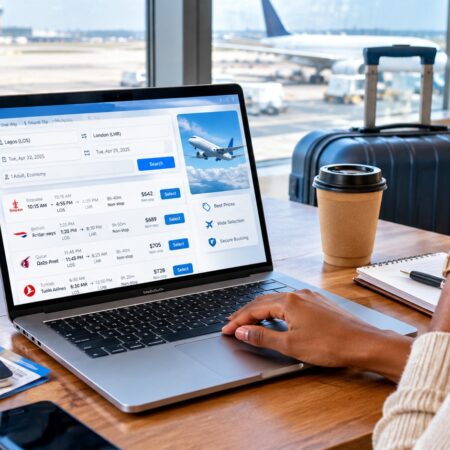
Use flight comparison tools to evaluate price differences between one-way and return fares.
Consider return tickets even if your main plan is relocation; many travelers still benefit from cheaper return fares during visa processing or travel planning.
Return tickets offer greater value and flexibility while keeping travel costs manageable.
Airlines do not price tickets randomly. Every price displayed online is guided by advanced algorithms, customer behavior, global competition, and business strategy. This is why return tickets are often more affordable than one-way tickets. Airlines want predictable passengers, stable revenue, and full seat occupancy, and offering cheaper return fares helps them achieve these goals.
For Nigerian travelers who want to save money and enjoy stress-free travel, understanding this pricing logic is essential. Whether you are traveling for tourism, schooling, business, visiting family, or relocation, choosing the right ticket type can make a huge difference in your overall travel cost.
Fill this FORM to book your flight today.

Other Articles




No Comment! Be the first one.