


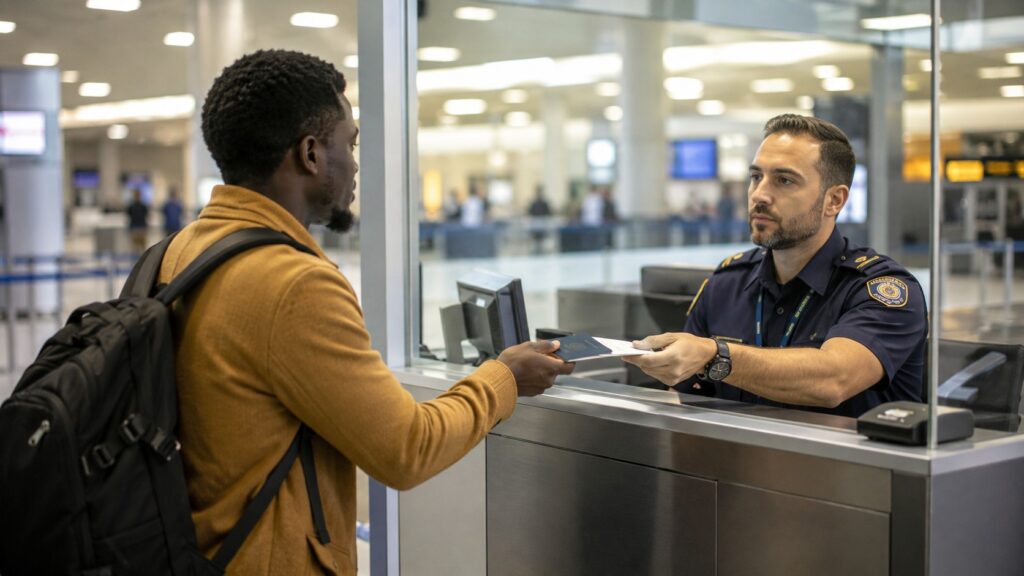
Traveling internationally can be exciting, but for many travelers, one of the most stressful moments of the journey occurs after landing, standing in front of an immigration officer at the point of entry. Whether you are traveling for tourism, business, study, or to visit family, the interaction with immigration officials can determine how smoothly your trip begins. Many travelers mistakenly believe that having a valid visa guarantees entry into a country. In reality, a visa only allows you to travel to a country’s border and request admission. The final decision rests with the immigration officer.
Understanding what immigration officers actually look for can help travelers prepare properly, avoid unnecessary complications, and enter their destination with confidence. This knowledge not only reduces anxiety but also significantly improves your chances of a smooth arrival experience.
The Purpose Behind the Process
Immigration officers stand at the final checkpoint of a country’s border security system. Their job is not to make travel difficult; it is to verify that each person entering the country meets legal requirements and does not pose a risk to public safety, national security, or the integrity of the immigration system itself. To do this efficiently, officers are trained to assess a combination of documentation, behavior, and consistency within a very short window of time, often under sixty seconds per traveler.
1. Validity and Authenticity of Travel Documents
The first and most obvious thing an officer checks is whether your passport, visa, or entry permit is valid, unexpired, and undamaged. Officers are trained to detect forged or altered documents by examining security features such as watermarks, holograms, microprinting, and the quality of the photo page. Even minor inconsistencies, such as mismatched fonts or an oddly placed stamp, can prompt further scrutiny. Travelers should always ensure their passport has at least six months of validity remaining and that any required visas or entry permits are correctly filled out and matched to their trip.
2. Purpose of Travel
Officers are trained to quickly determine whether your stated reason for visiting matches the evidence you present. If you say you are visiting for tourism, they may ask about your itinerary, accommodation, or return flight. If you claim to be attending a business meeting, they may ask for the name of the company or a contact person. The goal is not to trip travelers up, but to confirm that the purpose of the visit aligns logically with the visa category used and the length of stay requested.
3. Consistency in Your Answers
One of the most closely watched elements is consistency. Officers often ask a few simple, overlapping questions such as where you are staying, how long you plan to stay, and who you are traveling with. These are not designed to confuse you; they are designed to confirm that your story holds together. Genuine travelers usually answer such questions naturally, while contradictions or overly rehearsed responses can raise flags and lead to additional questioning.
4. Behavioral Cues
Body language plays a subtle but real role in these assessments. Officers are trained to notice excessive nervousness, avoidance of eye contact, sweating, or hesitation that goes beyond ordinary travel fatigue. It is important to understand that some nervousness is normal and expected; officers are looking for patterns that seem inconsistent with a traveler’s stated purpose, not simply the presence of nerves. Speaking clearly, maintaining a calm tone, and answering questions directly can go a long way toward a smooth interaction.
5. Ties to Your Home Country
For visitors on tourist or short-term visas, officers often want reassurance that you intend to return home after your visit. This is sometimes referred to as demonstrating “ties” to your home country, such as employment, family responsibilities, property, or ongoing education. While not always asked directly, having proof of these ties, such as an employment letter or return ticket, can strengthen your case if questioned.
6. Financial Sufficiency
Many countries require that visitors demonstrate they have enough funds to support themselves during their stay without needing to work illegally or rely on public assistance. Officers may ask about your budget or request evidence such as bank statements, a hotel booking with prepayment, or a sponsor’s letter. Carrying reasonable documentation of your financial means, even if not explicitly requested, can prevent unnecessary delays.
7. Travel History and Prior Compliance
An officer may check whether you have visited the country before, how long you stayed, and whether you left within the permitted timeframe. A clean travel history, showing that you respected previous visa conditions, works strongly in your favor. Conversely, past overstays or unresolved immigration issues, even in other countries, can lead to more detailed questioning.
8. Red Flags in Documentation and Behavior
Officers are specifically trained to identify certain warning signs: last-minute one-way tickets without a clear return plan, inconsistent addresses, unusual travel patterns, or vague answers about the purpose of the trip. These red flags do not automatically mean denial of entry, but they typically trigger a secondary interview where more detailed questions are asked in a separate area.
How to Prepare for a Smooth Entry
The best way to pass through immigration with minimal friction is simple preparation. Carry all essential documents in an easily accessible folder, including your passport, visa (if required), return ticket, proof of accommodation, and any financial documentation relevant to your trip. Know the basic details of your itinerary and be ready to state your purpose of travel clearly and confidently. Avoid vague or joking responses, even when trying to lighten the mood, as officers are trained to take every answer seriously.
Conclusion
Immigration officers are not adversaries; they are professionals performing a critical function that keeps international travel safe and orderly for everyone. By understanding what they are trained to observe, from document authenticity to behavioral consistency, travelers can approach the border with confidence rather than anxiety. A well-prepared, honest, and calm traveler will almost always find that the process, while formal, is far less intimidating than it first appears.
Safe travels, and may your next border crossing be nothing more than a brief formality on the way to your destination.
Fill this FORM to get visa support today.

Other Articles


No Comment! Be the first one.