


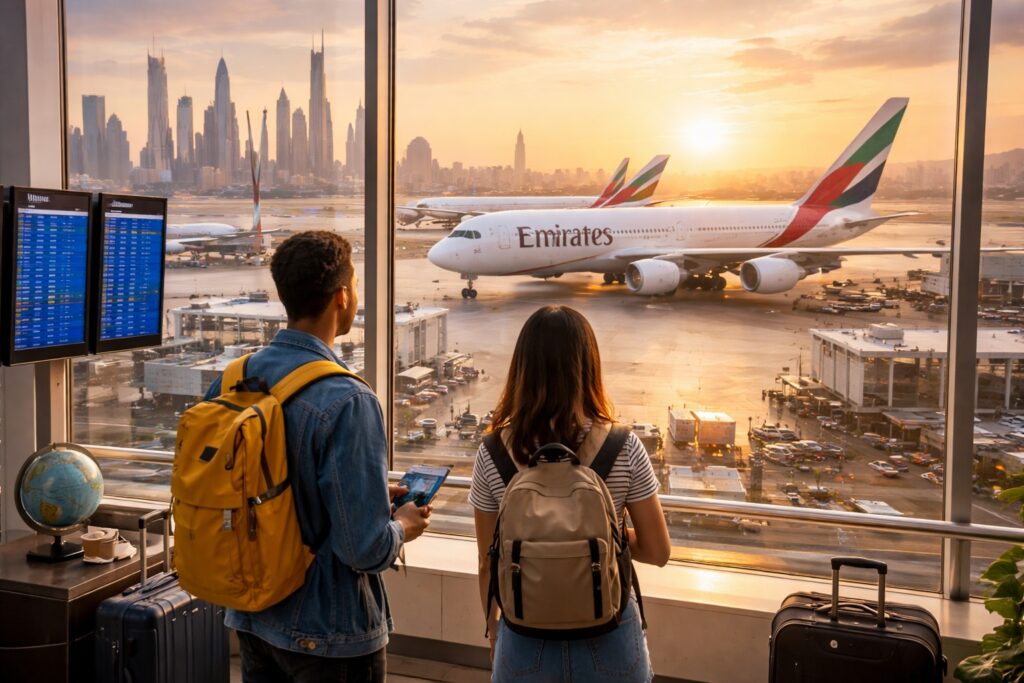
For many international students, transit through the Middle East has long been the most convenient and affordable route to major study destinations. Countries like the United Kingdom, Canada, the United States, and parts of Europe are often accessed through popular hubs such as Dubai, Doha, and Abu Dhabi. However, recent geopolitical tensions, airspace adjustments, visa delays, and airline schedule changes have raised an important question for students planning to travel in 2026. Is the Middle East still a safe and reliable transit option? This article breaks down the current situation, what has changed, what remains the same, and what students should consider before booking their travel.
Why Students Prefer Middle East Transit Routes
For years, Middle East transit hubs have been the preferred choice for international students for several reasons. First, airlines in the region offer competitive pricing compared to many European routes. Students traveling from Africa and Asia often find significantly cheaper fares through Middle East connections.
Second, transit times are usually shorter and more comfortable. Most Middle East airports are designed as global transit hubs with efficient connections, modern facilities, and student friendly layover options.
Another major factor is baggage allowance. Many Middle East airlines offer generous student baggage policies, which is very important for students relocating abroad.
Finally, flight availability is strong. There are multiple daily connections to popular study destinations, making it easier to plan around visa timelines and school resumption dates.
These advantages still exist in 2026, but recent developments have introduced new considerations.
What Changed Recently
The conversation around Middle East transit did not start without reason. Several developments have contributed to growing uncertainty.
Airspace Adjustments
Airspace restrictions in parts of the Middle East have forced airlines to reroute some flights. While this does not necessarily mean travel is unsafe, it can lead to longer travel times, unexpected stopovers, or last minute schedule adjustments.
Students traveling with tight timelines, especially those resuming school soon, may find this stressful.
Flight Rescheduling and Cancellations
Airlines sometimes adjust schedules quickly when situations evolve. This can affect transit connections, especially for students with long layovers or separate tickets.
In some cases, students have missed onward flights because their first leg was delayed.
Increased Transit Time
Some flights now take longer due to rerouting. A journey that used to take 13 hours may now take 15 to 17 hours depending on the airline and route.
This does not make travel unsafe, but it does require better planning.
Visa Processing Delays
Embassies and consulates in some regions have also experienced delays. While this is not directly related to transit safety, it affects travel planning. Students sometimes book flights expecting quick visa issuance, then face changes.
This makes flexible tickets more important than ever.
Is It Still Safe to Transit Through the Middle East?
Yes, transit through the Middle East remains generally safe in 2026. Major international airports in the region continue to operate normally. Airlines are still flying daily, and thousands of passengers transit successfully without issues.
However, safe does not automatically mean predictable. The main concern is not danger, but uncertainty.
Airlines constantly monitor situations and adjust routes to maintain safety. Aviation authorities do not allow flights to operate in unsafe conditions. This means if flights are operating, they are considered safe.
The real difference now is that students should expect possible changes and plan accordingly.
Major Advantages That Still Make Middle East Transit Attractive
Despite concerns, many students still choose Middle East transit for practical reasons.
Competitive Ticket Prices
Flights through Middle East hubs remain among the cheapest options for long haul travel. For students already spending heavily on tuition and accommodation, this matters.
Student Friendly Airlines
Airlines serving Middle East routes continue to offer student benefits like extra baggage and flexible date changes.
Good Airport Facilities
Transit airports in the region are still among the best globally. Students with long layovers can rest comfortably, eat, recharge devices, and even sleep in quiet zones.
Strong Connectivity
Middle East hubs connect easily to cities across Canada, the UK, Europe, Asia, and Australia. This reduces the need for multiple stopovers.
Risks Students Should Consider Before Choosing Middle East Transit
Being realistic is important. Students should consider these factors before booking.
Possible Flight Changes
Schedules may change closer to departure. Students should avoid very tight transit times.
Long Layovers
Some rerouted flights may have longer waiting periods between connections.
Multiple Notifications
Students must check emails regularly after booking. Airlines may send updates.
Separate Ticket Risks
Booking two separate tickets increases risk. If one flight changes, the other may not adjust automatically.
Smart Booking Tips for Students Traveling in 2026
Students can still transit safely through the Middle East by following these practical tips.
Choose One Ticket
Always book a single ticket from departure to final destination. This protects you if delays occur.
Avoid Tight Connections
Choose at least three to four hours transit time. This gives room for delays.
Consider Flexible Tickets
Flexible tickets allow date changes if visa delays happen.
Monitor Flight Updates
Check your email and airline app regularly before departure.
Arrive Early
Arrive at the airport early to avoid stress, especially during busy travel periods.
Work With a Travel Consultant
Students who book through experienced travel consultants often receive quicker updates and better rebooking support.
Alternative Transit Options Students Are Considering
Because of uncertainty, some students are exploring alternative routes.
European Transit
Cities like Istanbul, Addis Ababa, and some European hubs are being used more frequently. However, some of these require transit visas depending on nationality.
Direct Flights
Some students prefer direct flights where available, even if more expensive.
African Transit Hubs
Certain African airlines now offer connections to Europe and North America, though availability may be limited.
Each option has advantages and disadvantages. Middle East transit still remains the most balanced in terms of cost and convenience.
What Universities Are Advising Students
Many universities are aware of travel uncertainties. Some schools are now advising students to:
- Book flexible tickets
- Travel earlier than resumption date
- Avoid last minute travel
- Monitor airline updates
- Inform school of delays if necessary
Schools understand that travel disruptions can happen. Communication is important.
When You Should Avoid Middle East Transit
Students may consider alternative routes if:
- Their visa is issued very late
- They cannot handle long transit times
- They prefer direct flights
- They are traveling with very tight school deadlines
- They have medical conditions requiring shorter travel
In these cases, paying slightly more for a direct or alternative route may be better.
When Middle East Transit Still Makes the Most Sense
It remains a good option when:
- Budget is a major concern
- Student baggage allowance is important
- Multiple flight options are needed
- Travel date is flexible
- Student is traveling early before resumption
For many students, this still applies.
Conclusion
So, is the Middle East still a safe transit option for students in 2026? The answer is yes, but with careful planning. Flights are still operating, airports are functioning normally, and thousands of students continue to travel successfully through the region.
The key difference now is uncertainty. Students must plan with flexibility, allow extra time, and stay informed. Those who prepare properly can still enjoy smooth travel using Middle East transit hubs.
For students traveling abroad in 2026, the goal should not be to avoid the Middle East completely, but to travel smarter. Book wisely, monitor updates, allow buffer time, and choose reliable airlines.
With the right planning, Middle East transit remains one of the most practical and cost effective routes for international students heading to their study destinations.
Fill this FORM to start your study abroad journey.
FORM







No Comment! Be the first one.