


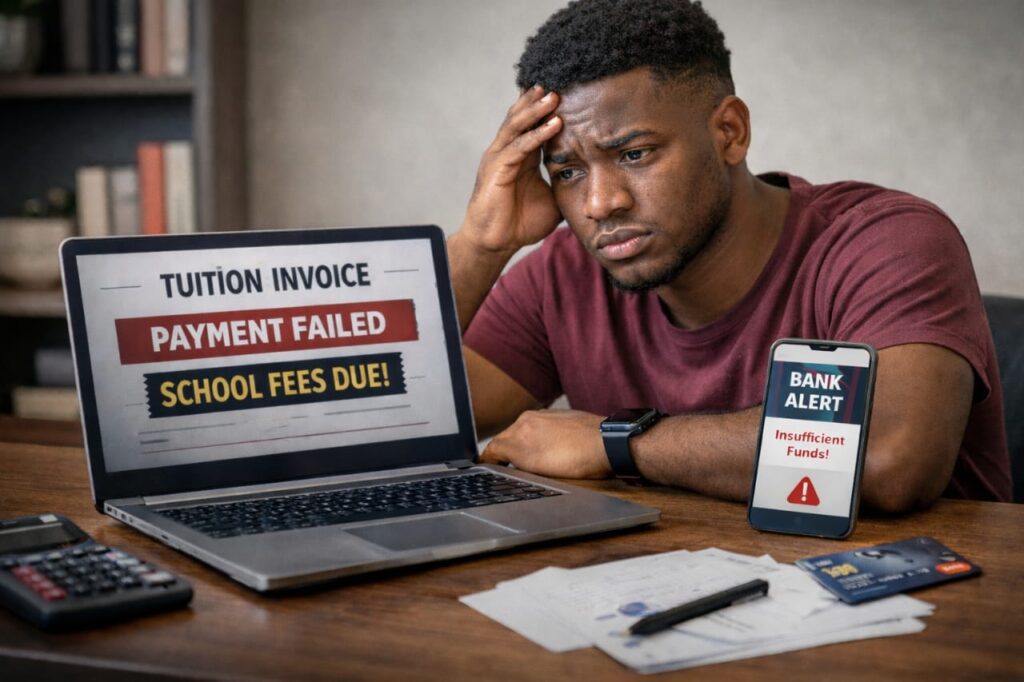
Paying school fees abroad should be a simple step after getting admission. But for many Nigerian students, it turns into stress, panic, and sometimes serious financial loss. From wrong payment methods to fake agents and last-minute rush, small mistakes can cost you your admission or delay your visa process. The truth is, foreign schools follow strict rules. They do not accept excuses like network issues or bank delays.
This article explores the most common mistakes Nigerians make when paying school fees abroad, why they happen, and how to avoid them.
1. Paying Through Unverified Agents or “Connections”
This is one of the biggest mistakes Nigerian students make. Many students hand over school fees to:
- A friend’s friend
- A random agent on WhatsApp
- Someone who says, “I’ve helped many people do it”
The problem is simple. Once the money leaves your account, the school does not care who you gave it to. If the fees do not reflect, your admission is at risk.
Why This Happens
- Fear of international payment stress
- Lack of foreign bank cards
- Pressure from school deadlines
- Trusting words instead of proof
How to Avoid It
- Pay directly through the school’s official payment portal
- If using an agent, confirm they are registered and traceable
- Ask for official payment receipts from the school, not screenshots from the agent
- Never rely on “I know someone in the school”
Rule of thumb: If the school does not acknowledge the payment, it did not happen.
2. Using the Wrong Payment Reference or Student ID
This mistake looks small but causes big trouble.
Some students pay correctly but:
- Use the wrong student ID
- Misspell their full name
- Use someone else’s reference number
When this happens, the school may receive the money but cannot match it to your profile.
What Happens Next
- Payment delays
- Long email back-and-forth
- Missed registration deadlines
- Stress you did not budget for
Practical Steps
- Always copy and paste your student ID or invoice number
- Double-check spellings before payment
- Save screenshots of every step
- Email the school immediately after payment with proof
Schools abroad are organized. Help them help you.
3. Waiting Until the Last Minute to Pay
This is a classic Nigerian habit. Unfortunately, foreign institutions do not work with vibes.
International payments take time, especially from Nigeria. Banks may delay transfers, cards may decline, and exchange rates may change overnight.
Common Last-Minute Problems
- Payment portal suddenly closes
- Dollar or pound rate jumps
- Bank places a temporary block on your card
- Payment reflects after deadline
What You Should Do Instead
- Pay at least 2–3 weeks before the deadline
- Ask your school if partial payment is allowed
- Confirm payment deadlines in writing
- Keep buffer time for bank issues
If the deadline is Friday, do not start payment on Thursday evening. That is not faith. That is gambling.
4. Ignoring Exchange Rate and Hidden Charges
Many students calculate school fees using Google rate. That is where the problem starts.
Banks, cards, and payment platforms use different rates. Some also add:
- International transaction fees
- Conversion charges
- Processing fees
So what you thought was ₦10 million can quietly turn into ₦11.5 million.
Common Mistakes
- Not asking the bank for the final payable amount
- Forgetting bank charges
- Paying exact tuition amount without buffer
Smart Move
- Ask your bank or payment platform for the total amount in naira
- Add extra funds for unexpected charges
- Avoid multiple failed attempts, they attract more charges
Foreign schools do not care that your bank charges extra. They only care if the full amount was received.
5. Paying School Fees Before Confirming Refund Policy
This one hurts the most when things go wrong.
Some students pay full tuition before:
- Getting visa approval
- Understanding deferral options
- Knowing refund conditions
Later, the visa gets delayed or denied, and the school keeps part or all of the money.
What Students Often Miss
- Refund deadlines
- Non-refundable deposits
- Administrative charges
- Currency conversion losses
What to Do Before Paying
- Read the school’s refund policy carefully
- Ask if tuition can be deferred to next intake
- Confirm refund timeline and charges
- Keep all emails and official documents
Never assume you will get a full refund. Assumptions are expensive abroad.
6. Using Personal Accounts for Sponsored Payments Without Proof
If someone else is paying your fees, parent, sponsor, company, you must be careful.
Some students:
- Use random personal accounts
- Cannot explain source of funds later
- Have no payment trail
This becomes a problem during:
- Visa interviews
- Immigration checks
- School verification
How to Do It Properly
- Use sponsor’s account where possible
- Keep sponsorship letter
- Keep bank statements showing payment
- Match sponsor name with visa documents
Your school fees payment should support your visa story, not complicate it.
7. Falling for Fake School Payment Links
Scammers have upgraded. It is no longer just fake admission letters. Now it is fake payment portals.
Some students click links sent by:
- Fake “school representatives”
- Cloned email addresses
- Telegram groups
Money goes out. School never receives it.
Red Flags to Watch Out For
- Email not ending with school’s official domain
- Pressure to pay urgently
- Requests to pay into personal accounts
- Links that do not appear on the school website
Safety Tips
- Always log in through the official school website
- Do not click random payment links
- Cross-check emails with admission office
- When in doubt, ask the school directly
One careful email can save you millions.
8. Not Keeping Proper Payment Records
Some students pay and move on. No receipts. No screenshots. No email confirmations.
Then weeks later, the school says:
“We have no record of your payment.”
Now you are scrambling.
What You Should Always Keep
- Bank payment receipt
- Transaction reference number
- Screenshots of successful payment
- Email confirmation from school
Store them in:
- Your email
- Google Drive
- WhatsApp backup
Memory is not evidence. Documents are.
9. Assuming School Fees Automatically Mean Enrollment
Paying school fees does not always mean you are fully enrolled.
Some schools still require:
- Course registration
- Document verification
- Medical clearance
- Acceptance confirmation
Students who ignore this show up abroad confused.
What to Do After Payment
- Confirm enrollment status
- Register courses if required
- Check orientation dates
- Confirm accommodation deadlines
Payment is a step, not the finish line.
10. Not Asking for Help Early Enough
Many Nigerian students suffer in silence until the problem becomes big.
They are afraid to:
- Ask the school questions
- Contact their bank early
- Seek professional help
By the time they ask, deadlines are gone.
Smart Students Do This
- Ask questions early
- Email the school clearly and politely
- Use verified education consultants when needed
- Plan payments like a project, not an emergency
There is no award for suffering quietly.
Final Thoughts
Paying school fees abroad is not just about sending money. It is about timing, accuracy, documentation, and smart decisions. Most mistakes Nigerian students make are avoidable with the right information and planning.
Slow down. Read instructions. Ask questions. Verify everything.
Your admission is too valuable to lose to haste, trust without proof, or last-minute pressure. Studying abroad is already a big step. Do not let payment mistakes trip you at the starting line.
If you handle school fees properly, the rest of the journey becomes much smoother.
Fill this FORM to start your study abroad journey.

Other Articles

Why Some Students Get Admission Fast While Others Struggle
Is It Safe to Book One-Way Tickets? The Truth


No Comment! Be the first one.