


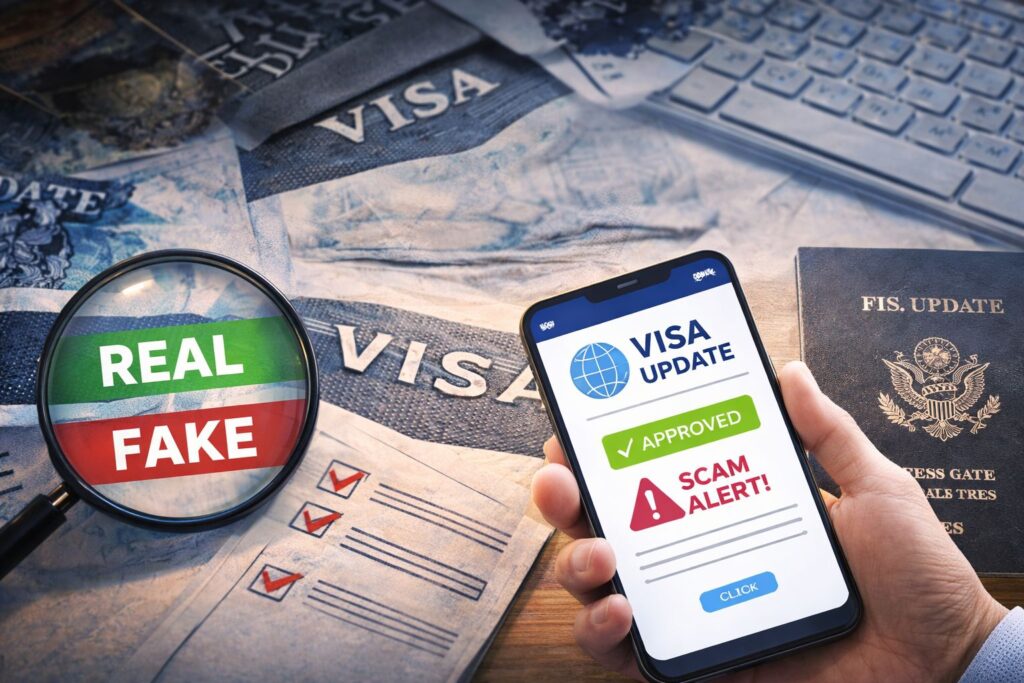
Visa updates travel fast online. One minute a country is closed, the next minute social media says visas are now free, open, or automatic. For travelers, students, business owners, and families, these updates can change plans and cost real money. Sadly, not every visa update you see online is true. Some are outdated. Some are half truths. Others are deliberate scams designed to confuse, mislead, or collect money from unsuspecting people. Knowing how to separate real visa updates from fake ones is now a survival skill for modern travelers.
This article explains, step by step, how to verify visa information online, what red flags to watch out for, where to find trusted sources, and how to protect yourself from visa related scams.
Why Fake Visa Updates Are Everywhere
Visa policies change often due to politics, security, health concerns, and international agreements. Because of this constant movement, misinformation spreads easily. Fake visa updates usually come from:
- Unverified blogs looking for traffic
- Social media pages chasing engagement
- WhatsApp broadcasts copied many times
- Scammers posing as agents or officials
- Old news recycled as new information
People are also quick to share good news without checking facts. Headlines like “Visa Free Entry Now Open” spread fast, even when the details say something very different.
Start With the Official Government Source
The first and most reliable place to verify any visa update is the official government website of the destination country. These include:
- Ministry of Foreign Affairs websites
- Immigration Service websites
- Official embassy or consulate websites
Real visa updates are always published on at least one official government platform. If a so-called update cannot be found on a government website, that is your first warning sign.
Important tip. Government websites usually end with extensions like .gov, .gov.uk, or .gouv. Be careful with look alike websites using .com or .org to appear official.
Check the Embassy or Consulate Website in Your Country
Visa rules can vary by nationality and location. A visa update that applies to one country may not apply to another. Always check the embassy or consulate website of the destination country located in your own country.
If the embassy website does not mention the update, or still shows old requirements, do not assume social media knows better than diplomats. Embassies update their pages when policies change. Sometimes it takes a few days, but it always appears.
Be Careful With Social Media Visa Announcements
Social media is the most common place people see visa updates. While some pages share useful information, many posts are misleading.
Red flags to watch out for include:
- No link to an official source
- Screenshots without context
- Headlines written in all capital letters
- Emotional language like “Hurry Now” or “Last Chance”
- Comments turned off
A real visa update does not need hype. It comes with dates, conditions, eligibility rules, and official references.
Watch Out for WhatsApp Broadcast Messages
WhatsApp is one of the biggest carriers of fake visa information. Messages are copied and forwarded until the original source is lost.
Common signs of fake visa broadcasts include:
- No date on the update
- No official website link
- Statements like “Someone I know at immigration said”
- Requests to forward the message
If a visa update is real, it does not need chain forwarding to survive.
Verify the Date and Context of the Update
Many visa updates shared online are real, but old. Policies that applied two or three years ago may no longer be valid.
Always check:
- The publication date
- The year mentioned in the article
- Whether the update was temporary
For example, visa relaxations during COVID or special travel seasons are often time limited. Sharing them years later creates confusion.
Understand the Difference Between Visa Free, Visa on Arrival, and E Visa
Fake updates often mix these terms to mislead people.
- Visa free means no visa application is required before travel
- Visa on arrival means approval is given at the airport, but conditions still apply
- E visa means you must apply online and receive approval before traveling
If an update claims “Visa Free” but later asks for online application or payment, something is wrong. Real updates are clear about the visa type.
Be Careful When Money Is Mentioned
A major warning sign of fake visa updates is payment pressure.
Be cautious if:
- You are asked to pay to secure a visa update
- Payment is requested via personal bank accounts
- Urgency is used to rush payment
- No official receipt is offered
Governments do not announce visa policy changes through private payment requests.
Confirm Through Multiple Trusted Sources
Never rely on one source alone. A real visa update will usually appear on:
- Government websites
- Embassy websites
- Reputable international news platforms
- Recognized travel advisory portals
If only one blog or one social media page is talking about it, pause and verify further.
Consult a Licensed Travel Consultant or Visa Expert
Professional travel consultants deal with visa rules daily. They cross check updates before advising clients.
A reliable consultant will:
- Show you official sources
- Explain how the update applies to your nationality
- Tell you what has not changed
- Avoid guaranteeing visa approval
Anyone who promises “100 percent approval” based on an online update is not being honest.
Common Examples of Fake Visa Updates
Some popular fake updates include:
- Claims that embassies have stopped interviews
- Announcements of permanent visa free access without treaties
- Statements that visa refusals are no longer possible
- Messages saying documents are no longer required
Visa processes may evolve, but they rarely disappear overnight.
What to Do If You Are Unsure
If you are confused about a visa update:
- Do not book flights immediately
- Do not pay any agent yet
- Take screenshots of the update
- Verify through official channels
- Ask a professional before proceeding
Patience can save you money, stress, and disappointment.
Final Thoughts
In today’s digital world, not every visa update online deserves your trust. The difference between real and fake information can mean a smooth journey or a costly mistake. Always verify from official sources, question anything that sounds too easy, and avoid rushing decisions based on online excitement. Travel opportunities are real, but so are scams. Smart travelers check twice before they move once. When in doubt, seek professional guidance. Your passport, your money, and your peace of mind are worth it.
Fill this FORM to get visa support today.

Other Articles
How to Avoid Being Denied Admission Due to Document Errors
A Beginner’s Guide to Multi-City Flight Booking

No Comment! Be the first one.