


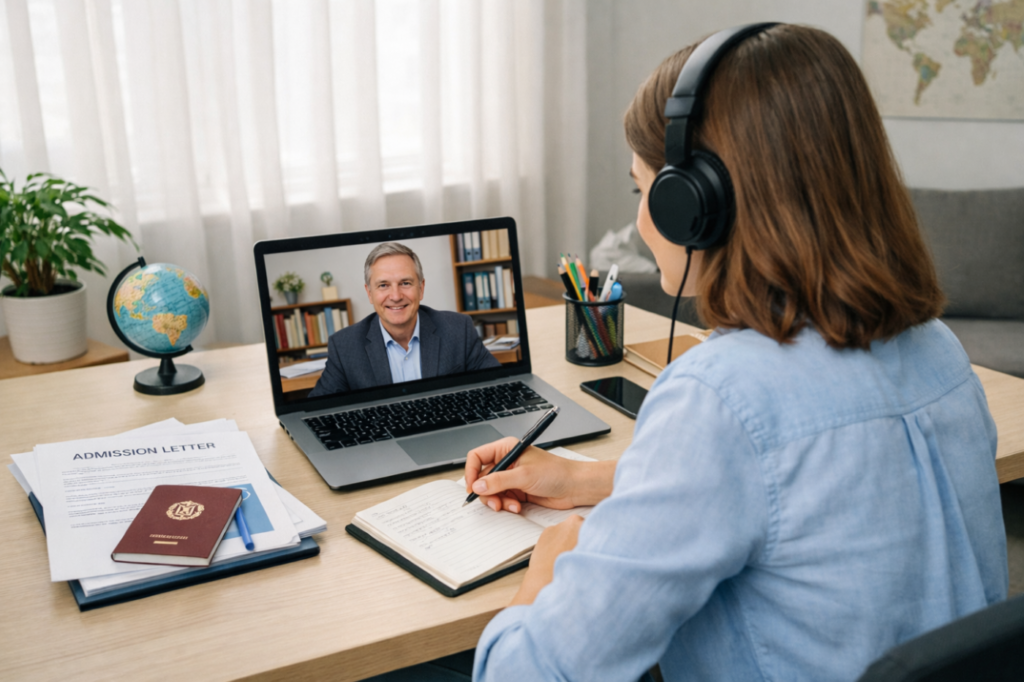
Receiving an interview invitation from a school abroad is an important step in the international study journey. It shows that your application has been reviewed and that the institution is interested in learning more about you beyond your documents. Many schools now conduct interviews virtually, allowing applicants to participate from anywhere.
Although held online, virtual interviews are treated with the same importance as physical interviews. Schools use them to assess communication skills, academic motivation, clarity of goals, and readiness to study in a new academic and cultural environment. Proper preparation is essential, as a strong interview performance can significantly improve your chances of admission.
This article offers practical guidance to help students prepare confidently and professionally for virtual interviews with schools abroad.
Understanding Virtual Interviews With Schools Abroad
A virtual interview is an online meeting conducted through platforms such as Zoom, Google Meet, Microsoft Teams, or Skype. Depending on the institution, the interview may be conducted by one admissions officer, a faculty member, or a small panel.
The primary objectives of the interview include:
- Assessing your ability to communicate clearly
- Understanding your academic and career goals
- Evaluating your motivation for studying abroad
- Confirming your suitability for the chosen program
Some schools also use virtual interviews to verify application details and assess English language proficiency.
Why Virtual Interviews Are Important
Virtual interviews are a key part of the admission process and should be taken seriously. They allow schools to determine whether you are a good fit academically and culturally.
These interviews help institutions to:
- Confirm your understanding of the course and institution
- Evaluate your confidence and professionalism
- Assess your adaptability to an international learning environment
- Make final admission decisions
A successful interview can also strengthen future visa applications, as it reflects genuine academic intent and preparedness.
Step 1: Understand the Interview Structure
Before the interview date, carefully review the information provided by the school. Ensure you understand:
- The interview date and time
- Time zone differences
- The platform that will be used
- The expected duration of the interview
- Whether the interview will be individual or panel-based
If any details are unclear, contact the admissions office in advance. Clear communication demonstrates seriousness and professionalism.
Step 2: Research the School and Program Thoroughly
One of the most common reasons candidates underperform in interviews is inadequate research. Interviewers expect applicants to have a clear understanding of the institution and the program they applied for.
Focus your research on:
- The specific course or program
- The school’s academic strengths
- Teaching methods and facilities
- Campus culture and location
- Career opportunities after graduation
Be prepared to explain why you chose the school and how it aligns with your academic and professional goals.
Step 3: Prepare Structured Responses to Common Questions
While you should not memorize scripted answers, it is important to prepare clear and organized responses to common interview questions.
Typical questions include:
- Can you tell us about yourself?
- Why did you choose this program?
- Why do you want to study in this country?
- What are your career plans after graduation?
- How do you plan to fund your studies?
Your responses should be honest, concise, and relevant. Avoid overly long explanations and focus on clarity.
Step 4: Test Your Technology in Advance
Technical issues can disrupt an interview and create unnecessary stress. To avoid this, test all equipment at least one day before the interview.
Ensure that:
- Your internet connection is stable
- Your camera and microphone work properly
- The interview platform is installed and updated
- Your background is neat and professional
- Lighting allows your face to be clearly visible
It is also advisable to have a backup internet option or device in case of unexpected issues.
Step 5: Dress Professionally
Although the interview is virtual, your appearance matters. Dressing professionally shows respect for the institution and the interview process.
Recommended attire includes:
- A neat shirt or blouse
- Neutral or professional colors
- Minimal accessories
Avoid casual clothing and ensure your overall appearance is clean and well-groomed.
Step 6: Keep Important Documents Ready
Having your documents nearby helps you respond confidently if asked for clarification or verification.
Keep the following documents accessible:
- Passport
- Interview invitation or offer letter
- Academic certificates and transcripts
- English language test results, if applicable
- Personal statement or study plan
Being organized reflects seriousness and preparedness.
Step 7: Communicate Clearly and Confidently
Clear communication is one of the most important aspects of a successful interview. You do not need to speak with a foreign accent, but your responses should be understandable and well-structured.
During the interview:
- Speak at a steady pace
- Listen carefully before answering
- Answer questions directly
- Ask for clarification when necessary
Confidence should be calm and respectful, not aggressive or overconfident.
Common Mistakes to Avoid
Avoiding common mistakes can significantly improve your interview performance.
These include:
- Joining the interview late
- Poor internet connection without a backup plan
- Dressing casually or inappropriately
- Giving very short or unclear answers
- Interrupting the interviewer
- Speaking negatively about your home country
- Showing a lack of knowledge about the program
Professional behavior leaves a lasting positive impression.
Managing Interview Anxiety
Feeling nervous before an interview is normal. However, excessive anxiety can affect your performance.
To manage nerves:
- Prepare thoroughly in advance
- Practice answering questions aloud
- Get enough rest before the interview
- Take deep breaths before speaking
During the interview, focus on the conversation rather than on making a perfect impression.
After the Interview
Once the interview is completed:
- Thank the interviewer for their time
- Ask about the next steps if appropriate
- Exit the meeting calmly
Unless instructed, avoid sending repeated follow-up emails. Allow the admissions team sufficient time to review your interview.
Conclusion
Preparing for a virtual interview with a school abroad requires planning, research, and self-confidence. These interviews are a vital part of the international study journey and should be approached with professionalism and seriousness.
When you understand the interview process, prepare your responses, manage technical details, and communicate clearly, you increase your chances of success. More importantly, you present yourself as a capable and motivated candidate ready for international education.
With proper preparation, a virtual interview becomes an opportunity to demonstrate your readiness and commitment, rather than a source of fear.
Fill this FORM to start your study abroad journey.

Other Articles

How to Appeal a Visa Denial the Right Way





No Comment! Be the first one.