


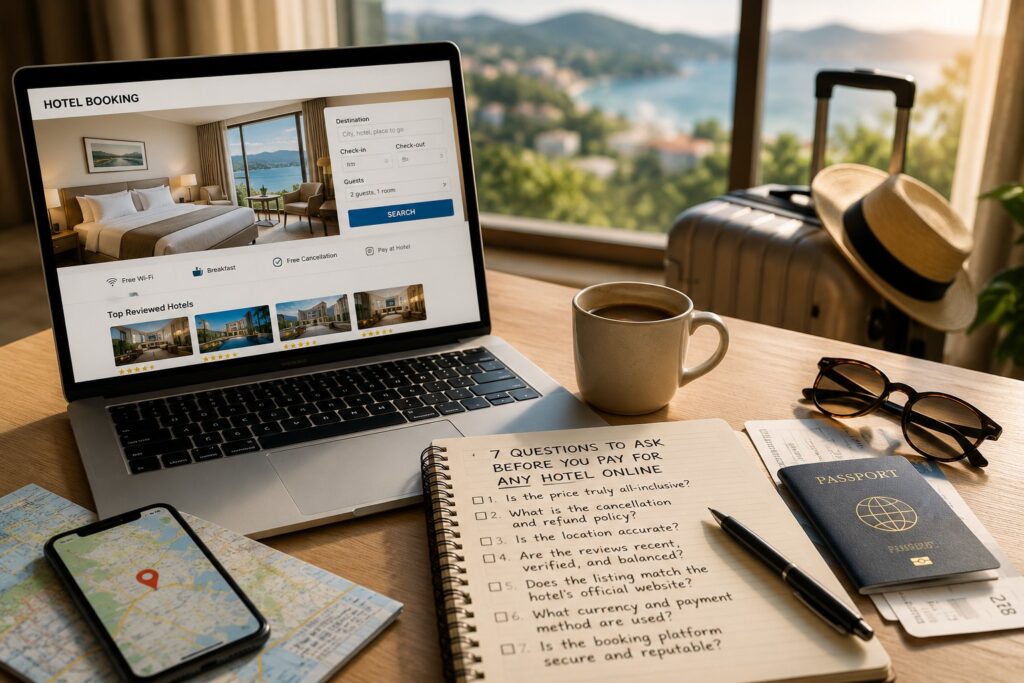
Picture this: you have just found what looks like the perfect hotel. The photos are stunning, the price seems reasonable, and a red banner warns that only two rooms remain. Your cursor hovers over the “Book Now” button. Before you click, pause for a moment. Behind that tempting listing may lie hidden fees, a misleading location, or a cancellation policy that could cost you dearly.
This article reveals seven essential questions every traveler must ask before paying for a hotel online, helping you avoid costly mistakes and book with genuine confidence.
1. Is the Price Truly All-Inclusive?
The figure displayed on your screen is rarely the final amount you will pay. Many booking platforms and hotels advertise a base rate, only to add resort fees, service charges, city taxes, or “amenity fees” during checkout. Before entering your payment details, scroll through the full price breakdown and read any fine print regarding additional charges. If the listing does not clearly state whether taxes and fees are included, contact the hotel directly or check its official website for clarification. A seemingly cheaper rate on a third-party site can quickly become more expensive than a direct booking once hidden costs are added.
2. What Is the Cancellation and Refund Policy?
Plans change, flights get delayed, and emergencies arise. This makes the cancellation policy one of the most important details to review before payment. Some rates are labeled “non-refundable” in exchange for a lower price, while others allow free cancellation up to a specific date. Pay close attention to time zones and deadlines; a policy that permits cancellation “until 6:00 PM local time” can catch travelers off guard if they are booking from a different region. Always screenshot or save a copy of the cancellation terms at the time of booking, as these policies can sometimes change or be difficult to locate later.
3. Is the Hotel’s Location Accurately Represented?
A stunning image of a beachfront view means little if the hotel is actually a twenty-minute drive from the shore. Verify the exact location using an independent map service rather than relying solely on the map embedded in the booking site, which may be zoomed in to obscure surrounding distances. Search for the hotel’s address alongside nearby landmarks, public transportation options, and restaurants. Reading recent guest reviews that mention accessibility and neighborhood safety can also provide a clearer, more honest picture than promotional descriptions alone.
4. Are the Reviews Recent, Verified, and Balanced?
Star ratings can be misleading when they are outdated or unverified. Before committing to payment, examine reviews from the past three to six months rather than the overall average, since hotels can change ownership, management, or quality over time. Look for verified guest reviews, which confirm that the reviewer actually stayed at the property, and pay attention to how management responds to negative feedback. A pattern of complaints about cleanliness, noise, or unresponsive staff should never be ignored simply because the overall rating appears favorable.
5. Does the Listing Match the Hotel’s Official Website?
Discrepancies between a third-party booking site and the hotel’s own website can be a warning sign. Cross-check the room type, amenities, and price directly on the hotel’s official page whenever possible. Occasionally, hotels offer better rates, complimentary breakfast, or room upgrades to guests who book directly, particularly for loyalty program members. In some cases, third-party listings may also feature outdated photographs or incorrect information about facilities such as swimming pools, parking, or Wi-Fi availability, so a direct comparison is always worthwhile.
6. What Currency and Payment Methods Are Being Used?
International bookings often display prices in a currency different from your own, and hidden conversion fees can quietly inflate the final charge. Confirm whether the listed price is in your home currency or the local currency of the destination, and check whether your card issuer applies foreign transaction fees. Additionally, review whether the platform requires full payment upfront or allows a partial deposit with the balance due at check-in. Understanding these details in advance prevents unpleasant surprises when your bank statement arrives.
7. Is the Booking Platform Secure and Reputable?
Finally, and perhaps most importantly, verify that you are booking through a secure and trustworthy platform. Look for “https” in the website address and a visible padlock icon in your browser, both of which indicate encrypted data transmission. Research the platform’s reputation through independent review sites and confirm that it has a legitimate customer service channel, such as a working phone number or live chat. Be especially cautious of listings that pressure you with countdown timers or claims of extremely limited availability, as these tactics are sometimes used to rush travelers into hasty, ill-considered decisions.
Conclusion
Booking a hotel online should feel exciting, not stressful. By taking a few extra minutes to ask these seven questions, you protect yourself from hidden fees, misleading listings, and unreliable platforms. A well-informed traveler is far more likely to enjoy a smooth, comfortable, and memorable stay. The next time you find yourself about to click “Book Now,” remember that a small amount of diligence today can save you significant frustration tomorrow. Safe travels, and happy booking.
Fill this FORM to book your hotel today.







No Comment! Be the first one.