


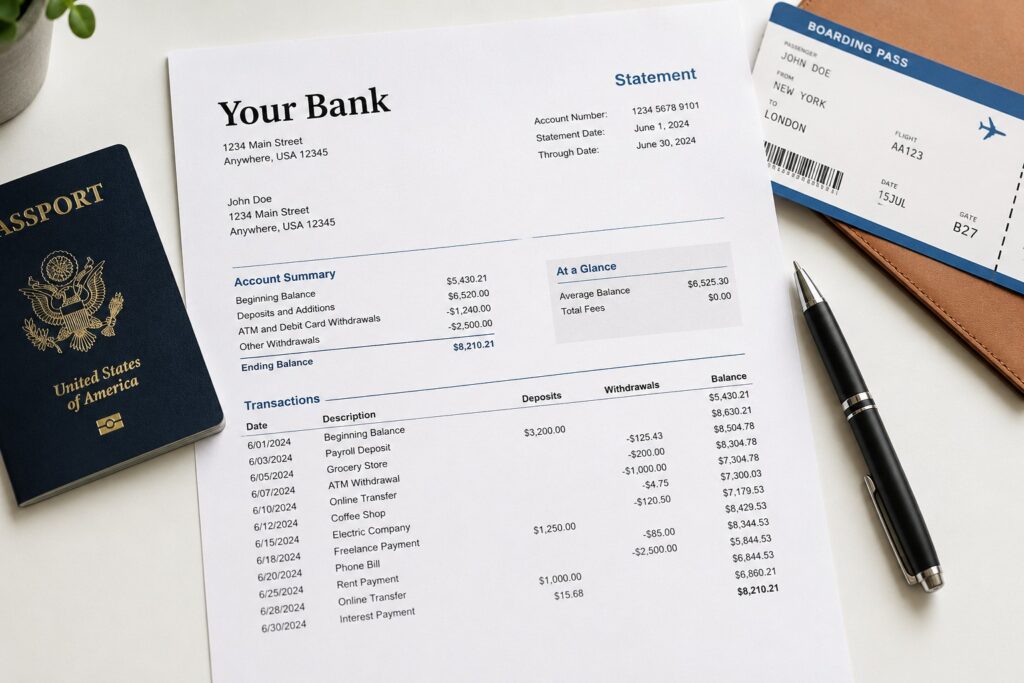
You have saved diligently, planned every detail of your trip, and submitted what you believed was a flawless visa application only to receive a rejection letter citing your bank statement as insufficient. It feels unjust, confusing, and deeply frustrating. Yet this scenario plays out thousands of times every week at embassies around the world. The truth is, bank statements are among the most misunderstood documents in the entire visa application process. Most applicants assume that simply having money in their account is enough. It is not. Embassies look far beyond the balance and knowing exactly what they look for could be the single most important step you take before your next application.
What Embassies Are Actually Looking For
When a consular officer reviews your bank statement, they are not simply confirming that you have money. They are constructing a financial profile of you as a traveller. Their primary concern is this: Are you likely to overstay your visa or become an undocumented immigrant?
To answer that question, they examine your bank statement as a behavioural document, one that reveals your financial stability, your spending patterns, and your ties to your home country. A large balance alone tells them very little. What they need to see is a story of consistent, legitimate financial activity over time.
The Most Common Reasons Bank Statements Are Rejected
1. Sudden Large Deposits (“Lump Sum” Deposits)
This is the single most frequent cause of rejection worldwide. Many applicants, upon realising their balance is too low, ask a friend or family member to temporarily transfer a large sum into their account shortly before applying. Consular officers are trained to spot this pattern immediately.
A statement that shows a modest average balance punctuated by one or two large, unexplained deposits raises an immediate red flag. It suggests that the funds do not genuinely belong to the applicant and embassies are right to be suspicious. This practice is sometimes called “account padding,” and it can result not only in rejection but in future visa bans.
How to avoid it: Maintain a consistent, healthy balance over a period of at least three to six months before applying. Genuine savings grow gradually. If you do receive a legitimate large sum such as a salary bonus or property sale, be prepared to explain and document it.
2. Statements That Cover Too Short a Period
Many applicants submit only their most recent one-month statement. Most embassies, particularly Schengen countries, the United Kingdom, Canada, and the United States require statements covering a minimum of three to six months. A single month provides insufficient context for a consular officer to assess your financial behaviour.
How to avoid it: Request bank statements going back at least six months. Even if the embassy only specifies three months, providing six months demonstrates transparency and strengthens your application considerably.
3. Inconsistent or Irregular Income
A bank statement that shows no regular income, no salary credit, no business proceeds, no pension payment raises questions about how an applicant sustains themselves. Consular officers want to see that money flows into your account regularly and legitimately, not merely that a balance exists.
How to avoid it: If you are formally employed, ensure your salary credits are visible on your statement. If you are self-employed or run a business, supplement your bank statement with audited accounts, tax returns, or business bank statements alongside your personal ones.
4. A Balance That Falls Below Acceptable Thresholds
Different countries and different visa categories have varying minimum balance requirements. Submitting a statement that technically meets the requirement on paper but shows a volatile account, one that frequently dips near zero before recovering, signals poor financial management.
How to avoid it: Research the specific financial requirements of the embassy you are applying to well in advance. As a general benchmark, many Schengen embassies expect applicants to demonstrate the equivalent of €50–€100 per day of travel. Maintain a balance comfortably above the minimum, not merely at it.
5. Statements That Are Not Officially Stamped or Signed
Printed internet banking statements are often rejected, particularly by stricter embassies. Many consular offices require statements that bear an official bank stamp and authorised signature, or that are issued directly on the bank’s official letterhead.
How to avoid it: Visit your bank branch and request a formal statement printed on bank letterhead, stamped, and signed by a bank official. Some banks can also issue a bank confirmation letter, a separate document that summarises your account standing and is widely accepted as supporting evidence.
6. Currency Not Converted or Contextualised
When the destination country’s embassy reviews a statement in a foreign currency, they may struggle to assess its adequacy without context. Unconverted amounts can slow processing or lead to conservative assessments.
How to avoid it: Include a clearly referenced exchange rate or have your statement supplemented with a bank letter that states your balance in both local and destination currencies.
How to Prepare a Bank Statement That Gets Approved
Follow these steps before submitting your next visa application:
Start early. Begin building your account balance at least three to six months before you intend to apply. Avoid sudden deposits during this period.
Request an official statement from your bank. Do not rely solely on downloaded PDF statements. Visit the branch and obtain a stamped, signed, and officially printed version.
Supplement with supporting documents. A bank statement is rarely sufficient on its own. Include payslips, employment letters, tax returns, and where applicable, property or investment documents to paint a complete financial picture.
Maintain account activity. A dormant account with a high balance is suspicious. Regular transactions, grocery purchases, utility bill payments, subscriptions, demonstrate that the account is genuinely in use.
Write an explanation letter if necessary. If your statement contains any unusual activity like a large deposit, a period of low balance, or a sudden spike, include a brief, honest cover letter explaining the circumstances. Proactive transparency is always better than leaving a consular officer to draw their own conclusions.
Conclusion
Embassy decisions can seem arbitrary, but consular officers operate within structured frameworks designed to protect national borders. Understanding what they are looking for and preparing your documents accordingly, transforms the visa application from a guessing game into a manageable, strategic process.
Your bank statement is not merely a financial record. In the eyes of an embassy, it is a character reference. Treat it with the same care and attention you would give to any other critical document in your application, and your chances of approval improve dramatically.
Safe travels and may your visa always be granted on the first attempt.
Fill this FORM to get visa support today.







No Comment! Be the first one.