


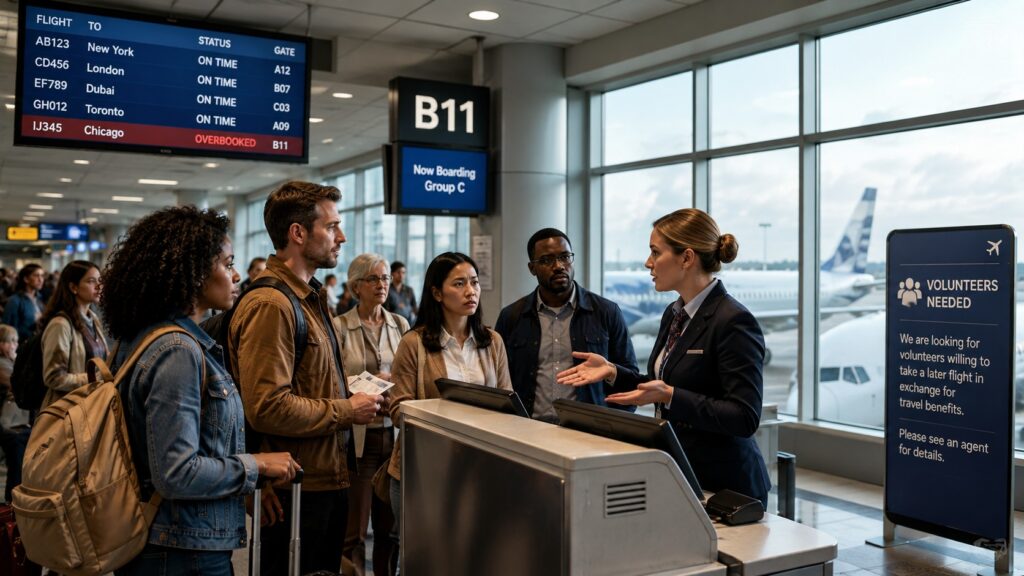
Imagine arriving at the airport early, checking in on time, passing through security and getting to your gate, only to discover that the airline has sold more seats than the aircraft actually has. It sounds like a mistake, but in many cases, it is not. Airlines deliberately overbook some flights because they know that a certain number of passengers will not show up. The practice helps airlines reduce losses from empty seats, but it can create serious inconvenience when more passengers arrive than expected. So, what happens when an airline overbooks your flight? Can you be denied boarding? What are your rights? Understanding how airline overbooking works can help you prepare for the possibility and know what to do if it happens to you.
The Business Logic Behind Overbooking
Airlines overbook flights for one primary reason: not everyone who books a seat actually shows up. Business travelers change plans at the last minute, connecting passengers miss tight layovers, and some people simply forget or decide not to fly. Historically, a small but consistent percentage of ticketed passengers become “no-shows” on every flight, and airlines have built entire revenue models around predicting this pattern.
To understand why this matters financially, consider that an empty seat on a departing flight is a permanent loss. Once the aircraft door closes, that seat can never be sold again. Airlines operate on notoriously thin profit margins, often just a few dollars per passenger after accounting for fuel, staffing, maintenance, and airport fees. Every empty seat represents pure lost revenue that cannot be recovered. By selling slightly more tickets than there are physical seats, airlines aim to ensure that even after accounting for no-shows, the aircraft departs as close to full capacity as possible.
This is not guesswork. Airlines employ sophisticated data science and revenue management teams who study historical booking patterns for specific routes, times of day, seasons, and even day-of-the-week trends. A Friday evening flight between two major business hubs, for example, might have a very different no-show pattern than a holiday weekend leisure route. These teams calculate an optimal overbooking level designed to maximize revenue while minimizing the risk of having more passengers than seats.
When the Math Doesn’t Work Out
Despite this careful planning, overbooking calculations occasionally miss the mark. When more passengers show up than expected, and the flight becomes oversold, airlines must find a way to reduce the number of boarding passengers. This is where the passenger experience becomes directly affected.
Airlines typically follow a structured process in these situations. First, gate agents will ask for volunteers willing to give up their seats in exchange for compensation, which often includes travel vouchers, cash payments, meal allowances, and sometimes hotel accommodation if an overnight delay is involved. For many flexible travelers, this can actually be a welcome opportunity, occasionally resulting in significant value for a minor schedule adjustment.
If not enough volunteers come forward, airlines may be forced to deny boarding to passengers involuntarily. This is generally done according to specific criteria, which can include check-in time, fare class, frequent flyer status, and how early the ticket was booked. Passengers who checked in late or purchased lower-cost tickets are often more likely to be selected, though this varies by airline policy and jurisdiction.
Your Rights as a Passenger
The good news is that passengers are not left without protection. In many regions, including the United States and the European Union, strict regulations govern how airlines must handle oversold flights. In the United States, the Department of Transportation requires airlines to compensate involuntarily bumped passengers based on the length of the delay caused, with compensation potentially reaching several times the cost of the original ticket, and in some cases substantially more for longer delays.
In the European Union, similar consumer protection rules require airlines to offer compensation, rerouting options, meals, and accommodation depending on the circumstances and flight distance. Many other countries have adopted comparable frameworks, recognizing that passengers deserve protection when airlines’ business decisions directly disrupt their travel plans.
It is also worth noting that certain passengers are typically protected from involuntary bumping altogether, including those with disabilities requiring special assistance and unaccompanied minors, reflecting the added vulnerability these travelers may face if displaced.
How to Protect Yourself
While you cannot control an airline’s overbooking strategy, there are practical steps that reduce your risk of being affected. Checking in as early as possible, ideally online within the first hour of check-in opening, often improves your standing in the boarding priority order. Choosing higher fare classes or joining an airline’s loyalty program can also offer some protection, since airlines are generally reluctant to bump their most valuable and loyal customers.
If you are someone with a flexible schedule and no urgent commitments, volunteering to be bumped can actually work in your favor. Before agreeing, it is wise to ask clear questions about the exact compensation being offered, the timing of your rebooked flight, and whether meals or accommodation will be provided if necessary. Always request everything in writing before surrendering your original boarding pass.
Conclusion
Overbooking is not a sign of airline incompetence or disregard for passengers; rather, it is a calculated, data-driven practice built to keep flights full and fares more affordable for everyone. Understanding why it happens can transform a stressful, confusing moment into one where you feel informed and prepared. Knowing your rights, arriving early, and staying alert to your airline’s policies can make all the difference between an unpleasant surprise and a smooth, even rewarding, travel experience.
Fill this FORM to book your flight today.
FORM

Other Articles

How to Prove “Strong Ties to Home” Without Overdoing It
Why Hotel Location Matters More Than Hotel Rating

No Comment! Be the first one.