


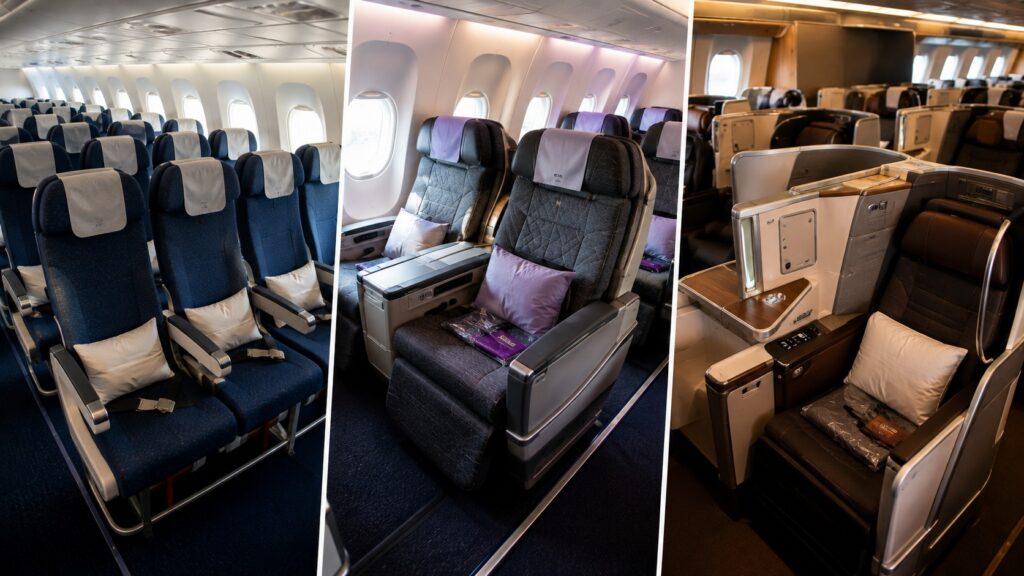
When booking a flight, one of the first decisions you will make is choosing a travel class. For many travellers, the choice comes down to Economy, Premium Economy, or Business Class. At first glance, the price difference between these cabins can seem significant, leaving many people wondering whether paying more is truly worth it. While all three classes will get you to the same destination, the experience can vary greatly in terms of comfort, services, baggage allowance, dining, and overall convenience. Understanding what each class offers will help you make smarter travel decisions and ensure you get the best value for your money.
Economy Class: The Baseline Experience
Economy class is the standard cabin most travelers are familiar with, and it remains the most affordable way to fly. Seats typically range between 17 and 18 inches in width, with legroom, known as seat pitch, generally falling between 30 and 32 inches depending on the airline and aircraft type. Meals, when included, are simple and standardized, and entertainment access, power outlets, and blanket or pillow provisions vary widely between carriers and flight lengths.
Economy is best suited for shorter flights, budget-conscious travelers, and those who prioritize getting to their destination over the journey itself. On long-haul flights, however, the limited recline and tighter space can make rest genuinely difficult, particularly for taller passengers or those prone to discomfort during extended sitting.
Premium Economy: The Middle Ground Worth Understanding
Premium economy sits between economy and business class, both in price and in comfort, but the value it offers is often misunderstood. Seats are generally wider, typically around 18 to 19 inches, with noticeably more pitch, often between 35 and 38 inches, allowing for a meaningful increase in legroom and recline compared to standard economy.
Beyond the physical seat, premium economy usually includes enhanced meal service, priority boarding, increased baggage allowance, and sometimes access to expedited check-in. Some airlines also provide amenity kits and improved entertainment screens in this cabin. The key advantage of premium economy is that it delivers a genuinely more comfortable long-haul experience without the steep price increase associated with business class, making it particularly attractive for travelers on flights exceeding six to eight hours who want better rest without the full business-class cost.
It is worth noting that premium economy varies more between airlines than any other cabin class. Some carriers offer an experience close to a scaled-down business class, while others provide only marginally improved economy seating with a different name. Researching the specific airline’s premium economy product, rather than assuming consistency across carriers, is essential before booking.
Business Class: The Full Premium Experience
Business class represents a substantial shift in both comfort and service, designed primarily for long-haul comfort, privacy, and rest. Seats are considerably wider and, on many modern aircraft, convert into fully flat beds, an important distinction from angled-flat or reclining seats found on older aircraft or shorter routes. Seat pitch in business class often exceeds 60 inches on long-haul configurations, providing space that feels dramatically different from any economy or premium economy product.
Service in business class extends well beyond the seat itself. Passengers typically receive priority check-in, access to airport lounges, expedited security and boarding, multi-course meal service often designed by recognized chefs, premium beverage options, and significantly increased baggage allowances. On many international carriers, business class also includes amenity kits with skincare products, noise-cancelling headphones, and dedicated cabin crew ratios that allow for more personalized service throughout the flight.
For travelers on long-haul international routes, particularly overnight flights, business class can meaningfully affect how rested and productive you feel upon arrival, which is a significant consideration for business travelers with commitments shortly after landing.
Comparing the Real Value: What You’re Actually Paying For
The price difference between these three cabins is not simply about comfort; it reflects a combination of space, service, flexibility, and time saved throughout the travel process. Business class fares are often two to four times higher than economy, yet include benefits such as lounge access, priority services, and more flexible ticket change policies that carry real monetary value beyond the seat itself.
Premium economy, by contrast, typically costs 40 to 90 percent more than economy, depending on the route and airline, while delivering a substantial comfort improvement without matching the full cost of business class. For many travelers, this makes premium economy the most reasonable upgrade in terms of comfort gained per additional dollar spent.
Which Class Makes Sense for Your Trip
Choosing the right cabin depends heavily on flight duration, trip purpose, and personal priorities. For short flights under three hours, the comfort difference between cabins is often minimal enough that economy remains the most practical choice for most travelers. For medium to long-haul flights where rest matters but budget is still a consideration, premium economy frequently offers the best balance of comfort and cost. For long-haul international travel, particularly overnight flights or trips requiring immediate productivity upon arrival, business class can be a worthwhile investment despite its higher cost, especially when booked during sales, using loyalty points, or through corporate travel arrangements.
Questions to Ask Before Upgrading
Before deciding whether to upgrade, consider the following: How long is the flight, and will you need genuine rest during it? Does the specific airline’s premium economy or business class product match what you expect, given how much these offerings vary between carriers? Is the price difference justified by the added services, or are you paying primarily for the seat? Would points, miles, or a fare sale make an upgrade significantly more affordable than the standard price difference suggests?
Conclusion
Understanding the real differences between economy, premium economy, and business class allows you to make a booking decision based on genuine value rather than marketing language or assumptions carried over from other airlines. Each cabin serves a different type of traveler and trip, and the right choice ultimately depends on your flight length, budget, and how much comfort and time savings matter to your specific journey. Taking a few extra minutes to compare what each cabin actually includes, rather than choosing by price alone, ensures your money goes toward the experience that genuinely fits your trip.
Fill this FORM to book your flight today.
FORM

Other Articles

Why Some Routes Are Always More Expensive Than Others
Scholarships Nigerian Students Often Overlook


No Comment! Be the first one.