


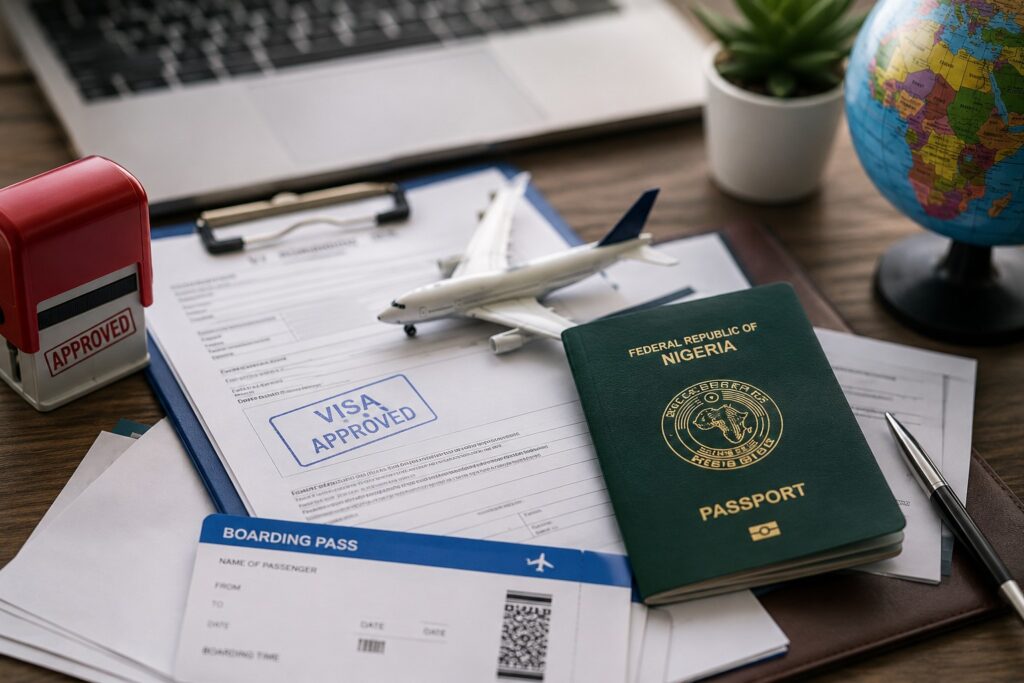
You are sitting in a visa application centre in Lagos or Abuja. The queue is long, the air conditioning is barely working, and you have spent the last three weeks gathering every document you could think of. Then the officer looks through your envelope, pauses, and asks for something you do not have, or worse, says nothing at all and marks your file for rejection. It happens every single day across foreign embassies and consulates in Nigeria. Not to careless people. Not to dishonest ones. It happens to hardworking, well-intentioned Nigerians who simply did not know exactly what was required, or how it needed to be presented. This guide closes that gap entirely.
The Reality of Applying From Nigeria
Applying for a foreign visa while living in Nigeria comes with a specific set of challenges that applicants in other countries do not face to the same degree. The British High Commission in Lagos, the US Consulate General in Lagos and Abuja, French and German embassies handling Schengen applications, and the Canadian High Commission in Abuja are among the busiest and most selective foreign missions anywhere in the world.
Officers at these missions process hundreds of Nigerian applications daily. They are acutely familiar with patterns of weak documentation, inconsistent records, and inflated financial statements. At the same time, they approve thousands of Nigerian applications every month, applications that are thorough, honest, and professionally assembled.
The difference between an approval and a rejection almost always comes down to documentation. Here is exactly what you need.
The Universal Documents, Required for Every Application
Regardless of which country you are applying to or why, the following documents form the backbone of every visa application submitted from Nigerian soil.
1. Your International Passport
Your Nigerian international passport must be valid for at least six months beyond your intended return date and must have a minimum of two blank pages available for visa stamps. Applications submitted with passports close to expiry are routinely refused before the officer even reviews the rest of the file.
If you hold an older passport with previous visas or travel stamps to Europe, North America, or anywhere else, include it alongside your current one. A history of international travel, particularly to high-income countries is one of the most quietly powerful elements of a Nigerian visa application. It tells the embassy that you have been trusted before and that you returned as promised.
Apply for or renew your Nigerian passport through the Nigeria Immigration Service portal at immigration.gov.ng well before beginning any visa application. Processing times vary, and submitting a visa application with a passport renewal in progress is almost always a dead end.
2. Completed Visa Application Form
Every embassy requires its own application form, and each one must be completed with absolute accuracy. For UK visa applications, this is done online through the UK Visas and Immigration portal. For US visas, it is the DS-160 form completed on the CEAC portal. For Schengen visas, forms are obtained directly from the relevant embassy: the French Consulate, German Embassy, Italian Embassy, and so on.
The single most damaging mistake Nigerian applicants make on application forms is inconsistency. Your job title on the form must match your employment letter. Your travel dates must match your flight itinerary. Your address must match your utility bill. Officers cross-reference every field against your supporting documents, and a single mismatch raises a credibility flag that can colour the entire application.
Complete your form after every supporting document is ready, not before.
3. Recent Passport Photographs
Most embassies specify photograph dimensions, background colour, and recency. The standard requirement is a white background, full-face view, taken within the last three to six months, printed in colour on photographic paper. Mobile phone selfies printed at a business centre rarely meet the quality threshold and are frequently rejected at submission.
Use a professional passport photograph studio. Confirm the specific dimension requirements of the embassy you are applying to, as they vary between the UK, US, and Schengen countries.
Financial Documents — Where Most Nigerian Applications Are Won or Lost
No category of documents is examined more carefully in Nigerian visa applications than financial evidence. Embassy officers need to be satisfied that you can fund your trip independently and that you are not likely to seek employment or remain illegally in their country.
4. Personal Bank Statements
You will typically need bank statements covering the last three to six months, obtained directly from your bank and bearing an official stamp and signature. The statement should demonstrate:
- Regular, consistent income credits that can be identified as salary payments, business proceeds, or other legitimate sources
- A closing balance that comfortably covers your total trip cost including flights, accommodation, feeding, and spending money, with a reasonable surplus
- Ongoing financial activity in Nigeria, such as bill payments, transfers, and withdrawals, that reflects a genuine, active life you are returning to
What embassy officers in Lagos and Abuja have seen so frequently that it has become a red flag pattern is the last-minute balance inflation, a dormant or low-balance account that receives one or two large transfers in the weeks immediately before the statement is printed. This practice is widely understood among consular staff and routinely results in rejection or requests for additional financial evidence. If your balance was boosted by a family member or employer ahead of your application, declare this honestly with a formal sponsorship letter rather than presenting it as your own organic savings.
5. Salary Payslips
Three to six months of recent payslips, showing consistent gross and net salary figures that match the amounts credited in your bank statement, significantly reinforce your financial credibility. If the figure on your payslip does not match what lands in your account each month, be prepared to explain the difference.
Employment and Professional Documents
6. Employment Letter
For salaried employees in Nigeria, the employment letter is one of the most important documents in the application package. A strong employment letter is printed on the company’s official letterhead and signed by a senior officer typically the Human Resources Manager or a Director. It must clearly state:
- Your full legal name and job title
- The date your employment commenced and whether your position is permanent or contractual
- Your gross monthly or annual salary
- The specific dates of your approved annual leave
- A direct telephone number and email address for the embassy to use if verification is required
A letter that omits salary information or leave approval dates is frequently treated as insufficient. Before submitting, confirm that every detail in the letter matches what appears on your bank statement, payslips, and application form.
7. Business Documents for Entrepreneurs and the Self-Employed
Self-employed Nigerians and business owners must demonstrate two things simultaneously: that the business is legitimate, and that it is active enough to require their return. This is a higher evidential burden than salaried employment, but it is absolutely achievable with the right documents.
The essential documents for any Nigerian business owner applying for a foreign visa include:
- CAC Certificate of Incorporation — issued by the Corporate Affairs Commission and the foundational proof that your business legally exists in Nigeria
- Tax Clearance Certificate — issued by the Federal Inland Revenue Service (FIRS) or the relevant State Internal Revenue Service, covering the last one to three assessment years. This single document carries enormous weight with embassies because it confirms that you are a registered, tax-compliant economic participant in Nigeria
- Business bank statements for the last three to six months, showing turnover and transaction activity rather than simply a static balance
- Contracts, purchase orders, or letters of engagement from clients or partners that demonstrate ongoing business commitments in Nigeria
Many Nigerian entrepreneurs travel with bank statements showing impressive balances but no accompanying business documentation. Embassies see this routinely and often treat it as insufficient. The Tax Clearance Certificate and CAC documents transform a financial statement into a verified business profile.
Travel-Specific Documents
8. Flight Itinerary
You do not need to purchase a fully paid return ticket before your visa is approved and it is inadvisable to do so. What you need is a confirmed flight reservation showing your intended departure from Nigeria, your arrival at your destination, and your return date. Many travel agencies in Lagos and Abuja provide verifiable flight reservations for visa application purposes without requiring full payment upfront.
The itinerary must be consistent with your stated travel dates and the duration of stay you have declared on your application form.
9. Accommodation Evidence
Every embassy requires proof of where you will be staying. If you are booking a hotel, a confirmed reservation with your name, check-in and check-out dates, and the hotel’s full address is required. If you are staying with a friend or relative abroad, you will need a formal written invitation from your host, accompanied by:
- A copy of the host’s passport or national identity document
- Proof of the host’s legal residence or citizenship in the destination country – a residence permit, utility bill, or tenancy agreement in their name
Vague accommodation arrangements are among the most common reasons for delays and additional document requests in applications submitted from Nigeria.
Documents That Prove You Will Return to Nigeria
This is the question that sits at the heart of every decision made about a Nigerian visa application: will this person come back? Everything in your application must collectively and convincingly answer yes.
10. Proof of Family and Social Ties
- Marriage certificate and, where applicable, your spouse’s employment documents — a spouse in full-time employment in Nigeria is a powerful indicator of return intent
- Children’s birth certificates, particularly if your children are in school in Nigeria. School enrolment letters and recent school fee receipts reinforce this further
- NIN (National Identification Number) slip — your registration in Nigeria’s national identity database confirms your documented presence and obligations in the country
11. Property and Asset Documentation
- A Certificate of Occupancy, land title, or deed of assignment for property owned in Nigeria
- A tenancy agreement in your name if you are renting: this confirms an active residential commitment in Nigeria that requires your return
- Vehicle registration documents if applicable
The Cover Letter — Your Most Underused Advantage
An alarming number of Nigerian visa applicants submit no cover letter at all, or include a generic one-paragraph note that adds nothing to the file. This is one of the most consequential missed opportunities in any visa application.
A well-written cover letter does not summarise your documents. It contextualises them. It tells the officer, in clear and professional prose, exactly who you are, why you are making this specific trip, how it is funded, and most importantly what in your life in Nigeria makes your return inevitable. It is also the appropriate place to address anything in your application that requires explanation: a previous visa refusal, a gap in employment history, or an unusually large recent deposit.
Structure your cover letter as follows:
- Who you are — your name, profession, and employer or business
- Purpose of travel — specific, concrete, and consistent with your itinerary
- Funding — how the trip is paid for and by whom
- Ties to Nigeria — family, employment, property, and any other obligations awaiting your return
- Clarifications — anything in the file that needs context or explanation
Keep it to one page. Write in clear, formal English. Never exaggerate or embellish — officers read thousands of these letters and inconsistencies are immediately obvious.
Mistakes That Specifically Damage Nigerian Applications
Ignoring a previous visa refusal on the application form. Almost every visa form asks whether you have previously been refused. Answering dishonestly is grounds for an immediate ban from most countries. Disclose all refusals and address them in your cover letter.
Submitting documents in the wrong order or without proper organisation. A disorganised application signals carelessness. Arrange documents in the order specified by the embassy, use dividers or tabs where helpful, and ensure every page is legible.
Relying entirely on a travel agent without reviewing the documents yourself. Travel agents in Lagos and Abuja assist thousands of applicants but you are the one who signs the form and bears responsibility for every document submitted. Review everything personally before submission.
Submitting documents that are inconsistent with each other. Your salary on your employment letter, your bank credits, and your payslips must all tell the same numerical story. If they do not, you will be asked to explain the difference or your application will simply be refused.
Final Thoughts
A visa application submitted from Nigeria is, at its core, a document-based argument. You are arguing that you are who you say you are, that your reasons for travelling are genuine, that you can fund the trip without difficulty, and that your life in Nigeria is substantial enough to guarantee your return. The embassies in Lagos and Abuja have seen every variation of this argument — strong and weak, honest and fabricated.
The applicants who consistently succeed are not always the wealthiest or the most well-connected. They are the ones whose documents are complete, consistent, and professionally assembled. Build that application, and let it speak for you.
Fill this FORM to get visa support today.

Other Articles

IELTS, TOEFL or MOI — What Do You Really Need?
What to Do If Your Sponsor Stops Funding

No Comment! Be the first one.