



If you’ve ever stared at a flight itinerary showing two or three stops and felt a wave of confusion, just know you’re not alone. Questions like “Will I collect my luggage?”, “Do I need a transit visa?”, and “What if I miss my next flight?” are among the most common concerns first-time travellers have.
The good news? Millions of people navigate transit flights every day without incident. Once you understand how the process works, it becomes one of the most straightforward parts of international travel.
This guide walks you through everything, step by step.
What Is a Transit Flight?
A transit flight is any journey that includes a stop at one or more airports before you reach your final destination. Instead of flying directly from your home city to where you’re going, you change planes at an in-between airport called a transit or connecting airport.
For example, if you’re travelling from Lagos to Toronto, your airline might route you through Doha, London, Amsterdam, or Istanbul. That stop in the middle? That’s your transit.
Transit routes exist because they allow airlines to connect passengers across regions more efficiently. They’re often cheaper than direct flights and open up far more scheduling options, especially on long-haul routes from West Africa to North America, Europe, or Australia.
A quick terminology note:
- Transit — the stop itself
- Layover — the time you spend waiting at the transit airport
- Connecting flight — the next plane you board after the stop
You’ll see all three terms on your itinerary. Now they won’t confuse you.
How a Transit Flight Works: Step by Step
Step 1: Check In at Your Departure Airport
Head to your airline’s check-in counter or use self-service check-in if it’s available. If your flights are all on a single booking, the agent will usually print boarding passes for every leg of your journey right there at the counter.
Before you walk away, confirm:
- Boarding passes for all flights
- Where your luggage is tagged to go
- Your transit airport and gate information
- Boarding times for each flight
Step 2: Drop Your Checked Luggage
Here’s something that surprises many first-timers: in most cases, your bag is automatically transferred to your final destination. You won’t see it again until you land in Toronto, Sydney, or wherever you’re headed.
There are exceptions, though. Some countries require passengers to collect and re-check their luggage during transit. Always ask the check-in agent directly: “Will my bag go straight through to final destination?” Don’t assume, ask every time.
Step 3: Board Your First Flight
After clearing security and immigration at your departure airport, make your way to the gate and board. During the flight, pay attention to cabin crew announcements, they sometimes share connecting gate details or important information about the transit airport.
Step 4: Arrive at the Transit Airport
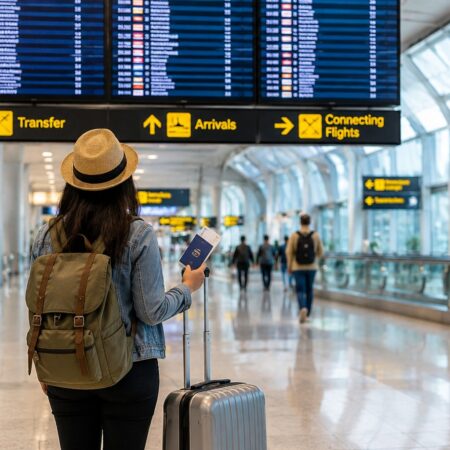
When you land, look for signs that say:
- Transfers
- Transit
- Connecting Flights
Follow these signs and do not head toward Baggage Claim unless you’ve been specifically told to do so. Major international airports are designed to move connecting passengers efficiently. Trust the signage, it will take you where you need to go.
Step 5: Clear Security Screening
Many transit airports require passengers to go through another security check before entering the departure area for their next flight. This is completely normal. Have your passport, boarding pass, and any visa documents ready and easily accessible.
Step 6: Locate Your Next Gate Early
After clearing security, find the airport’s flight information screens and locate your connecting flight. Gates can and do change without warning, so check the screens as soon as you’re through, don’t assume the gate on your boarding pass is still correct.
Find your gate before you stop for food or browse the shops. In large airports like Heathrow, Schiphol, or Doha, gates can be a 20-minute walk or even a terminal transfer away.
Step 7: Board and Continue to Your Destination
When boarding opens, head to your gate and board your connecting flight. On arrival at your final destination, complete immigration, collect your luggage, and you’re done.
Do You Need a Transit Visa?
This is the question that catches the most first-time travellers off guard, often after it’s too late to fix.
Whether you need a transit visa depends on:
- Your nationality and the passport you hold
- Which country you’re transiting through
- The specific airport involved
- How long your layover is
- Whether you’ll leave the international transit zone
Some countries allow certain nationalities to remain airside, inside the international terminal, without any visa at all. Others require specific nationalities to obtain a transit visa even if they never leave the building.
Important: Never assume that staying inside the airport means no visa is required. This assumption has caused travellers to be denied boarding entirely. Visa regulations also change frequently, so always verify requirements on your government’s official travel advisory website or directly with your airline before booking.
How Long Should Your Layover Be?
The right layover length depends on the airport and your circumstances. For first-time travellers, a little extra time buys a lot of peace of mind.
Domestic connections: 1 to 2 hours is generally enough.
International connections: 2 to 4 hours is the comfortable range.
Major hub airports (Heathrow, Schiphol, Istanbul, Doha): Allow 3 hours or more. These airports are enormous, and getting from one gate to another can take longer than you’d expect.
If you’re booking your first transit flight, resist the temptation to choose the cheapest itinerary with a 45-minute connection. A missed connection is far more expensive — in money, time, and stress — than a slightly longer wait at the airport.
What Happens If You Miss Your Connecting Flight?
Flight delays happen. Bad weather, congestion, technical issues — these are outside your control. What matters is how your ticket is structured.
If all your flights are on one booking: The airline is responsible for getting you to your destination. They’ll rebook you on the next available flight, usually at no extra cost. Head straight to the airline’s transfer desk when you land.
If your flights were booked separately: You may be on your own. You could be required to purchase a new ticket at full price. This is exactly why travel professionals consistently recommend booking all connecting flights on a single itinerary whenever possible.
Six Tips That Make Transit Travel Easier
1. Keep your documents within reach: Your passport, boarding passes, and any visa documents should live in one easily accessible spot throughout your journey, not buried at the bottom of a bag.
2. Keep your phone charged: Your boarding pass, airport maps, and airline app all live on your phone. Carry a power bank and treat it as essential travel equipment.
3. Watch the flight information screens: Gate numbers change. Check the screens when you land, again after security, and once more before you settle somewhere to wait.
4. Research your transit airport before you travel: A few minutes with an airport map before your trip removes a surprising amount of anxiety on the day. Know which terminal your connecting flight departs from.
5. Stay in the transit zone: Unless you have confirmed entry permission and sufficient time, don’t leave the international transit area. Re-entering can take time you simply don’t have.
6. Follow the signs, they’re there for a reason: Large international airports are built to move connecting passengers. Signs marked “Transfers” or “Connecting Flights” will guide you. Follow them before asking anyone for directions.
Common Mistakes to Avoid
- Not checking transit visa requirements before booking
- Choosing an extremely short layover to save a little money
- Assuming luggage is always checked through without confirming
- Ignoring gate change announcements and flight screens
- Booking connecting flights on separate tickets without understanding the risk
- Leaving the transit zone without knowing the entry requirements
- Assuming every airport operates the same way
You’re More Ready Than You Think
Transit flights are simply a series of connected journeys. Understand the process, confirm your visa requirements, choose a sensible layover, and keep your documents within reach. That’s really all it takes.
The first time always feels like the hardest. By the second or third transit, you’ll be navigating airports with the quiet confidence of someone who’s done it a hundred times before.
Safe travels.
Found this helpful? Share it with someone planning their first international trip.
Fill this FORM to book your flight today.
FORM



No Comment! Be the first one.