


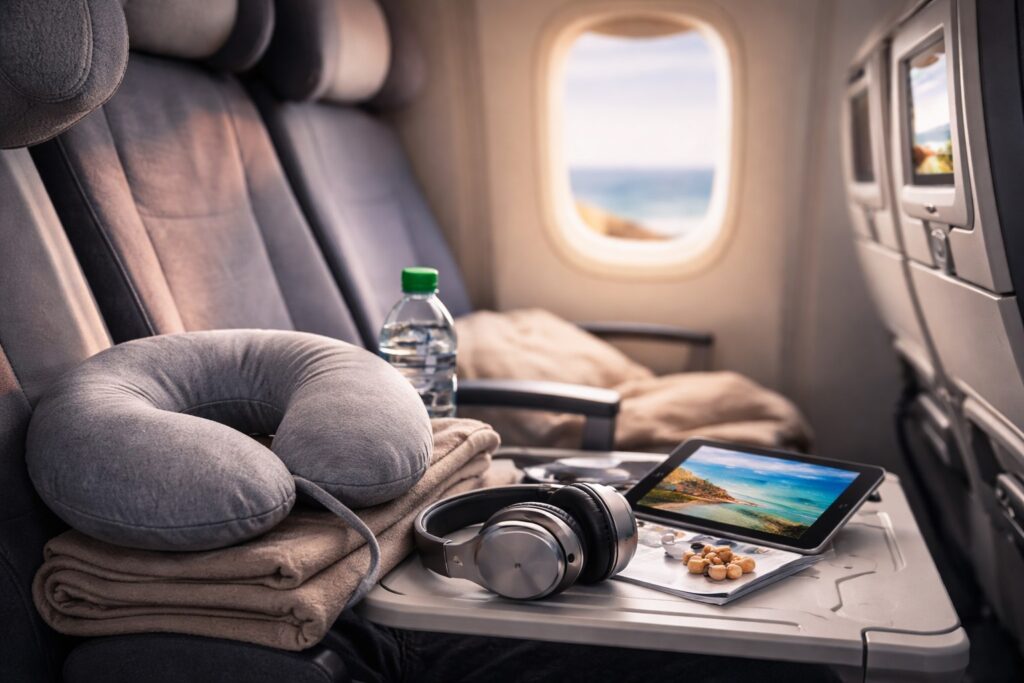
Long flights can feel like a small test of endurance, especially when you are seated in economy and the hours seem to stretch endlessly. But here is the truth most people overlook. Comfort on long flights is not only about the ticket you buy, it is about the choices you make before and during the journey. With the right preparation, even economy class can feel manageable and surprisingly comfortable. From seat selection to sleep tricks and smart packing, small decisions can change your entire travel experience. If you have ever arrived exhausted, this guide will change how you fly forever.
Choose Your Seat Like It Matters, Because It Does
Seat selection is one of the biggest factors that decides how comfortable your flight will be. If you are flying long haul, avoid random seat assignment if you can help it. A window seat is usually best for sleep because you have something to lean on and fewer interruptions. An aisle seat works better if you prefer to stretch or use the bathroom often without disturbing others.
Avoid seats near the toilets if possible. The constant movement, noise, and smell are not your friends on a long journey. Exit row seats can be a win if you get extra legroom, but remember some do not recline. That trade off is worth thinking through.
If you are traveling with someone, consider the middle section of the aircraft where movement is often smoother. The goal is simple. Reduce discomfort before you even step on the plane.
Pack a Small Comfort Kit That Actually Works
Many people overpack gadgets and forget the basics that matter. Your carry on comfort kit should focus on real comfort, not fantasy luxury.
A good neck pillow is essential. Not the stiff ones that look nice but feel like punishment after two hours. Choose one that supports your neck properly. Add a light blanket or large scarf because aircraft cabins can get cold without warning.
Noise cancelling headphones or good earphones are a game changer. They help you block engine noise, crying babies, and general cabin chaos. An eye mask is also useful, especially if you want to sleep while others are still watching movies.
Do not forget lip balm, hand cream, and a small bottle of sanitizer. The air inside planes is dry, and your skin will notice it quickly.
Dress for Comfort, Not for Instagram
Long flights are not a runway show. Comfort should always win over style. Wear loose, breathable clothing that allows your body to relax. Tight jeans or heavy fabrics will make the journey feel longer than it actually is.
Layer your clothing. Cabin temperatures change often, and what feels fine at take off can feel freezing halfway through the flight. A simple hoodie or light jacket can save you from discomfort.
Shoes matter too. Go for slip on shoes because your feet can swell during long flights. You will thank yourself when you are not struggling with tight footwear in a cramped seat.
Learn the Art of Sleeping on a Plane
Sleeping on a plane is not natural for most people, it is a skill. The first step is timing. Try to adjust your sleep before the flight if you are crossing time zones. This helps your body adapt faster.
Once on board, create your sleep environment. Put on your eye mask, settle your neck pillow, and reduce noise as much as possible. Avoid heavy meals before trying to sleep because digestion can keep you awake.
If you struggle with sleep, try breathing techniques. Slow breathing helps your body relax even in an uncomfortable seat. The goal is not perfect sleep, it is rest.
Hydration and Food, The Silent Comfort Hack
Airplane cabins are extremely dry. If you do not drink enough water, you will feel tired, dizzy, and uncomfortable. Drink water regularly during the flight, even if you do not feel thirsty.
Avoid too much alcohol or caffeine. They may seem tempting, but they disrupt sleep and increase dehydration. A simple rule works best. Water is your main travel companion.
When it comes to food, eat light. Heavy meals can make you sluggish and uncomfortable. If airline food is not appealing, bring light snacks like nuts, fruit, or granola bars.
Move Your Body, Even in Small Ways
Long flights are not friendly to the body. Sitting for hours can cause stiffness and poor circulation. You do not need to do exercise routines in the aisle, but small movements matter.
Stretch your legs, rotate your ankles, and shift your position often. Take short walks when the seatbelt sign is off. Even standing for a minute or two helps more than people realize.
This is not just about comfort, it is also about health. Good movement reduces the risk of swelling and improves circulation.
Keep Your Mind Occupied
A bored mind makes time feel slower. Before your flight, download movies, podcasts, or music playlists. Do not depend entirely on the airline entertainment system because it may not always have what you like.
Reading is also a great option, but choose something light. A long flight is not the time for heavy emotional novels unless you enjoy overthinking at 35,000 feet.
Some travelers prefer offline games on their phones or tablets. The idea is simple. Keep your mind busy so you are not constantly checking the clock.
Smart Booking Decisions Make a Big Difference
Comfort starts before you even reach the airport. Try to book flights that match your natural sleep cycle if possible. Overnight flights are often better for long distances because they align with rest hours.
If you have a choice, avoid very tight layovers. Rushing through airports adds stress and reduces your overall comfort experience.
Also, check aircraft type when booking. Some planes have better seat spacing than others. A little research can save you a lot of discomfort later.
Airport Habits That Improve Your Flight Experience
How you behave at the airport can affect your comfort on the plane. Arrive early so you are not stressed before boarding. Stress has a way of following you into your seat.
Stay hydrated at the airport and avoid heavy fast food before boarding. Once you are calm and settled, your flight experience naturally improves.
Boarding early also helps you organize your seat, settle your bag properly, and avoid the rush of passengers trying to squeeze into overhead compartments.
Conclusion
Flying long distances in economy class does not have to feel like a punishment. It simply requires intention. Comfort is built through small smart decisions, not luxury upgrades. The way you choose your seat, what you pack, how you dress, and how you manage your body and mind all come together to shape your experience.
At the end of the day, the goal is not to arrive feeling like you just survived a battle. It is to arrive ready to enjoy your destination. And yes, even economy class passengers deserve that kind of comfort.
Fill this FORM to book your flight today.
FORM

Other Articles


No Comment! Be the first one.