


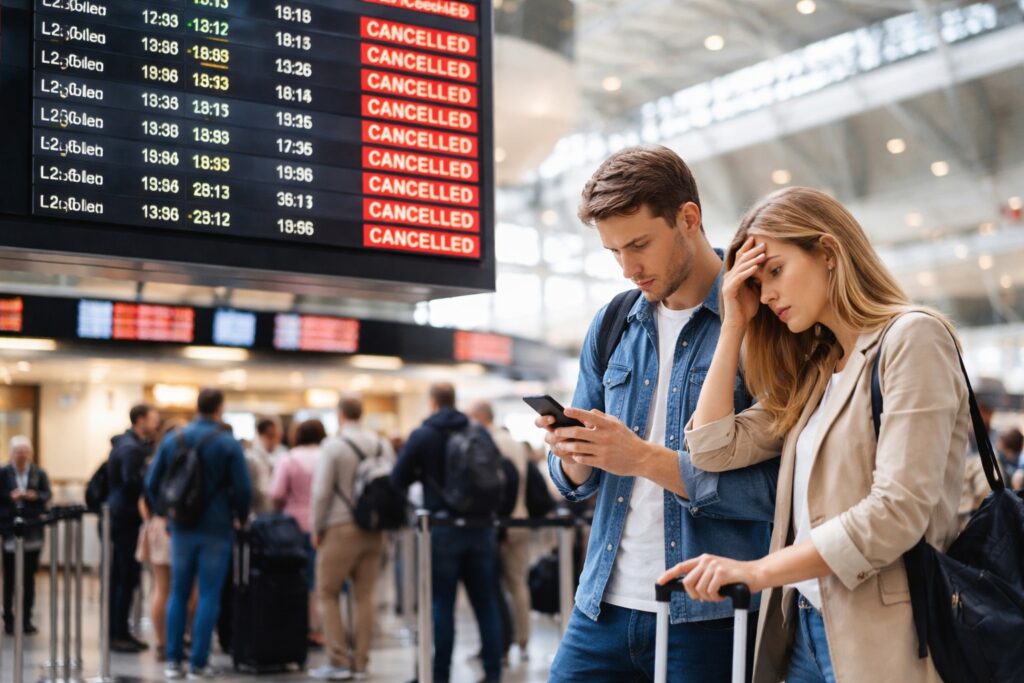
Travel plans are becoming less predictable. Across many regions, airlines are adjusting schedules, cancelling flights, and rescheduling departures at short notice. Some travelers receive updates days before departure. Others find out at the airport. These changes are not limited to one route or one airline. They are affecting international travelers, students, tourists, and business passengers alike.
If you are planning to travel soon, or you already have a ticket, this is the time to stay alert. Understanding what to do when your flight is cancelled or rescheduled can save you money, prevent stress, and help you avoid missing important appointments. This guide explains what is happening, why it is happening, and what travelers should do right now.
Why Flight Cancellations Are Increasing
Flight cancellations and rescheduling usually happen for several reasons. Recently, the most common factors include operational adjustments, security concerns, airspace restrictions, aircraft rotation changes, and lower passenger demand on some routes. When airlines adjust one route, it often affects other connecting flights.
Airlines also reschedule flights to optimize passenger loads. If a flight has low bookings, it may be merged with another flight. This leads to time changes or cancellations. In some cases, airlines change aircraft types, which can reduce seat capacity and force some passengers to be moved to another date.
Weather disruptions, technical issues, and airport congestion also contribute to sudden changes. For travelers, the reason may not matter as much as the impact. A cancelled flight can affect visas, hotel bookings, airport transfers, and connecting flights.
First Thing to Do When Your Flight Is Cancelled
The most important step is to remain calm and confirm the status of your flight. Do not rely only on rumors or screenshots. Check directly through your airline booking reference, email notification, or travel agent.
Once confirmed, take these steps immediately:
Check the new schedule carefully
Some rescheduled flights depart earlier, not later. Many travelers miss their flights because they assume the new time is later. Always confirm the new departure time and date.
Confirm your seat
Rescheduling does not always guarantee automatic seat confirmation. Some airlines place passengers on standby. Contact your airline or agent to confirm your ticket is reissued.
Check your connecting flights
If you have a connecting flight, ensure the new schedule still allows enough transit time. If not, request a new routing immediately.
Update your visa or travel documents if needed
If your visa has strict travel dates, ensure the new schedule still falls within validity.
Understand Your Options
When a flight is cancelled, travelers usually have three main options. These depend on airline policy and ticket rules.
1. Free Rescheduling
Most airlines offer free rescheduling when they cancel a flight. You may be moved to the next available flight. Sometimes you can request a preferred date within a certain period.
Always ask what your options are. Some airlines allow changes within seven days. Others allow up to thirty days. Knowing this helps you choose wisely.
2. Alternative Route
If your original route is unavailable, you may request an alternative routing. For example, instead of one transit point, you may travel through another city. This is useful for travelers with urgent travel needs.
Alternative routes may also reduce long transit hours. However, always confirm baggage allowance and transit visa requirements before accepting.
3. Refund
If the new schedule does not work for you, you may request a refund. Some airlines offer full refunds. Others provide travel vouchers. Always confirm the form of refund before choosing.
Refunds may take time. If your travel is urgent, rescheduling may be the better option.
Travelers With Visa Appointments
Flight cancellations can affect visa interviews and embassy appointments. If your flight was meant for a visa trip, act quickly.
Reschedule your flight immediately
Confirm your new travel date before changing your visa appointment.
Notify the embassy if necessary
Some embassies allow date adjustments due to airline disruptions.
Keep proof of cancellation
Airline emails or notices can help explain changes if required.
Avoid cancelling your visa appointment too early. First confirm your new travel schedule.
Students Traveling Abroad
Students are among the most affected when flights are cancelled. Missing school resumption dates can create problems with enrollment.
Students should:
Inform the school immediately
Most institutions understand airline disruptions and may allow late arrival.
Request updated travel support letter if needed
Some schools issue new letters reflecting revised arrival dates.
Avoid tight travel windows
Try to arrive a few days before resumption to avoid last minute issues.
Keep all airline communication
This helps explain delays during school check in.
Hotel and Airport Transfer Adjustments
Flight changes often affect hotel bookings and airport pickup arrangements. Once your flight changes, update all related bookings.
Contact your hotel
Many hotels allow free date adjustments if informed early.
Update airport pickup
Drivers often charge waiting fees if not updated.
Check cancellation policies
Some bookings may become non refundable after a certain time.
Travelers who booked through agents should notify them immediately. This helps coordinate changes smoothly.
Transit Passengers Should Be Extra Careful
If your journey includes transit, rescheduling can affect your entire trip. Pay attention to these details:
Transit duration
Short transit times may become risky after rescheduling.
Airport change
Some rescheduling involves different airports in the same city.
Overnight transit
You may need a transit visa or hotel booking.
Baggage transfer
Confirm if baggage will still go through to the final destination.
Never assume everything remains the same. Always reconfirm.
How to Reduce Stress During Travel Disruptions
Travel disruptions can be frustrating, but preparation helps. Follow these simple steps:
Book flexible tickets when possible
Flexible tickets allow easier changes.
Avoid very tight connections
Give yourself buffer time between flights.
Travel with digital and printed documents
Internet access may fail when you need it most.
Arrive at the airport early
Rescheduled flights may involve gate changes.
Monitor email and SMS notifications
Airlines often send updates late at night.
Use one booking reference
Avoid splitting tickets when possible.
These small steps can prevent major problems.
What Travel Agents Are Advising Right Now
Travel professionals are advising travelers to stay proactive. Do not wait until the last minute. If your travel date is close, reconfirm your flight at least 72 hours before departure. Then check again 24 hours before.
Travelers should also avoid booking non refundable services too early. When possible, choose options that allow changes.
It is also wise to keep emergency funds. Sometimes travelers must book temporary accommodation or adjust transport unexpectedly.
Most importantly, maintain communication with your airline or travel consultant. Quick communication often leads to better options.
When Airlines Change Your Airport
In some cases, rescheduled flights depart from a different airport in the same city. This can create confusion, especially for transit passengers.
Always check:
Departure airport code
Terminal number
Transit instructions
Check in time
Missing these details can lead to missed flights.
Travelers With Group Bookings
Group travelers should be extra careful. When flights change, not everyone may be moved to the same new flight. Airlines sometimes split groups across different departures.
Group coordinators should:
Confirm all passengers are on same flight
Check seat assignments
Verify baggage allowances
Confirm meal requests if needed
Early confirmation prevents surprises at the airport.
Conclusion
Flight cancellations and rescheduling are becoming more common, but they do not have to ruin your travel plans. The key is quick action, clear communication, and flexibility. Always confirm your new schedule, understand your options, and adjust related bookings immediately.
Travelers who stay informed and proactive usually experience fewer problems. Whether you are traveling for study, business, tourism, or family visits, take time to monitor your flight closely. A few minutes of checking can save hours of stress.
Right now, the smartest travelers are not just booking flights. They are preparing for changes. And that preparation makes all the difference.
Fill this FORM to book your flight today.
FORM



No Comment! Be the first one.