


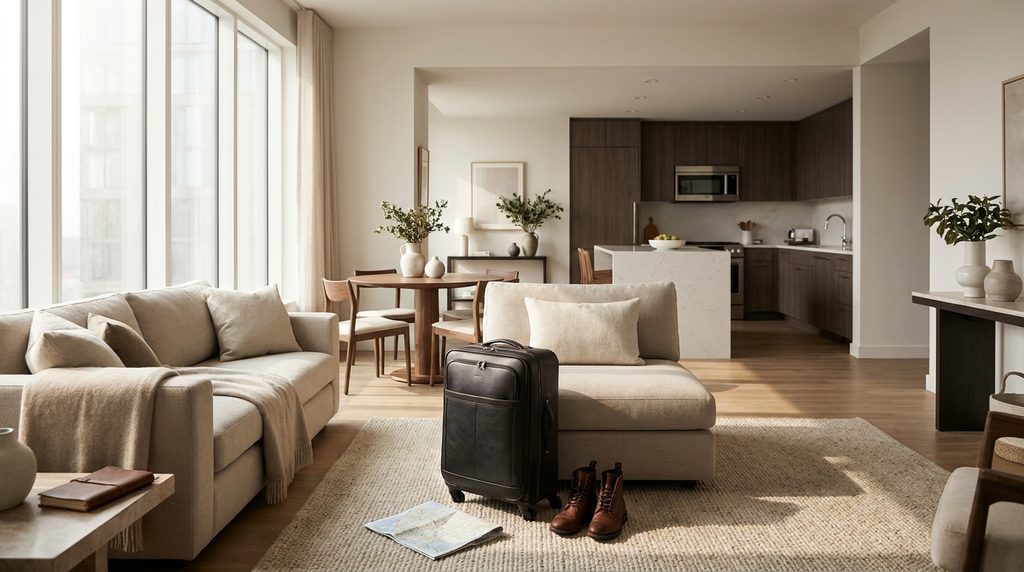
When planning a trip, accommodation is one of the biggest decisions a traveller has to make. For many people, booking a hotel is the obvious choice. Hotels are familiar, easy to understand and designed specifically for short stays. However, serviced apartments have become an increasingly popular alternative, especially for travellers who want more space, flexibility and the comfort of living in a home while away from home. At first glance, a serviced apartment may simply look like another place to sleep. In reality, choosing one instead of a hotel can change your daily travel experience, your budget and even the way you plan your trip.
What Is a Serviced Apartment?
A serviced apartment is a fully furnished residential unit that combines the comfort and independence of a private home with the convenience and support services typically associated with a hotel. Guests get their own bedroom, living area, and kitchen, along with amenities such as housekeeping, Wi-Fi, and sometimes front-desk assistance, depending on the property. Unlike renting a private apartment through informal channels, serviced apartments are professionally managed and often regulated similarly to hotel accommodations, making them a legitimate and increasingly mainstream option for travellers.
Space and Layout
One of the most immediate differences travellers notice is space. A standard hotel room is typically designed for short-term rest, offering a bed, a bathroom, and limited seating. A serviced apartment, on the other hand, usually includes a separate living room, a dedicated workspace, and in many cases, more than one bedroom.
This distinction matters significantly for families, business travellers on extended assignments, or groups sharing accommodation, since it allows for privacy, organisation, and comfortable movement that a single hotel room cannot easily provide.
Kitchen Access and Meal Flexibility
Perhaps the most defining feature of a serviced apartment is the presence of a functional kitchen. Guests can cook their own meals, store groceries, and avoid the recurring cost of dining out for every meal. This is particularly valuable for travellers with dietary restrictions, families with children, or anyone staying longer than a few days who wants more control over their food choices.
Hotels, by contrast, often require guests to rely on room service or nearby restaurants, which can become expensive and repetitive over an extended stay.
Cost Considerations
At first glance, serviced apartments may appear more expensive per night than standard hotel rooms, but the overall value often shifts in their favour for longer stays. Because guests can prepare their own meals and enjoy more space without needing multiple rooms, serviced apartments frequently become more cost-effective for stays exceeding a week.
Hotels, meanwhile, tend to offer better value for very short stays, especially when a guest simply needs a place to sleep between flights or meetings and has no interest in cooking or extended relaxation.
Housekeeping and Daily Services
Hotels are well known for daily housekeeping, fresh towels, and consistent staff presence throughout the property. Serviced apartments typically offer housekeeping as well, but the frequency is often reduced, such as once or twice a week rather than daily, since the emphasis shifts toward independent living rather than constant hotel-style service.
This means guests in serviced apartments may need to manage some daily tasks themselves, such as washing dishes or tidying common areas, similar to living in one’s own home.
Length of Stay Suitability
Serviced apartments are generally structured with longer stays in mind, often accommodating guests for weeks or even months at a time. Many properties offer discounted rates for extended bookings, along with amenities such as laundry facilities that make longer trips significantly more manageable.
Hotels remain the stronger choice for short getaways, one or two night business trips, or situations where flexibility to change dates at the last minute is a priority, since many hotel booking policies are structured around short-term flexibility.
Privacy and Independence
Serviced apartments tend to offer a greater sense of privacy, as guests are not sharing hallways, elevators, or common spaces with hotel staff and other guests on the same scale as a traditional hotel. This appeals to travellers who prefer a more residential, low-profile experience during their stay, including remote workers, relocating professionals, or families seeking a quieter environment.
Hotels, in contrast, often provide more social and service-oriented environments, with staff readily available around the clock and communal spaces such as lounges, restaurants, and concierge desks designed to enhance guest interaction and convenience.
Booking Process and Availability
Serviced apartments are typically booked through specialised platforms, property management companies, or travel agencies familiar with extended-stay accommodation, rather than always appearing on standard hotel booking engines. This means travellers may need to do slightly more research to find verified, reputable serviced apartment providers in their destination city.
Hotels, being more standardised and widely listed, are generally easier to book quickly, with transparent pricing, established cancellation policies, and instant confirmation across most major travel platforms.
Which Option Should You Choose?
The right choice ultimately depends on the nature of your trip. Business travellers on a short assignment, tourists on a quick weekend visit, or anyone who values full-service convenience will likely find hotels more suitable. Meanwhile, families, long-term relocators, remote workers, or travellers who value space, privacy, and cooking flexibility will often benefit more from a serviced apartment.
For travellers uncertain about which option best fits their itinerary, budget, and purpose, working with a knowledgeable travel agency can simplify the decision. A professional booking service can compare both options based on trip duration, location, and personal preferences, ensuring the final choice genuinely matches the traveller’s needs rather than defaulting to habit.
Conclusion
Choosing between a serviced apartment and a hotel is no longer simply a matter of preference; it is a decision that directly affects comfort, cost, and daily routine throughout a trip. By understanding the practical differences in space, service, and suitability for various trip lengths, travellers can make more informed decisions that enhance rather than complicate their travel experience. The best accommodation is not always the most familiar one, but the one that truly fits the journey ahead.
Fill this FORM to book your hotel today.

Other Articles

How to Handle Rent and Housing Deposits as a New International Student
Why Some Countries Require Proof of Accommodation and Others Don’t





No Comment! Be the first one.