


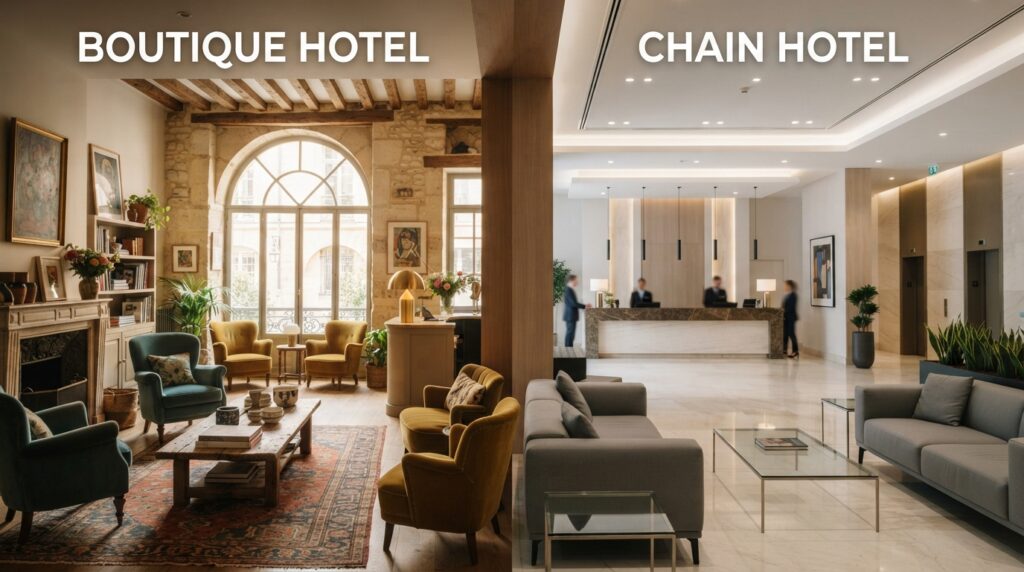
Choosing a hotel can look simple until you start comparing your options. Do you choose the familiar international chain with predictable rooms and services, or should you try a smaller boutique hotel that promises character, personal service and a more local experience? The difference goes far beyond the name on the building. It can affect how you are welcomed, what your room feels like, the amenities available, how much flexibility you receive and even how memorable your trip becomes. Neither option is automatically better. The right choice depends on what you value most during your journey. Understanding the real differences can help you spend your money wisely and choose a hotel that genuinely suits your travel needs.
1. Defining Boutique Hotels
Boutique hotels are typically small, independently owned or operated properties that emphasise unique design, personalised service, and a distinct character reflecting their location or ownership vision. These hotels often feature fewer rooms, sometimes as few as ten to a hundred, allowing staff to offer a more intimate, attentive level of service. Boutique properties frequently showcase local art, architecture, or cultural elements, creating an experience that feels deeply connected to the destination itself rather than replicated across multiple locations worldwide. No two boutique hotels are ever truly alike, even within the same city or region.
2. Defining Chain Hotels
Chain hotels, by contrast, belong to larger hospitality corporations that operate multiple properties under a single recognisable brand, often across numerous countries and continents. These hotels follow standardised design templates, service protocols, and amenity offerings, ensuring that a guest checking into the same brand in two entirely different countries can expect a broadly similar experience in terms of room layout, service standards, and overall quality. This predictability is precisely what draws many travellers to chain hotels, as it removes much of the uncertainty associated with booking accommodation in an unfamiliar destination.
3. The Experience of Personalisation
One of the most significant differences between these two hotel types lies in the level of personalisation offered to guests. Boutique hotels, due to their smaller size and often owner-operated structure, are frequently able to offer highly tailored experiences, remembering guest preferences, offering personalised recommendations for local dining or activities, and creating a warm, individualised atmosphere that can feel more like staying with a knowledgeable friend than a corporate establishment. Chain hotels, while certainly capable of excellent service, generally operate within standardised frameworks designed for consistency and efficiency across a much larger guest volume, which can sometimes result in a more transactional, though still professional, experience.
4. Design, Character, and Atmosphere
Design is often where boutique hotels truly distinguish themselves. Many boutique properties are housed in restored historic buildings, converted mansions, or architecturally distinctive structures, each carefully curated to reflect a specific aesthetic or story. Interior design elements often incorporate local craftsmanship, artwork, and materials, creating a genuinely immersive sense of place. Chain hotels, on the other hand, typically prioritise functional, universally appealing design that ensures consistency across their global portfolio, meaning a guest can generally predict the general look and feel of their room regardless of which country they are visiting.
5. Reliability and Predictability
Predictability is arguably the greatest strength of chain hotels. Frequent travellers, particularly those travelling for business, often value knowing precisely what to expect in terms of room quality, amenities, and service standards, regardless of destination. This reliability extends to loyalty programmes as well, allowing guests to accumulate points and enjoy consistent benefits such as room upgrades, late checkouts, or complimentary breakfasts across any property within the same brand family. Boutique hotels, while often exceptional, do not offer this same level of predictability, since each property operates independently with its own unique standards and offerings.
6. Pricing Considerations
Pricing between boutique and chain hotels varies considerably and does not always follow a predictable pattern. While many boutique hotels position themselves as luxury or premium offerings, commanding higher prices due to their exclusivity and personalised service, others may offer surprisingly competitive rates, particularly in emerging destinations or lesser-known neighbourhoods. Chain hotels typically offer a broader range of price points, from budget-friendly options to luxury flagship properties, giving travellers considerably more flexibility depending on their financial constraints. It is always worth comparing specific properties directly rather than assuming one category is universally more affordable than the other.
7. Location and Neighbourhood Character
Boutique hotels are frequently located in distinctive neighbourhoods, historic districts, or culturally rich areas, offering guests an authentic sense of place from the moment they step outside. Chain hotels, particularly larger flagship properties, are often strategically located near business districts, airports, or major transportation hubs, prioritising convenience and accessibility over cultural immersion. Depending on the purpose of your trip, whether leisure exploration or efficient business travel, this difference in location strategy can significantly influence which option better serves your specific needs.
8. Amenities and Facilities
Chain hotels generally offer a broader, more standardised range of amenities, including extensive fitness centres, business facilities, multiple dining options, and dedicated concierge services, particularly within their larger properties. Boutique hotels, given their smaller scale, may offer fewer facilities overall but often compensate with curated, high-quality offerings, such as an exceptional in-house restaurant, a beautifully designed spa, or thoughtfully selected amenities that align closely with the property’s overall character and target guest experience.
9. Which Option Suits Different Types of Travellers
Ultimately, the right choice depends heavily on individual travel priorities. Business travellers who value consistency, loyalty rewards, and dependable service across multiple destinations often find chain hotels better suited to their needs. Leisure travellers seeking a memorable, immersive experience deeply connected to local culture and character may find boutique hotels considerably more rewarding. Families travelling with children might prioritise the extensive amenities and reliability of larger chain properties, while couples or solo travellers seeking a unique, intimate atmosphere might gravitate naturally toward boutique accommodations instead.
Conclusion
Neither boutique nor chain hotels are inherently superior, as each offers distinct advantages suited to different travel styles, priorities, and expectations. Understanding these genuine differences allows travellers to make more informed decisions, selecting accommodations that align closely with the specific experience they are seeking, whether that is dependable consistency or intimate, character-rich immersion. The next time you find yourself weighing these two options, consider not simply the price or star rating, but the entire experience each choice genuinely promises to deliver.
Fill this FORM to book your hotel today.

Other Articles





No Comment! Be the first one.