


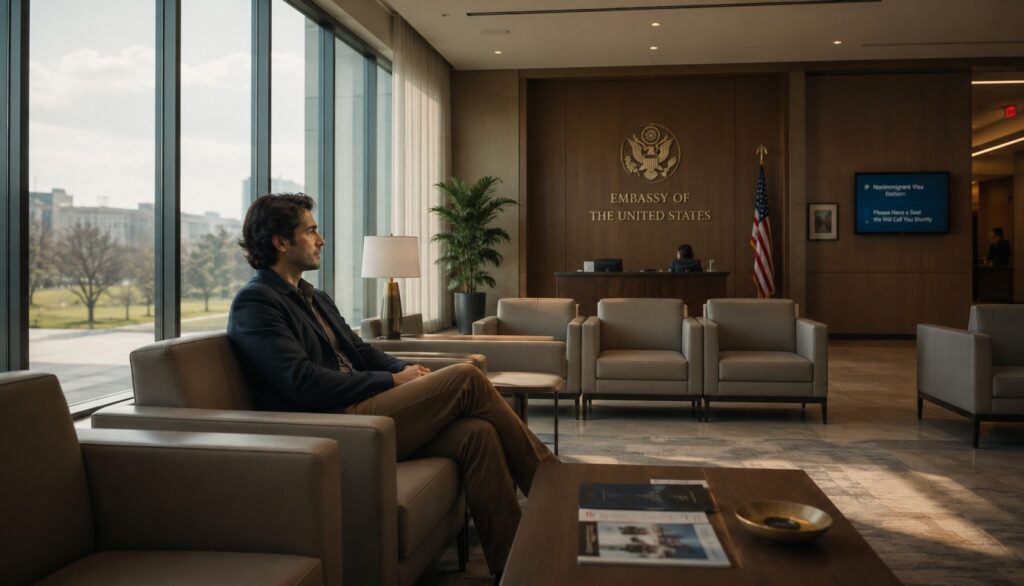
You have gathered every document, filled out every form, paid every fee, and finally pressed that submit button. Now what? For most people, the visa application process feels like dropping a letter into a black hole, you send it off and wait anxiously, with little idea of what is actually happening on the other side. The silence can be deafening. The uncertainty, exhausting. But the truth is, your application is anything but idle. From the moment it leaves your hands, it embarks on a detailed, multi-layered journey through a system designed to protect borders while facilitating legitimate travel.
This guide pulls back the curtain entirely.
Step 1: Initial Receipt and Acknowledgement
The very first thing that happens after you submit your visa application whether online or in person, is that the consulate or immigration authority generates an official acknowledgement. This receipt is not merely a formality. It assigns your application a unique reference or tracking number that will be used throughout the entire process. You should store this number safely, as it is your primary tool for monitoring your application status.
At this stage, officials also conduct a preliminary check to confirm that your submission is complete. Missing signatures, absent photographs, or incorrect fee payments can result in your application being returned before it even enters the formal review queue. This is known as an “administrative rejection” and is entirely separate from a visa refusal. Always double-check requirements before submitting.
Step 2: Document Verification and Screening
Once your application is accepted into the system, a visa officer is assigned to review it. This is where the substantive examination begins. The officer will scrutinise every document you have submitted, your passport, financial statements, employment letters, travel history, accommodation bookings, and any supporting materials, to establish whether you meet the eligibility criteria for the visa category you applied for.
During this phase, documents are cross-referenced with official databases. Your passport details are run against international watchlists, including Interpol databases and bilateral information-sharing systems between countries. Your travel history is evaluated to assess patterns of compliance with previous visa conditions.
Biometric data — fingerprints and facial images — collected at a visa application centre are also processed during this stage for applicants in categories that require it. This data is stored securely and compared against existing records to confirm your identity.
Step 3: Background Checks and Security Clearance
Depending on your nationality, the visa category, and the destination country, your application may be referred for security clearance. This is one of the most time-consuming stages of the process and accounts for a significant portion of processing delays. Intelligence and immigration agencies which may include national security bodies, are consulted to ensure that granting you entry does not pose a risk to the host country.
It is important to understand that being subject to a security check does not mean you are suspected of wrongdoing. Certain nationalities or visa categories are routinely subjected to additional screening as a matter of policy. If your application falls into such a category, patience is your best asset. Attempting to contact the consulate repeatedly during this stage rarely accelerates the outcome.
Step 4: Assessment of Eligibility and Intent
The heart of any visa decision lies in a holistic assessment conducted by the reviewing officer. This involves evaluating two critical factors: your eligibility and your genuine intent. Eligibility refers to whether you technically qualify for the visa based on factors such as age, finances, qualifications, and sponsor details. Intent refers to whether the officer believes you will honour the conditions of the visa, that you will leave when required, will not work illegally, or will not overstay.
Officers are trained to assess these factors based on the totality of your application. Strong ties to your home country — steady employment, property ownership, dependents, ongoing studies are considered positive indicators that you will return home as required. Conversely, a lack of such ties may prompt further scrutiny.
In some cases, the officer may request additional documentation or an interview. This is not necessarily a negative sign. It simply means more information is needed before a fair decision can be made. Respond promptly and thoroughly to any such requests.
Step 5: The Decision — Approval, Refusal, or Further Review
After all checks are complete, the officer makes a recommendation, which is then reviewed by a senior officer in many jurisdictions before a final decision is issued. The three possible outcomes are an approval, a refusal, or a deferral for further administrative processing.
An approval means your visa will be issued, either as a physical stamp or sticker in your passport or as an electronic authorization linked to your travel documents. Read the conditions carefully, note the validity period, the number of permitted entries, and the maximum duration of stay.
A refusal will typically be accompanied by a reason, though in some jurisdictions the stated reason can be general. You are usually entitled to appeal the decision or reapply with stronger supporting evidence. A refusal does not permanently bar you from future applications, but it will be considered in subsequent submissions. Address the reason for refusal directly when reapplying.
How Long Does Each Stage Take?
Processing times vary widely depending on the visa type, destination country, and application volume. As a general guide:
- Tourist and short-stay visas: 5 to 15 working days on average
- Work and study visas: 3 to 12 weeks, depending on complexity
- Permanent residency or long-stay applications: Several months to over a year
- Applications requiring security clearance: Variable, no guaranteed timeline
Always apply well in advance of your intended travel date. Processing time estimates provided by immigration authorities are guides, not guarantees.
Practical Tips to Support a Smooth Process
- Submit complete, accurate, and honest documentation from the outset.
- Respond immediately to any requests for additional information.
- Keep copies of every document submitted, including your payment receipt.
- Monitor your application using the reference number provided.
- Avoid booking non-refundable travel until your visa is confirmed.
- Seek professional immigration advice for complex or high-stakes applications.
Final Thoughts
Understanding what happens to your visa application after submission transforms the waiting period from a source of anxiety into an informed exercise in patience. Your application is not sitting in a drawer. It is moving through a structured, layered system staffed by officials whose job is to make fair, thorough, and defensible decisions.
By submitting a complete, honest, and well-supported application, you give that system the best possible material to work with. The rest, the checks, the assessments, the decision, is in capable hands. Travel confidently, plan wisely, and give yourself the time and preparation every good journey deserves.
Fill this FORM to get visa support today.

Other Articles

Study Abroad Scams Students Should Avoid


No Comment! Be the first one.