



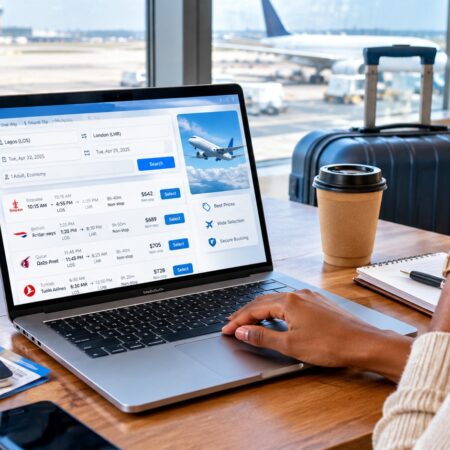
Travelers around the world, including Nigerians, are often surprised to discover that airline ticket prices can vary dramatically depending on the country from which the booking is made. You might search for a flight from Lagos to London and see a price that is far higher than what someone in Brazil, India, or the UAE sees for the same route, same airline, and sometimes even the same departure date. This raises an important question: why do airlines offer cheaper fares when you book from another country?
The answer lies in a combination of airline pricing strategies, market segmentation, competition, demand patterns, currency differences, and digital sales algorithms. Flight pricing is far more complex than most people realize, and airlines adjust fares with precision to match each market’s purchasing power and travel behavior.
This article explores the reasons behind this pricing variation, how it affects Nigerian travelers, and practical strategies you can use to benefit from these international fare differences.
Understanding How Airlines Set Prices
To understand why international pricing differs, you must first understand the basics of airline revenue management. Airlines use sophisticated algorithms designed to predict:
Consumer purchasing power
Peak travel periods
Local travel habits
Competition within each market
Economic conditions
Currency fluctuations
These algorithms are constantly updating, which is why flight prices can change multiple times in a single day. One major part of this system is geo-based pricing, also known as market-specific pricing, where airlines offer different fares based on a traveler’s physical location or the location they appear to be booking from.
Why Airlines Offer Cheaper Fares in Some Countries
1. Market Purchasing Power
Airlines adjust prices to match the economic realities of different countries. In countries with lower income levels, airlines often reduce ticket prices to attract more passengers. This is part of a strategy called price discrimination, which allows airlines to maximize their revenue by charging different prices to different groups of people.
For example, a flight purchased in India or Indonesia may be priced differently from the same flight purchased in Nigeria or the UK. Prices reflect what the local population can realistically pay.
2. Currency Exchange Rates
Fluctuations in exchange rates significantly affect how much a flight costs. Sometimes, when booking websites price fares in a particular country’s currency, it becomes cheaper when converted to another currency like the Nigerian Naira.
If the local currency of another country is weaker at the time of booking, the flight may appear more affordable when a Nigerian traveler converts it to naira.
3. Local Competition
Competition influences pricing more than most people realize. In markets where multiple airlines operate on the same route, prices tend to be lower because airlines compete aggressively for customers.
On the other hand, in countries where only one or two airlines dominate a route, prices often remain high.
4. Airline Partnerships and Local Incentives
Some governments negotiate agreements with airlines that include tax breaks or subsidies. This helps airlines offer lower fares to travelers booking from those regions. Airlines may also reduce ticket costs in some countries to gain market share or encourage more tourism.
This is why flights booked from countries with strong tourism promotion strategies may be cheaper.
5. Different Versions of Airline Websites
Many airlines operate localized websites that offer country-specific prices. A flight on the Nigerian version of an airline’s website can be drastically different from the price displayed on the United States, UK, or Indian version.
Sometimes these websites also apply local discounts, promo codes, or seasonal pricing that may not appear elsewhere.
6. Geolocation-Based Algorithms
Booking websites use IP addresses to detect your location. Based on this, they may automatically adjust:
Fare class availability
Special deals
Displayed seat inventory
Taxes and fees
If you book from a country with lower average travel demand, the system may show you cheaper prices.
7. Local Taxes and Airport Fees
Every country has its own tax structure. Some charge high departure taxes, while others keep taxes low to attract more travelers. Airport fees also differ widely.
A country like the UK has higher air passenger duties than many Asian countries, which increases the total fare for travelers booking from the UK website.
Meanwhile, booking from a country with low travel taxes can result in a significantly lower ticket price.
How Nigerian Travelers Can Benefit from International Pricing
There are smart ways Nigerian travelers can take advantage of geo-based fare differences. Here are effective strategies:
Change Your Website Location
Most airline websites allow you to manually change your country or currency. This can instantly reveal cheaper fares.
Use a VPN
A VPN allows you to simulate booking from another country. Many travelers use this method to compare fares across different locations. While not illegal, it should be done carefully, especially if payment methods must match the country.
Compare Regional Versions of Booking Platforms
Check prices on different versions of platforms like Expedia, Skyscanner, Agoda, and the airline’s official site.
Use International Payment Methods
Some deals require you to pay using USD, GBP, CAD, or the currency of the country you appear to be booking from.
Look for Countries with Lower Taxes
Sometimes booking from countries with low aviation taxes results in surprisingly cheaper fares.
Potential Risks and Things to Consider
While international booking can save money, travelers must be aware of a few considerations:
Some airlines may require the payment card used to match the country of booking.
Refund or change policies may differ.
Local baggage rules may apply.
Customer support may only be available in the country you booked from.
Some airline apps verify your departure country when checking in, though this is rare.
Overall, the savings often outweigh the risks, but travelers should always review terms and conditions.
Airlines offering cheaper fares depending on your booking location is not a mistake—it is a calculated pricing strategy driven by economics, competition, purchasing power, and digital algorithms. Understanding how these systems work can help Nigerian travelers unlock significantly cheaper airfares by comparing prices across multiple countries and platforms.
Whether you are a frequent traveler or planning your next international vacation, applying these insights can lead to massive savings on flight tickets. Always cross-check fares, explore multiple regions, compare exchange rate impacts, and experiment with different booking versions to get the best possible price.
Fill this FORM to book your flight today.






No Comment! Be the first one.