


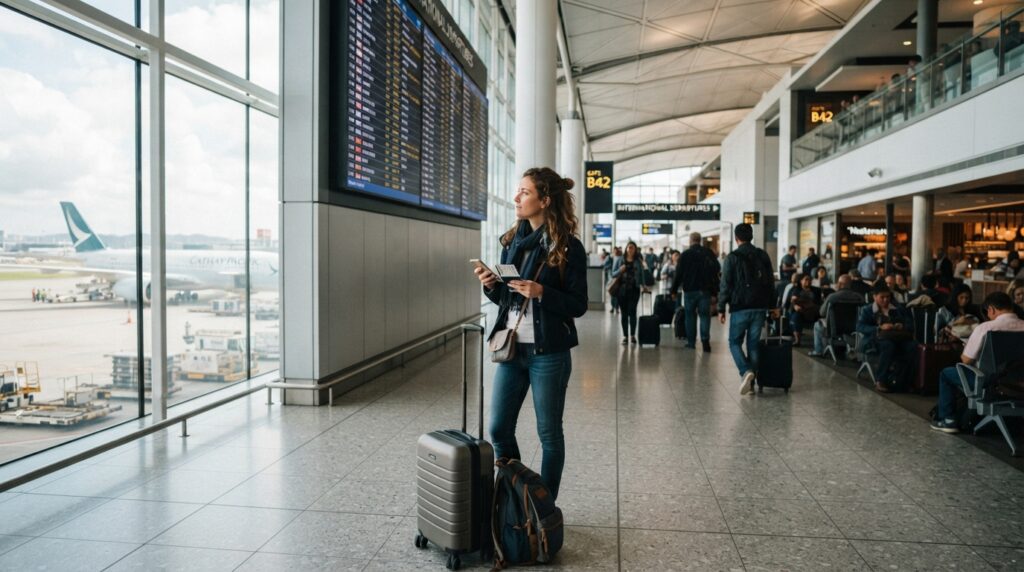
Most travellers treat layovers as an afterthought, a gap to be filled with coffee and boredom before the “real” journey continues. But that gap can quietly decide whether your trip begins with relief or regret. A layover that is too short can trigger a cascade of missed flights, lost luggage, and frayed nerves. A layover that is too long can drain hours you will never get back. Somewhere between panic and paralysis lies the sweet spot and understanding it could be the single most underrated skill in modern travel planning.
The Hidden Cost of Cutting It Close
When booking flights, many travellers instinctively choose the shortest layover available, reasoning that less waiting means a faster overall journey. On paper, this makes sense. In practice, it is one of the most common ways a trip goes wrong.
Airports are unpredictable environments. Flights land late because of weather, air traffic congestion, or mechanical delays. Immigration lines can stretch far longer than anticipated, especially at major international hubs during peak travel seasons. Baggage claim and security re-screening add further unpredictability. A layover of 45 minutes to an hour may look efficient on a booking website, but it leaves almost no room for anything to go wrong and something almost always does.
Missing a connecting flight because of an unrealistically short layover does not just cost time. It often means rebooking fees, unplanned overnight stays, missed hotel check-ins, and in some cases, forfeited prepaid activities or event tickets. For business travellers, it can mean missing the very meeting the trip was built around.
The Overlooked Risk of “Comfortable” Buffers
At the other end of the spectrum is the layover that feels safe but quietly becomes a burden. A four, five, or six-hour wait may seem like a responsible cushion, but without a plan, it can turn into a tiring stretch of sitting in uncomfortable chairs, paying inflated airport prices for food, and watching the clock while fatigue builds.
Long layovers matter more than people expect for a different reason: they affect how a traveller arrives at their destination. Someone who lands exhausted after an unnecessarily long and poorly managed layover is less likely to enjoy their first day, adjust well to a new time zone, or perform at their best if travelling for work. Layover length, in other words, does not just affect logistics, it affects the entire tone of a trip.
Why the “Sweet Spot” Depends on the Airport
There is no single ideal layover length that applies everywhere. The right buffer depends heavily on the airport itself.
Large international hubs with multiple terminals, such as those common on long-haul routes, often require longer minimum connection times simply because of the distance between gates, the need to clear security again, or immigration and customs procedures for international transfers. Smaller regional airports, by contrast, may allow for shorter, tighter connections because distances are shorter and processes are simpler.
Travellers who apply the same layover assumption to every airport treating a one-hour connection in a small domestic airport the same as a one-hour connection in a sprawling international hub are setting themselves up for unnecessary risk. Researching the specific airport’s layout, average security wait times, and whether a terminal change is required is a small step that prevents major disruption.
The Time Zone and Fatigue Factor
Layover length also interacts directly with time zones and jet lag, a detail many travellers overlook entirely. A short layover on a long-haul, multi-time-zone journey leaves no opportunity to rest, stretch, or mentally reset before the next leg. Over time, this compounds fatigue in a way that can affect health, mood, and decision-making upon arrival.
Conversely, a well-timed longer layover particularly one that aligns with a natural rest period can actually work in a traveller’s favour, offering a chance to eat a proper meal, rest, or even step out of the airport briefly if the layover is long enough and visa rules allow it. Some travellers now intentionally choose longer layovers in interesting cities as a way to experience a “mini trip” within their journey, a growing trend often referred to as a stopover holiday.
Practical Guidance for Choosing the Right Layover
While every journey is different, a few general principles apply broadly:
- For domestic-to-domestic connections, a minimum of one hour is often workable, but 90 minutes provides a safer buffer.
- For international connections requiring immigration or customs clearance, two to three hours is generally a safer minimum, particularly at large hub airports.
- For long-haul routes crossing multiple time zones, a layover of three to four hours can meaningfully reduce fatigue and stress, especially if it allows time to eat and rest before the next flight.
- When connecting through unfamiliar or complex airports, always check whether a terminal change is required, as this can significantly increase the time needed.
It is also worth noting that many airlines and booking platforms allow travellers to view and select layover duration directly during booking. Taking a few extra minutes to compare options rather than automatically choosing the cheapest or shortest itinerary can prevent costly disruptions later.
Conclusion
Layover length is often treated as a minor scheduling detail, but as this article has shown, it can shape the comfort, reliability, and overall success of an entire trip. Too short, and travellers risk missed connections and cascading disruptions. Too long, and unplanned hours can add unnecessary fatigue and cost. The real skill lies in matching layover length to the airport, the route, and the traveller’s own tolerance for risk and rest.
The next time you book a flight, resist the urge to simply pick the cheapest or fastest-looking option. Take a moment to consider what that layover will actually feel like because in air travel, the space between flights can matter just as much as the flights themselves.
Fill this FORM to book your flight today.
FORM

Other Articles

Why Appointment Slots Disappear Fast and How to Plan Around It
How Early Check-In and Late Check-Out Requests Really Work





No Comment! Be the first one.