


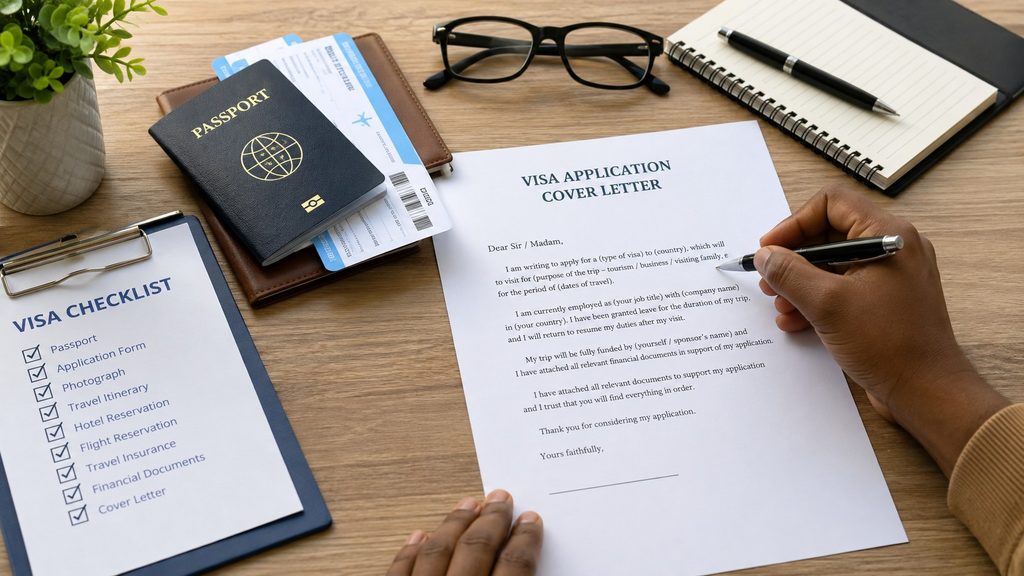
A visa application is more than a collection of forms and supporting documents. It is a complete presentation of who you are, why you want to travel, how you intend to fund your trip, and why you are likely to follow the conditions of your visa. While documents such as bank statements, employment letters, travel reservations, and passports provide evidence, a well written cover letter helps bring those documents together. Unfortunately, many applicants either ignore the cover letter completely or fill it with unnecessary information. A good visa cover letter should not tell your entire life story. It should clearly explain your application and help the visa officer understand your travel plans without having to guess.
Why the Cover Letter Matters More Than Most Applicants Realize
A visa cover letter, sometimes called a letter of explanation, is your opportunity to speak directly to the consular officer reviewing your file. Unlike forms and financial statements, which present raw data, the cover letter provides context. It explains who you are, why you are traveling, and why you intend to return home (or, in the case of immigrant visas, why you meet the requirements for your intended stay). Consular officers review hundreds of applications daily, and a clear, well-organized letter makes their job easier — which works in your favor. A confusing or incomplete letter, on the other hand, can prompt further scrutiny or an outright denial, even when your supporting documents are otherwise strong.
The Core Elements Every Cover Letter Should Include
1. Your full personal and contact details. Begin with your full legal name (matching your passport exactly), passport number, date of birth, nationality, current address, phone number, and email address. This information should be presented clearly at the top of the letter, formatted like a formal business letter.
2. The recipient’s details. Address the letter to the specific consulate, embassy, or visa processing center handling your application. Include the correct department name and address where possible. A generic “To Whom It May Concern” is acceptable only when no specific contact is available, but a properly addressed letter always looks more professional.
3. A clear statement of purpose. State plainly, in the first paragraph, what type of visa you are applying for and the purpose of your trip — tourism, business, study, family visit, medical treatment, or transit. Avoid vague language. Specificity signals honesty and preparation.
4. Detailed travel itinerary. Outline your intended dates of travel, entry and exit points, and a general overview of your planned activities. If you have already booked flights or accommodation, reference them here (though the actual bookings should be attached as separate supporting documents, not embedded in the letter itself).
5. Explanation of ties to your home country. This is one of the most scrutinized sections, particularly for tourist and visitor visas. Consular officers want assurance that you intend to return home after your trip. Mention your employment status and job stability, property or business ownership, family responsibilities, ongoing education, or other commitments that anchor you to your home country. Concrete, verifiable details are far more persuasive than general statements.
6. Financial capability. Briefly state how your trip will be funded — personal savings, sponsorship, or a combination of both — and reference the financial documents attached to your application. You do not need to repeat exact figures here, since your bank statements will do that; the letter simply needs to confirm that your finances are sufficient and properly documented.
7. Sponsorship details, if applicable. If someone else is funding your trip, whether a family member, employer, or friend, state their name, relationship to you, and reference their supporting sponsorship letter and financial documents. This section should align precisely with the sponsor’s own documentation to avoid inconsistencies.
8. Accommodation details. Briefly mention where you will be staying, whether a hotel, rented apartment, or with a host, and reference the relevant booking confirmation or invitation letter attached separately.
9. A summary of attached documents. Many applicants overlook this, but listing the documents accompanying your letter (passport copy, bank statements, employment letter, invitation letter, travel insurance, etc.) helps the reviewing officer quickly verify that your application is complete.
10. A polite, professional closing. Reaffirm your intention to comply with the visa conditions, thank the officer for their time and consideration, and provide your signature along with the date.
Common Mistakes That Weaken a Cover Letter
Even applicants with strong financial and employment profiles can undermine their case with a poorly constructed letter. Common pitfalls include:
- Being overly emotional or informal. A cover letter is a formal document, not a personal appeal. Keep the tone factual and respectful throughout.
- Repeating information without adding value. Simply restating what is already on the application form wastes an opportunity. Use the letter to add context and clarity, not duplicate data.
- Inconsistencies with other documents. Dates, figures, and names must match exactly across your entire application. Even small discrepancies can raise red flags.
- Excessive length. A cover letter should typically be one to two pages. Long, rambling letters can dilute your key points and appear disorganized.
- Generic, copy-paste language. Officers review large volumes of applications and can often recognize templated language that has not been personalized. Tailor every letter to your specific circumstances.
Final Tips for a Strong, Convincing Letter
Write in clear, simple language, and avoid jargon or overly complex sentence structures. Have someone else review the letter before submission to catch errors or unclear phrasing. If applying with family members, ensure that individual letters (where required) are consistent with one another in dates and details. Finally, always tailor the letter to the specific visa category and country requirements, since expectations can vary considerably between an embassy processing tourist visas and one processing student or work visas.
Conclusion
A visa cover letter is far more than a formality, it is your chance to present a clear, credible narrative that supports every other document in your file. By including all the essential elements above and avoiding common mistakes, you significantly strengthen your application’s chances of approval. Take the time to write it carefully, and it may well be the document that tips your application from “under review” to “approved.”
Fill this FORM to get visa support today.

Other Articles

Why Some Programs Require a Foundation Year and Others Don’t
Why Round-Trip Tickets Aren’t Always Cheaper Than Two One-Ways





No Comment! Be the first one.