


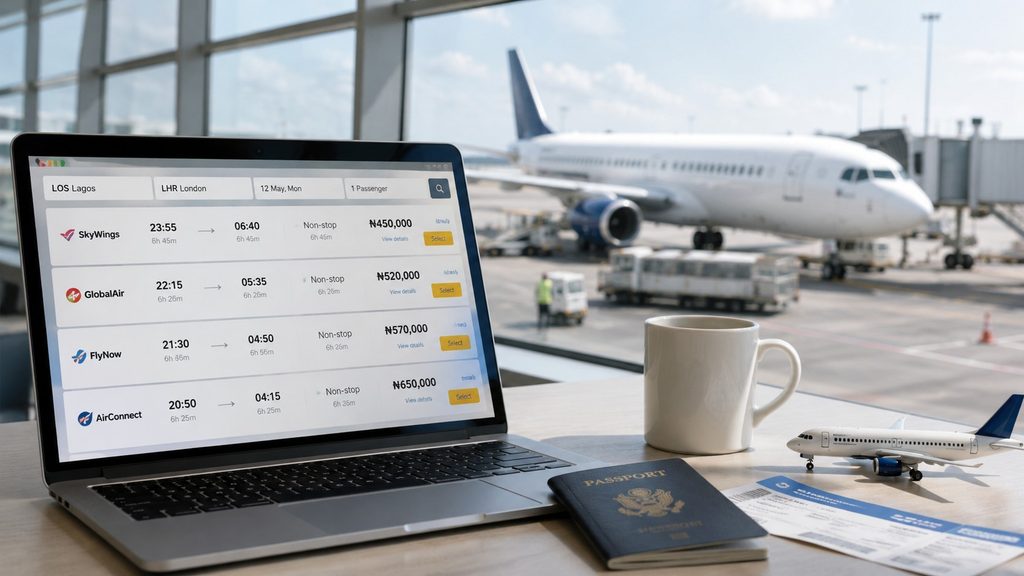
Have you ever searched for a flight and wondered why one airline is charging ₦500,000 while another is asking for ₦750,000 for what appears to be the same journey? Or perhaps you checked a flight in the morning, only to return later and discover that the fare had changed completely. It can feel confusing, especially when the flights leave on the same day and arrive at the same destination. The truth is, airline pricing is not based on distance alone. Several factors influence what you pay, including demand, timing, fare type, baggage, flexibility, competition, taxes, and how the airline manages its available seats. Understanding these factors can help travellers make better booking decisions and avoid comparing fares that are not actually offering the same thing.
The Myth of a “Standard” Airfare
Many travelers assume that a ticket from Lagos to London, or Enugu to Dubai, should cost roughly the same no matter which airline they choose or when they book. In reality, no such standard exists. Airlines do not sell flights the way a supermarket sells bread, with one fixed price for everyone. Instead, they use a pricing method called dynamic pricing, which adjusts fares constantly based on demand, competition, booking patterns, and dozens of other factors. Two passengers sitting beside each other on the same flight may have paid completely different amounts for their tickets, and both prices were “correct” at the moment each ticket was purchased.
1. Business Models Differ Significantly
The most fundamental reason airlines charge differently for the same route is that they operate under different business models entirely.
Full-service carriers, such as major international airlines, build the cost of checked baggage, meals, seat selection, and in-flight entertainment into their ticket prices. Their fares often appear higher upfront, but they include services that budget travelers may take for granted.
Low-cost carriers, on the other hand, strip their base fare down to the seat alone. Everything else, from luggage to snacks to seat choice, is sold separately. This is why a budget airline ticket can look astonishingly cheap at first glance, only for the final price to climb once extras are added during checkout.
Neither model is inherently better. The right choice depends on what a traveler values most: convenience and comfort, or flexibility and control over spending.
2. Demand and Timing Drive the Numbers
Airlines rely heavily on demand forecasting. Seats on a popular route during a peak season, such as December holidays or summer travel months, are priced higher because demand is high and airlines know travelers are willing to pay more to secure a seat.
Booking time also plays a major role. Airlines typically release a limited number of seats at the lowest fare tier. Once those seats are sold, the price moves up to the next tier, even if the flight is still weeks away. This is why booking early often, though not always, secures a better price, and why last-minute bookings can be significantly more expensive, particularly for business travelers who need to fly on short notice.
3. Competition on the Route
Routes with multiple airlines competing for passengers tend to have more competitive, lower fares. When only one or two carriers operate a particular route, there is less pressure to keep prices low, and fares can be noticeably higher.
This explains why flying between two major hubs with several airlines fighting for market share is often cheaper than flying to a smaller or less-served destination, even if the smaller destination is geographically closer.
4. Where and How You Book Matters
The channel used to book a flight can also affect the price. Airlines sometimes offer different fares directly on their own websites compared to third-party travel agencies or booking platforms. Currency of purchase, the country from which the booking is made, and even the device used to search for flights have all been reported to influence displayed prices, largely due to regional pricing strategies and localized promotions.
This is one of the strongest arguments for working with a knowledgeable travel agency. A good agent has access to fare comparisons across multiple airlines and booking systems, and can often identify savings or better routing options that a traveler searching alone might miss.
5. Fare Classes Within the Same Cabin
Even within economy class, airlines sell multiple fare types. A cheaper economy fare might be non-refundable, non-changeable, and offer no free seat selection. A slightly more expensive economy fare on the same flight might allow free changes, a checked bag, and refund flexibility.
This means two passengers in economy class, on the same aircraft, may have paid different amounts not because of luck, but because they selected different fare conditions. Reading the fine print before booking is essential, especially for travelers whose plans might change.
6. Currency Fluctuations and Regional Pricing
International airlines often price routes differently depending on the country of sale, adjusting for local purchasing power and currency exchange rates. A ticket bought in one country’s currency may translate to a noticeably different price than the same route booked from another location, even after currency conversion. This is a legitimate and common airline pricing practice, not a pricing error.
How Travelers Can Use This Information
Understanding these pricing factors puts travelers in a stronger position. Booking in advance, remaining flexible with travel dates, comparing fare classes carefully, and considering less busy travel periods can all lead to meaningful savings. Working with an experienced travel agency also removes much of the guesswork, since agents track fare changes and airline promotions that individual travelers may not have time to monitor.
Conclusion
Airline pricing may seem confusing at first, but it follows a logic rooted in business strategy, demand, and competition rather than randomness. The next time two people compare airfares for the same route and find different prices, it will be clear that both numbers reflect a system working exactly as designed. For travelers who want to navigate this system with confidence, partnering with a trusted travel agency remains one of the smartest ways to secure fair and favorable fares.
Fill this FORM to book your flight today.
FORM

Other Articles

Baggage Allowance Mistakes That Cost Travellers at the Airport


No Comment! Be the first one.