


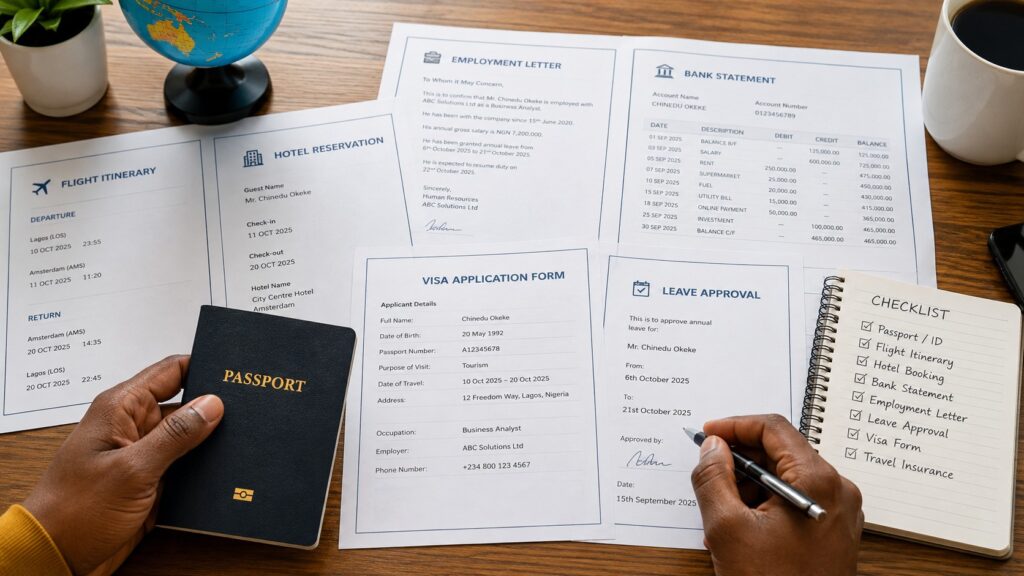
Imagine spending weeks perfecting your visa application, only to have it rejected over something as small as your name being spelled slightly differently on your bank statement than on your passport. It sounds almost unbelievable, yet this happens to travellers every single day. Many people assume that having flawless, impressive individual documents is enough to guarantee approval, but immigration and visa officers are trained to look for something far more telling than perfection, they look for consistency. A single mismatched detail can unravel an otherwise strong application.
Understanding why consistency matters so much could be the difference between approval and disappointment.
1. What “Consistency Across Documents” Really Means
Consistency across documents refers to the alignment of information such as names, dates, addresses, employment details, and financial figures across every single document submitted as part of an application, whether for a visa, admission, or travel booking. This means your name should appear exactly the same way on your passport, bank statements, admission letter, invitation letter, and flight itinerary. It also means that dates, such as your intended travel dates or employment start dates, should logically align across all supporting paperwork. Even minor discrepancies, such as an abbreviated middle name in one document and a full name in another, can raise unnecessary red flags during review.
2. Why Officers Prioritise Consistency Over Perfection
Visa and immigration officers review an enormous volume of applications, and they are specifically trained to identify inconsistencies as a primary indicator of potential fraud or error. A perfectly written cover letter or an impressively formatted bank statement means very little if the underlying details contradict information found elsewhere in the application. In fact, documents that appear “too polished” without supporting consistency can sometimes draw more suspicion, as officers may wonder whether the application was crafted to look impressive rather than to accurately reflect the applicant’s genuine circumstances. Consistency, not polish, is what builds a credible and trustworthy narrative.
3. Common Areas Where Inconsistencies Occur
Inconsistencies most frequently arise in a handful of predictable areas. Name discrepancies are extremely common, particularly for individuals whose names include multiple parts, hyphenations, or cultural naming conventions that may be recorded differently across various institutions. Date mismatches are another frequent issue, especially when travel dates on a flight itinerary do not align with the dates stated in an invitation letter or admission letter. Address inconsistencies can also cause problems, particularly when a permanent address differs from a mailing address without clear explanation. Financial inconsistencies, such as bank statement figures that do not match stated sponsorship amounts, are especially scrutinised, given their direct relevance to an applicant’s ability to fund their trip.
4. The Domino Effect of a Single Error
One of the most important things to understand is how a single inconsistency can create a domino effect across an entire application. Once an officer notices one discrepancy, it often prompts them to scrutinise every other document far more closely, searching for additional errors that might otherwise have gone unnoticed. What could have been a straightforward, quickly approved application can suddenly become mired in requests for clarification, additional documentation, or outright rejection. This is precisely why even seemingly minor details deserve careful attention, as they can trigger a level of scrutiny disproportionate to their apparent significance.
5. Consistency in Names and Legal Identity
Names deserve particular attention, as they form the foundation of an applicant’s legal identity throughout the application process. If your passport lists your name in a specific order or format, this exact format should be mirrored across every other document, including bank statements, admission letters, and employment verification letters. If a legal name change has occurred, such as through marriage, ensure that supporting legal documentation, such as a marriage certificate, is included to explain the discrepancy clearly rather than leaving it unaddressed and open to misinterpretation.
6. Consistency in Dates and Timelines
Dates must tell a coherent, logical story across all submitted documents. Your intended entry date should align sensibly with your flight itinerary, and your program or course start date, if applicable, should match what is stated in your admission letter. Employment dates on a reference letter should correspond accurately with what is reflected in bank statements showing salary deposits. Any gaps or overlaps in these timelines, if left unexplained, can create doubt in the mind of a reviewing officer, even when the underlying circumstances are entirely legitimate.
7. Consistency in Financial Documentation
Financial documents are among the most heavily scrutinised elements of any application, and consistency here is absolutely critical. If a sponsor’s letter states a specific amount of financial support, this figure should align with what appears in the corresponding bank statement. Currency conversions, if applicable, should be clearly noted and calculated accurately to avoid confusion. Any large, unexplained deposits or withdrawals close to the application date can also raise questions, so it is wise to ensure that financial documentation tells a clear, steady, and believable story of financial stability over time.
8. Practical Steps to Ensure Consistency
Before submitting any application, take the time to lay out every document side by side and cross-check names, dates, addresses, and figures methodically. Create a simple checklist covering each critical detail and verify it against every relevant document. Where discrepancies genuinely exist due to legitimate reasons, such as a legal name change or an address update, include clear supporting documentation and, where appropriate, a brief written explanation. Consider asking a trusted second party, such as a family member, friend, or professional travel consultant, to review your documents with fresh eyes, as they are often able to catch small inconsistencies that you may have overlooked after staring at the same paperwork for hours.
9. Why This Matters Beyond Visa Applications
While visa applications are perhaps the most obvious example, document consistency matters across virtually every stage of international travel, from hotel bookings and flight reservations to university admissions and even customs declarations upon arrival. Inconsistent information can cause delays at check-in counters, complications during immigration checks, or confusion when verifying accommodation reservations. Cultivating the habit of maintaining consistent, accurate documentation benefits travellers well beyond a single application, streamlining every subsequent interaction throughout their journey.
Conclusion
In the world of international travel and visa applications, perfection is far less important than consistency. A flawlessly written document that contradicts information found elsewhere can do more harm than a simple, honest document that aligns seamlessly with everything else submitted. By prioritising accuracy and coherence across every piece of paperwork, travellers significantly strengthen their credibility and improve their chances of a smooth, successful outcome. Attention to this small but powerful detail can ultimately make all the difference between approval and unnecessary rejection.
Fill this FORM to get visa support today.

Other Articles

Boutique Hotels vs Chain Hotels: What’s the Real Difference?
Why Some Hotels Ask for a Deposit and Others Don’t





No Comment! Be the first one.