


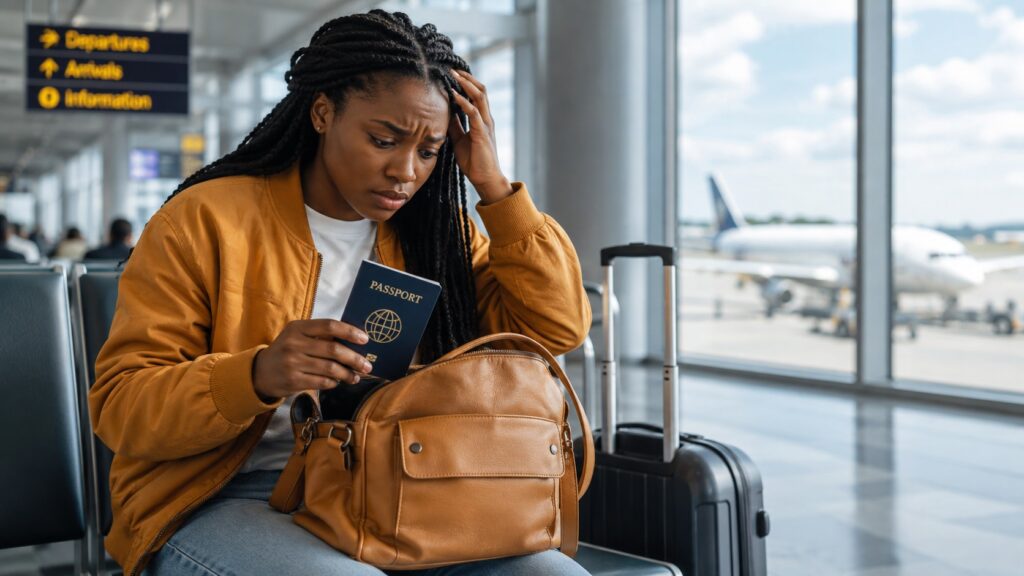
Losing your passport while travelling can turn an enjoyable trip into a stressful situation within minutes. Your passport is not just another document in your bag. It is your primary international identity and travel document, and losing it can affect your ability to move between countries, check into accommodation, board flights, or return home. The good news is that losing your passport abroad does not mean you are stranded permanently. There are established procedures for reporting the loss, proving your identity, obtaining replacement travel documents, and continuing your journey. Knowing what to do, and acting quickly, can make the situation much easier to manage.
1. Stay Calm and Retrace Your Steps
The first and most important thing to do when you realise your passport is missing is to remain calm. Panic clouds judgement and wastes precious time. Before assuming the worst, take a few minutes to retrace your movements. Check your hotel room thoroughly, including drawers, safes, luggage compartments, and pockets of clothing you wore recently. Think about the last time you used your passport, whether at immigration, a hotel check-in desk, a currency exchange bureau, or a tour booking office. Many “lost” passports are simply misplaced and turn up with a careful search. If you were at a restaurant, shop, or on public transport, contact the venue or transport authority immediately, as items are often turned in to lost-and-found desks.
2. Report It to the Local Police
If, after a thorough search, your passport is still missing, your next step should be to report the loss or theft to the local police as soon as possible. This is a critical step for two reasons. First, if your passport was stolen, a police report helps protect you from potential identity theft or fraudulent use of your documents. Second, most embassies and consulates require an official police report before they can issue you a replacement or emergency travel document. When filing the report, provide as much detail as possible, including the date, time, and location where you believe you lost the passport, and request a copy of the report for your records. Keep this document safe, as you will need it for subsequent steps.
3. Contact Your Embassy or Consulate Immediately
Once you have a police report in hand, contact your country’s embassy or consulate in the country you are visiting without delay. Most nations have embassies or consulates in major cities worldwide, and many maintain 24-hour emergency hotlines specifically for situations like this. The embassy will guide you through the process of obtaining either a temporary travel document or a full replacement passport. Be prepared to provide identifying information such as your full name, date of birth, passport number if you remember it, and details of your travel itinerary. Many embassies also require proof of citizenship, so having any secondary form of identification, such as a driver’s licence or national ID card, can significantly speed up the process.
4. Gather the Necessary Documents
To replace a lost or stolen passport, embassies typically require several supporting documents. These commonly include the police report, passport-sized photographs that meet official specifications, proof of identity, evidence of your travel itinerary such as flight bookings or hotel reservations, and payment for the replacement fee. If you have a photocopy or digital scan of your original passport’s biodata page, this can dramatically simplify and speed up the verification process. This is precisely why travel experts strongly recommend keeping both physical and digital copies of your passport in separate, secure locations before you ever set off on a trip.
5. Notify Your Travel Insurance Provider
If you purchased travel insurance before your trip, notify your provider as soon as possible after the incident occurs. Many travel insurance policies cover the cost of replacing lost or stolen travel documents, and some even offer emergency assistance services that can help coordinate with local authorities and embassies on your behalf. Keep receipts for any expenses incurred as a result of the loss, including transportation to the embassy, replacement photographs, and communication costs, as these may be reimbursable under your policy.
6. Inform Your Airline and Travel Agency
Your loss of a passport will likely affect your existing flight bookings, especially if you are scheduled to depart soon. Contact your airline and travel agency immediately to explain the situation. Airlines are generally familiar with these circumstances and may be able to adjust your booking dates without heavy penalties while your travel documents are being processed. A reliable travel agency can also assist by liaising with airlines and accommodation providers to minimise disruption to your itinerary while you await your replacement documents.
7. Consider an Emergency Travel Document
In situations where time is extremely limited, such as an imminent flight departure, embassies can often issue an Emergency Travel Document or a temporary passport. This document is usually valid for a single journey back to your home country or onward to your next destination, rather than for extended travel. It is not a permanent solution, but it can be a lifesaver when you need to move quickly. Once you return home, you will still need to apply for a full replacement passport through the standard process.
8. Take Preventive Measures for the Future
While this guide focuses on what to do after losing your passport, prevention remains the best strategy. Always keep photocopies or scanned digital copies of your passport’s biodata page stored separately from the original, ideally in cloud storage you can access from anywhere. Carry your passport in a secure, concealed travel pouch rather than a loose bag or back pocket. Register your travel plans with your home country’s embassy where possible, and share your itinerary with a trusted family member or friend before you depart.
Conclusion
Losing your passport abroad is undeniably stressful, but it is a manageable situation when approached methodically. Stay calm, search thoroughly, report promptly, and reach out to the right authorities without delay. With preparation and the right support, whether from your embassy, insurance provider, or a trusted travel agency, you can navigate this challenge and continue enjoying your journey with confidence.
Fill this FORM to book your flight today.
FORM

Other Articles

How to Choose a Guardian or Homestay Family Abroad
How to Prepare for Culture Shock Before You Even Leave



No Comment! Be the first one.