


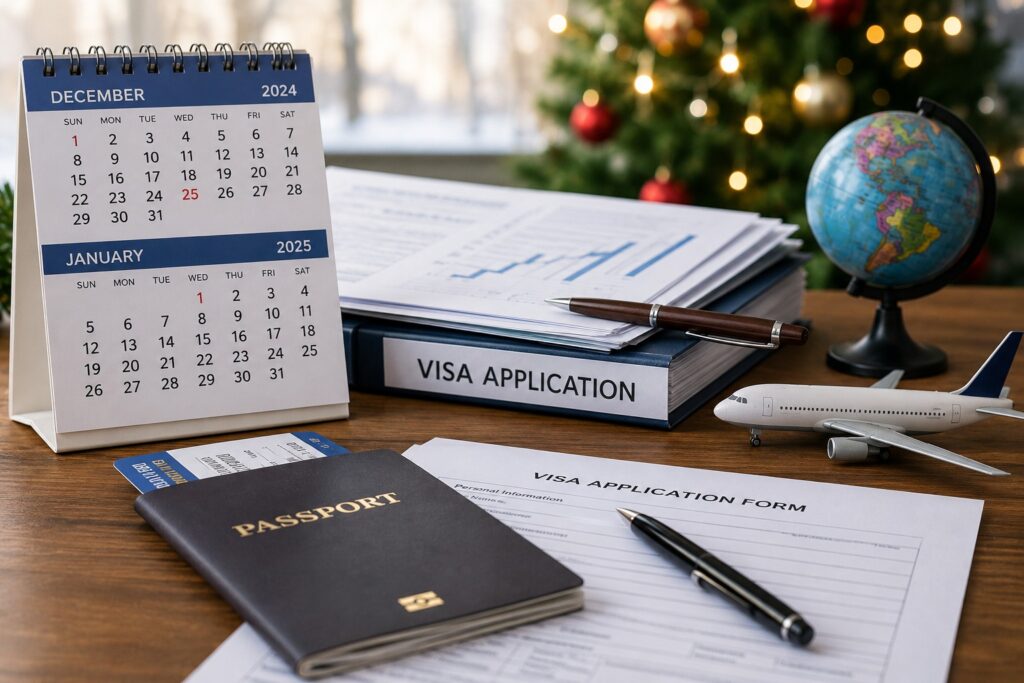
If you have ever submitted a visa application in the final weeks of the year and watched the processing status sit unchanged for what feels like forever, you are not imagining things. Visa delays genuinely spike during December and January, catching travelers, students, and job seekers off guard year after year. Understanding why this happens, and how to plan around it, can be the difference between a smooth approval and a missed flight, a missed semester, or a missed opportunity. Here is what is really going on behind the scenes during this seasonal slowdown.
1. Embassy and Consulate Holiday Closures
Most embassies and consulates observe public holidays in both their host country and their home country, and December brings an unusually high concentration of these. Christmas, Boxing Day, New Year’s Day, and various regional holidays often mean offices are either fully closed or operating on reduced hours for one to two weeks. Since visa processing relies on staff physically reviewing documents, conducting interviews, and approving applications, any closure directly extends the queue. An office closed for even five working days can create a backlog that takes several additional weeks to clear once operations resume.
2. A Seasonal Surge in Applications
December and January are among the busiest travel periods worldwide, driven by holiday visits to family, winter breaks, and the start of new academic terms in many countries. This means embassies receive a significantly higher volume of applications in a shorter window, all competing for the same limited number of appointment slots and processing staff. Study-abroad applicants preparing for January or February intakes often submit their visa paperwork around the same time as holiday travelers, compounding the congestion. The result is a system stretched well beyond its typical monthly capacity.
3. Staff Shortages During the Holiday Season
Embassy and consulate staff take personal leave during the holidays just like everyone else. With fewer officers available to review applications, conduct interviews, and process approvals, the same volume of work takes longer to complete. Some consulates also rotate staff between departments during this period to cover essential services, which can further slow specialized visa units. This is not a matter of inefficiency; it is simply a temporary reduction in processing capacity at the exact moment demand is highest.
4. End-of-Year Administrative and System Maintenance
Many government systems, including visa processing platforms, undergo administrative resets, audits, or software maintenance around the end of the calendar year. These technical updates, while necessary, can cause temporary application freezes or slower processing speeds. Some countries also adjust visa quotas, fee structures, or policy requirements at the start of a new year, requiring additional internal review before applications can move forward under updated guidelines.
5. Increased Scrutiny Around Peak Fraud Periods
Unfortunately, the same season that brings a genuine surge in family visits and holiday travel also historically sees a rise in fraudulent or high-risk applications, as some individuals attempt to exploit the busy period to slip through less noticed. In response, several immigration authorities increase document verification and background checks during this window. While this added scrutiny is meant to protect the integrity of the system, it inevitably slows down processing times for every applicant, including those with completely straightforward cases.
6. Courts, Banks, and Supporting Institutions Slow Down Too
Visa applications often depend on supporting documents such as police clearance certificates, bank statements, notarized letters, or court records. During the holiday season, courts, banks, and government registries in many countries also reduce their operating hours or face their own backlogs. If any part of your supporting documentation is delayed at the source, your visa application effectively stalls until that document arrives, regardless of how efficiently the embassy itself is working.
How to Protect Yourself From These Delays
The good news is that with the right preparation, you can significantly reduce the impact of seasonal slowdowns on your own application.
Apply early. Submit your visa application as far in advance as the embassy allows, ideally before late November, to avoid the worst of the December congestion.
Confirm holiday schedules in advance. Check the specific embassy or consulate’s published holiday calendar before booking appointments or planning your travel dates around an expected approval.
Gather documents well ahead of time. Request bank statements, police clearances, and other supporting paperwork early, accounting for the possibility that these institutions may also be operating on reduced schedules.
Avoid booking non-refundable travel before approval. Until your visa is confirmed, avoid locking in flights or accommodation that cannot be changed, particularly for travel dates in January.
Track your application status regularly. Many visa portals provide real-time updates; checking consistently allows you to respond quickly if additional documents are requested.
Consider working with a travel or visa support service. An experienced team can help you anticipate seasonal bottlenecks, prepare a complete application from the outset, and reduce the likelihood of delays caused by avoidable errors.
Conclusion
Visa delays during December and January are rarely a reflection of your individual application; they are largely a product of holiday closures, seasonal surges, reduced staffing, and system-wide administrative shifts happening across the board. By understanding these underlying causes and planning several weeks ahead, you can navigate this busy season with far greater confidence and avoid unnecessary last-minute stress. A little foresight during the holidays can save you weeks of uncertainty when it matters most.
Fill this FORM to get visa support today.

Other Articles

All-Inclusive vs Room-Only: What’s Actually Worth It?
What to Do in Your First Week After Arriving Abroad


No Comment! Be the first one.