


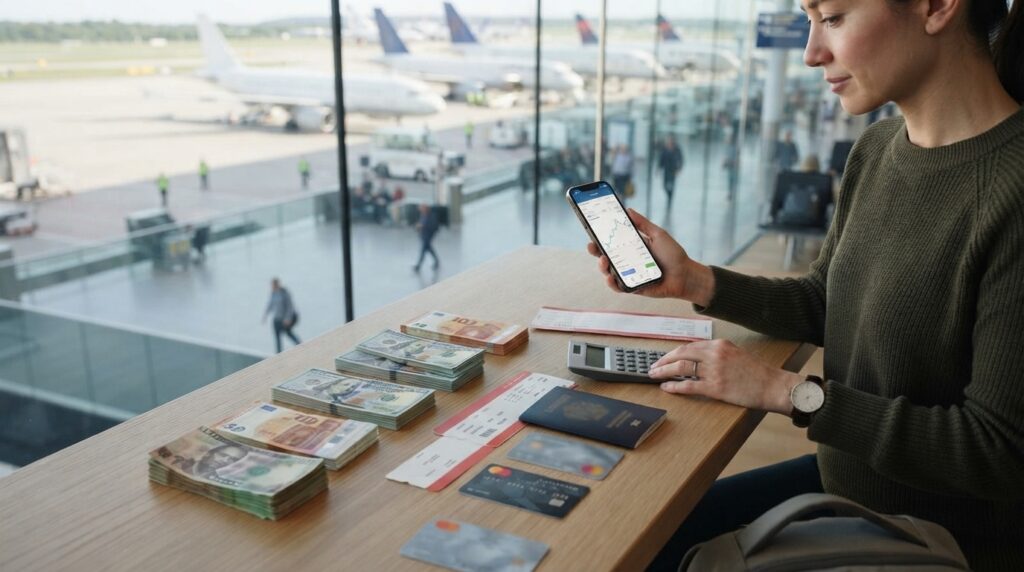
One of the most overlooked parts of international travel is currency exchange. Many travelers focus on booking flights, securing visas, and packing their luggage, only to realize later that they exchanged their money at an unfavorable rate. A poor currency exchange decision can cost you much more than you expect, leaving you with less money to enjoy your trip. Fortunately, with the right planning and knowledge, you can avoid unnecessary fees and get better value for your money. Whether you are traveling for business, tourism, study, or family visits, understanding how currency conversion works will help you stretch your travel budget and enjoy a more financially stress-free journey.
Why Currency Conversion Costs More Than You Think
Currency exchange isn’t a single standardized process, it involves multiple layers of fees, markups, and commissions that vary dramatically depending on where and how you convert your money. Airport kiosks, hotel exchange counters, banks, and online services all price currency differently, and the difference between the best and worst options can be substantial. Understanding these layers is the first step toward protecting your money.
Common Ways Travellers Lose Money
1. Airport Currency Exchange Counters
Airport kiosks are notorious for offering some of the worst exchange rates available, often combined with additional service fees. Their convenience comes at a steep price, sometimes charging travellers 10% or more above the actual market rate. While it may be tempting to exchange money the moment you land, airport counters should generally be a last resort, used only for small amounts to cover immediate needs like transport.
2. Dynamic Currency Conversion (DCC)
When paying by card abroad, merchants or ATMs sometimes offer to charge you in your home currency instead of the local currency, this is called Dynamic Currency Conversion. While it sounds convenient, DCC almost always applies a worse exchange rate than your card issuer would offer. Always choose to be charged in the local currency, even if a cashier or ATM prompts you otherwise.
3. Hidden Card Fees
Many debit and credit cards charge foreign transaction fees, typically between 1% and 3% per purchase, in addition to ATM withdrawal fees abroad. These fees add up quickly over the course of a trip. Before travelling, check whether your bank offers a travel-friendly card with no foreign transaction fees, several banks and fintech providers now offer this specifically for international travellers.
4. Poor Timing
Exchange rates fluctuate daily, sometimes significantly. Converting a large sum of money on a whim, without checking the current rate trend, can mean paying more than necessary simply due to bad timing. While predicting currency markets isn’t realistic for most travellers, being aware of general rate movement in the weeks before your trip can help you avoid converting during an unfavourable spike.
Smarter Ways to Convert Currency
1. Use Fee-Free or Low-Fee Travel Cards
Several modern banking and fintech providers offer multi-currency accounts or travel cards with minimal or no foreign transaction fees, and exchange rates close to the real market rate. These are often the most cost-effective way to spend abroad, particularly for longer trips or frequent travellers.
2. Withdraw From ATMs Strategically
If you need physical cash, withdrawing from a local bank ATM in your destination country, rather than exchanging cash at a counter, often provides a better rate. However, be mindful of your own bank’s foreign ATM fees, and try to withdraw larger amounts less frequently to minimize per-transaction charges.
3. Compare Rates Before You Travel
Use reliable currency comparison tools or apps to check the current market exchange rate before converting any money. This gives you a benchmark, so you can immediately spot when a kiosk or bank is offering a rate far worse than the market average.
4. Avoid Exchanging at Hotels
Hotel currency exchange desks, much like airport kiosks, typically offer poor rates in exchange for convenience. These should only be used for small emergency amounts, not for converting the bulk of your travel funds.
5. Notify Your Bank Before Travelling
Always inform your bank of your travel dates and destinations beforehand. This helps prevent your card from being flagged or frozen for suspicious activity while abroad, which can leave you stranded without access to funds at an inconvenient time.
6. Carry a Small Amount of Cash in Advance
While cards are generally more cost-effective, it’s wise to carry a small amount of local currency for immediate needs upon arrival: taxis, tips, or small purchases, particularly in destinations where card acceptance is limited or where you may land outside regular banking hours.
7. Diversify Your Payment Methods
Relying on a single card or currency source is risky. Carry a backup card, ideally from a different bank or provider, in case your primary card is lost, stolen, or unexpectedly declined. Diversifying reduces the risk of being left without access to funds during your trip.
A Simple Pre-Trip Currency Checklist
- Research and compare exchange rates at least a week before departure.
- Confirm whether your card charges foreign transaction fees, and consider applying for a fee-free alternative if needed.
- Notify your bank of your travel plans.
- Withdraw a small amount of local currency in advance if possible, or plan to withdraw from an ATM shortly after arrival.
- Always choose to be charged in local currency, never your home currency, when using a card abroad.
- Avoid airport and hotel exchange counters except for small, urgent amounts.
Conclusion
Currency conversion is one of those travel details that seems minor but can quietly cost you a significant amount of money if handled carelessly. By understanding where the hidden fees lie: airport counters, dynamic currency conversion, foreign transaction charges and taking a few simple precautions before you travel, you can protect your money and put it toward the experiences that actually matter on your trip.
Fill this FORM to book your flight today.
FORM



No Comment! Be the first one.