


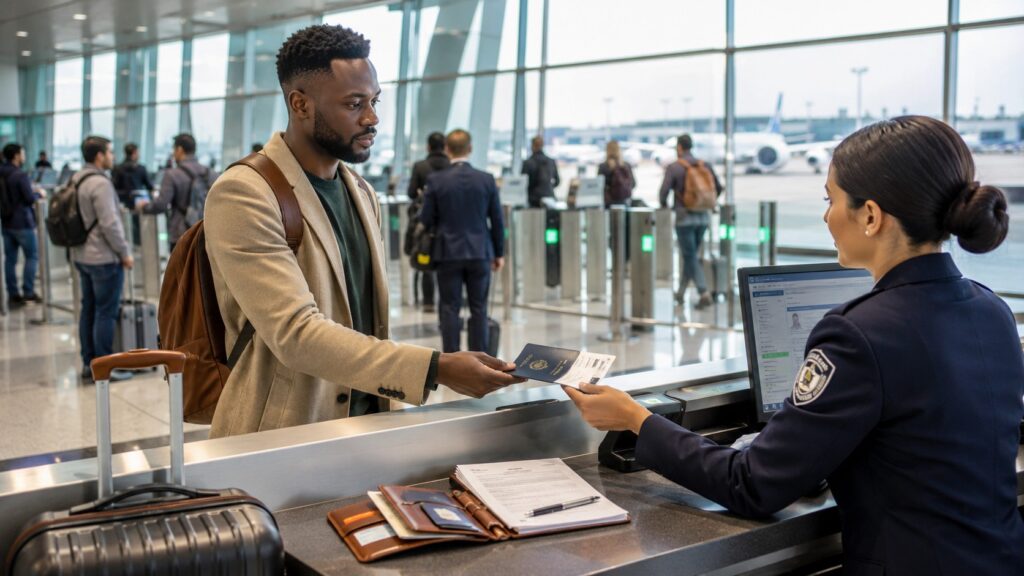
Every year, millions of travellers pass through international airports with one shared expectation: a seamless journey from the aircraft to their destination. Yet for thousands of those travellers, that expectation is shattered at the immigration desk sometimes without warning, sometimes without a clear understanding of why. Whether you are a seasoned globe-trotter or embarking on your first international trip, an immigration stop can be an unsettling and costly experience. The good news is that most of these stops are entirely preventable. Understanding what immigration officers look for, and why they pull certain travellers aside, is the first and most important step to ensuring your next journey goes exactly as planned.
What Is an Immigration Stop?
An immigration stop occurs when a border control or immigration officer detains a traveller temporarily or otherwise for further questioning, document verification, or investigation. It is important to note that being stopped does not automatically mean you have done something wrong. Immigration authorities are trained to assess risk, verify identity, and enforce national laws. However, being unprepared can turn a routine check into a prolonged ordeal.
1. Invalid, Expired, or Damaged Travel Documents
The most common reason immigration stops a traveller is a problem with their passport or travel documents. An expired passport is an immediate red flag, but officers also flag passports that are damaged beyond recognition, have pages missing, or are due to expire within six months of the intended travel date.
Many countries enforce a six-month passport validity rule, meaning your passport must be valid for at least six months beyond your planned departure date. Travellers who overlook this rule are frequently turned away at immigration even after boarding their flights.
What to do: Always check your passport’s expiry date well before booking travel. Renew it if it expires within six months. Carry a clean, undamaged passport at all times.
2. Visa Issues and Entry Requirements
Arriving without the correct visa or with an improperly obtained one, is another leading cause of immigration stops. Different countries have vastly different entry requirements depending on your nationality, the purpose of your visit, and the length of your stay.
Common visa-related issues include:
- Arriving on a tourist visa with evidence of intent to work
- Holding a visa for the wrong category (e.g., transit visa instead of a standard visitor visa)
- Possessing a visa obtained through incorrect or fraudulent channels
- Failing to apply for a visa in advance when one is required
Some countries also require Electronic Travel Authorisations (ETAs) or Electronic Visas (eVisas) that must be obtained before travel. Travellers who board without these approvals are routinely stopped upon arrival.
What to do: Research your destination’s entry requirements thoroughly before travel. Use official government websites. Never rely solely on advice from unofficial third parties.
3. Suspicious Travel History
Immigration officers have access to your travel history through your passport stamps and electronic records. A travel history that raises questions such as frequent visits to countries flagged for security concerns, or multiple entries into the same country within a short period may prompt further questioning.
This is not necessarily an accusation of wrongdoing. Officers are trained to identify patterns that may indicate illegal activity, such as people smuggling routes, drug trafficking networks, or attempts to circumvent immigration rules.
What to do: Be transparent about your travel history if asked. Have a clear, logical explanation for your itinerary, and carry supporting documentation such as hotel bookings, business letters, or conference invitations.
4. Inadequate Proof of Purpose of Visit
Immigration officers routinely ask travellers why they are entering the country. Vague, inconsistent, or evasive answers raise immediate concerns. Common issues include:
- Claiming to be a tourist but being unable to name any planned activities or destinations
- Having no hotel bookings or accommodation confirmation
- Travelling to a country with no plausible tourist or business reason
- Carrying items inconsistent with the stated purpose of travel
What to do: Always carry documentation that supports your reason for travel. This includes hotel reservations, return flight tickets, tour bookings, business invitation letters, or conference schedules.
5. Insufficient Funds
Many countries require travellers to demonstrate that they have sufficient funds to support themselves during their stay. Arriving with very little cash and no access to financial resources while claiming to stay for several weeks creates an immediate credibility problem.
Officers may ask for bank statements, credit card evidence, or proof of financial sponsorship. Travellers who cannot provide these may be denied entry or held for further questioning.
What to do: Carry a reasonable amount of local or foreign currency, and have access to a credit or debit card. If someone else is sponsoring your visit, carry a formal letter of sponsorship along with evidence of their financial capacity.
6. Prior Immigration Violations or Criminal Record
A previous deportation, overstay, or visa violation can have long-lasting consequences. Many countries share immigration databases, and a prior violation in one country may result in scrutiny or outright denial of entry, in another.
Similarly, a criminal record even for a minor offence may trigger an immigration hold, depending on the country’s regulations. Some nations, such as the United States and Canada, explicitly bar entry to individuals with certain criminal convictions.
What to do: If you have a prior immigration violation or criminal record, consult with an immigration attorney before booking international travel. Some countries offer formal waiver processes that may permit entry despite a prior record.
7. Security Flags and Watchlists
Immigration authorities in most countries operate in coordination with national and international security agencies. If a traveller’s name, date of birth, or document number matches an entry on a watchlist even due to a clerical error they will be stopped for further verification.
This can happen to entirely innocent travellers due to name similarities with individuals on security databases. While frustrating, this type of stop is typically resolved after thorough identity verification.
What to do: If you believe you may be incorrectly flagged, some countries including the United States through its Traveller Redress Inquiry Programme (TRIP) offer formal processes to challenge and correct erroneous records.
8. Suspicious Behaviour or Body Language
While this may seem subjective, immigration officers receive extensive training in behavioural analysis. Excessive nervousness, evasive eye contact, inconsistent answers, or an overly rehearsed demeanour can prompt closer scrutiny even when all documents are in perfect order.
What to do: Remain calm and composed. Answer questions clearly and honestly. Avoid volunteering excessive information or appearing overly anxious. Remember that being questioned is a standard procedure, not an accusation.
9. Prohibited or Undeclared Items
Customs and immigration checks often overlap. Carrying undeclared cash above a certain threshold, prohibited food items, restricted medications, or goods that may be subject to duties can result in an immigration or customs stop.
What to do: Declare all items as required by the destination country. Review the customs regulations well before your trip. Ignorance of the rules is rarely accepted as a valid defence.
Final Thoughts
Being stopped at immigration is not always within a traveller’s control, but being well-prepared significantly reduces the risk. Carry the correct and valid documents, understand your destination’s entry requirements, travel with financial evidence, and answer immigration questions with calm, honest clarity.
Immigration officers serve a vital function in protecting national security and upholding the law. Approaching the immigration desk with organisation, transparency, and confidence is the best strategy for a smooth and stress-free arrival wherever in the world your journey takes you.
Planning your next trip? Share this article with a fellow traveller who could benefit from knowing what to expect at immigration.
Fill this FORM to get visa support today.







No Comment! Be the first one.