


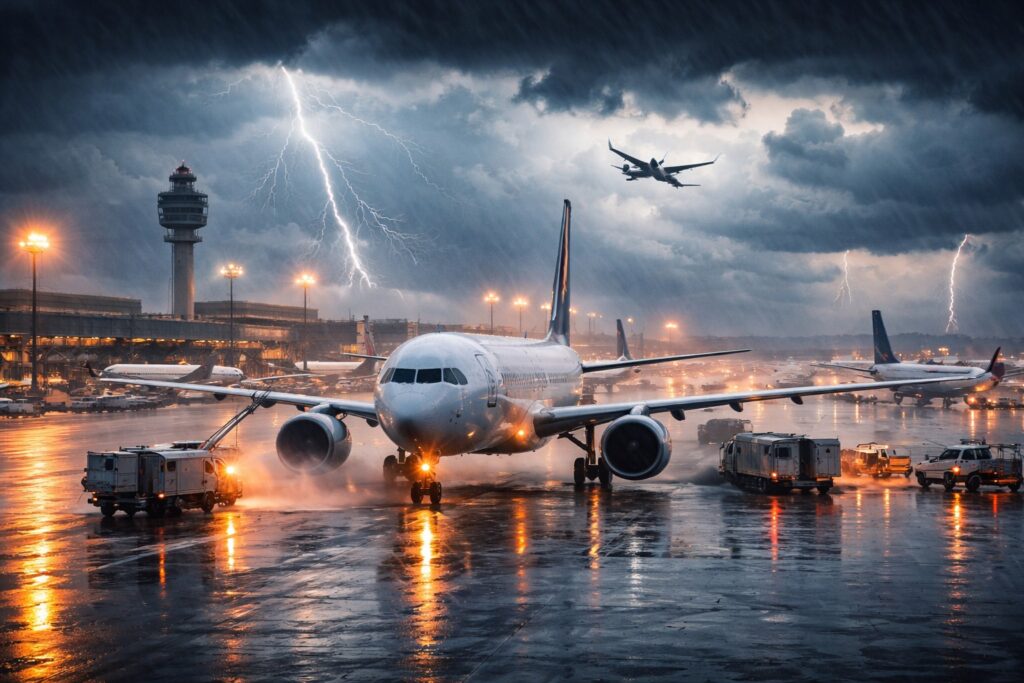
Air travel often feels like a well-oiled system until your flight suddenly gets delayed with a vague announcement and little explanation. While airlines may point to “operational issues” or “late incoming aircraft,” one major factor quietly sits behind many of these disruptions, weather. It does not always have to be a thunderstorm or heavy snowfall to cause delays. Even mild changes in atmospheric conditions can ripple through the entire aviation system. Understanding how weather truly affects flight operations gives travelers a clearer picture of what is happening behind the scenes and helps them make smarter travel decisions.
The Hidden Power of Weather in Aviation
Weather plays a far greater role in flight delays than most passengers realize. It is not just about whether it is raining or sunny. Aviation depends heavily on visibility, wind patterns, air pressure, and even temperature. These factors directly affect how planes take off, land, and navigate through the skies.
Airlines often downplay the impact of weather because it is an uncontrollable factor. Instead, they may label delays under broader categories. However, industry data consistently shows that weather is one of the leading causes of flight disruptions worldwide.
How Different Weather Conditions Cause Delays
1. Thunderstorms and Heavy Rain
Thunderstorms are one of the most disruptive weather conditions in aviation. They bring lightning, turbulence, strong winds, and poor visibility all at once. Pilots are trained to avoid flying through these conditions, which often leads to rerouting or holding patterns in the air.
At busy airports, even a short thunderstorm can create a backlog of flights waiting to land or depart. The delay does not end when the storm passes. The ripple effect can last for hours.
2. Fog and Low Visibility
Fog is a silent disruptor. Unlike storms, it may look harmless, but it significantly reduces visibility on the runway. Airports rely on precise visual and instrument guidance systems for safe landings.
When visibility drops below a certain level, flights are delayed or diverted. Not all airports have advanced landing systems that allow operations in dense fog, which makes the situation worse in some locations.
3. Strong Winds
Wind direction and speed are critical for takeoff and landing. Aircraft must align with the runway in a way that ensures stability. Crosswinds, especially strong ones, can make this difficult or unsafe.
In such cases, flights may be delayed until wind conditions improve. Sometimes, planes are diverted to alternate airports, causing further inconvenience to passengers.
4. Snow and Ice
In colder regions, snow and ice create multiple challenges. Runways must be cleared and treated before aircraft can safely operate. Additionally, planes require de-icing procedures before takeoff.
De-icing alone can add significant time to pre-flight preparation. When many flights are scheduled, delays quickly build up and spread across the network.
5. Extreme Heat
This one surprises many people. Extremely high temperatures can reduce air density, which affects aircraft performance. In simple terms, planes may need longer runways to take off or may have to reduce weight by limiting passengers or cargo.
In some cases, flights are delayed until temperatures drop to safer levels.
Why Airlines Do Not Always Say “Weather Delay”
You might wonder why airlines do not simply say, “Your flight is delayed due to weather.” The answer is not always straightforward.
First, weather delays often start somewhere else. For example, a storm in another city can delay an incoming aircraft. By the time it reaches your airport, the weather there might be perfectly fine, but the delay has already been passed on.
Second, airlines categorize delays in ways that affect reporting and performance metrics. Labeling a delay as “operational” instead of “weather-related” can sometimes make statistics look better.
Lastly, the complexity of aviation systems means that multiple factors are often involved. Weather might be the root cause, but it triggers a chain reaction involving crew schedules, aircraft rotations, and airport congestion.
The Domino Effect of Weather Delays
Weather disruptions rarely affect just one flight. They create a domino effect across the entire airline network.
Imagine a plane scheduled to fly from Lagos to Abuja, then to Accra, and back. If the first leg is delayed due to weather, every subsequent flight using that aircraft will also be delayed.
Crew members are also affected. Pilots and cabin crew have strict duty time limits. If delays push them beyond these limits, flights may be postponed further while replacement crews are arranged.
Airports themselves can become congested. When multiple flights are delayed, gates become occupied longer than planned, and new arrivals have nowhere to park. It quickly becomes a logistical nightmare.
The Role of Air Traffic Control
Air traffic control plays a crucial role during adverse weather conditions. Controllers may reduce the number of flights allowed to take off or land within a specific time frame to maintain safety.
This is known as flow control. While it helps prevent accidents, it also means fewer flights can operate, leading to delays.
Sometimes, entire airspaces are temporarily restricted due to severe weather. In such cases, flights must wait on the ground or take longer routes, increasing travel time and fuel consumption.
Technology and Weather Prediction
Modern aviation relies heavily on advanced weather forecasting systems. Airlines and pilots receive real-time updates that help them make informed decisions.
Radar systems can detect storms, while satellite data provides a broader view of weather patterns. Despite these advancements, weather remains unpredictable.
A forecast might indicate clear skies, only for conditions to change suddenly. This uncertainty is why airlines often build buffer time into schedules, though it is not always enough.
What Travelers Should Know
Understanding the impact of weather helps travelers manage expectations and plan better.
First, always allow extra time when traveling during seasons known for unpredictable weather. This includes rainy seasons, winter months in colder regions, and peak summer periods.
Second, consider booking early morning flights. These are less likely to be affected by delays that build up throughout the day.
Third, choose airports with better infrastructure when possible. Larger airports often have advanced systems that allow operations in lower visibility conditions.
Fourth, stay informed. Use airline apps or flight tracking tools to monitor your flight status. Knowing what is happening can reduce stress and help you make quick decisions if needed.
Practical Tips to Minimize Disruption
- Book flexible tickets that allow changes without heavy penalties
- Avoid tight connections, especially during risky weather periods
- Travel with essentials in your carry-on, including medications and chargers
- Know your rights, depending on airline policies and local regulations
- Have a backup plan, such as alternative flights or accommodation
The Human Side of Delays
It is easy to get frustrated when flights are delayed. However, it is important to remember that safety always comes first in aviation. Pilots and airlines do not take risks when it comes to weather.
Behind every delay is a team of professionals making decisions to protect passengers. While communication could sometimes be better, the priority is always to ensure that everyone reaches their destination safely.
Conclusion
Weather is one of the most powerful forces affecting air travel, and its impact goes far beyond what airlines typically communicate. From thunderstorms and fog to heat and wind, even minor changes in weather conditions can disrupt carefully planned schedules.
The next time your flight is delayed, there is a good chance weather played a role, even if it is not immediately obvious. Understanding this gives you a more realistic view of air travel and helps you stay calm and prepared when things do not go as planned.
Travel will always come with uncertainties, but with the right knowledge and preparation, you can navigate delays with less stress and more confidence.
Fill this FORM to book your flight today.
FORM

Other Articles



No Comment! Be the first one.