


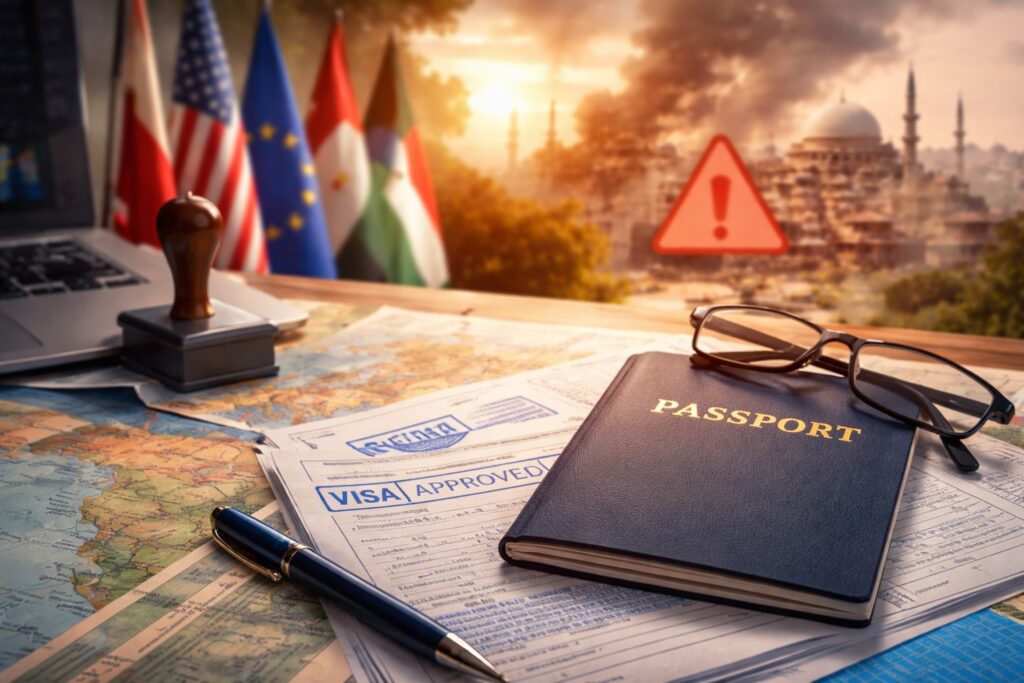
Travel has always been influenced by global events, but in recent times, rising tensions in the Middle East have started to affect something many travelers often overlook until it becomes urgent, visa processing times. Whether you are traveling for tourism, business, study, or relocation, delays in visa approvals can disrupt carefully planned trips and create unnecessary stress. Many applicants now find themselves waiting longer than expected, facing sudden policy changes, or dealing with stricter screening procedures.
Understanding what is happening behind the scenes can help you prepare better, avoid costly mistakes, and navigate the process with confidence.
Understanding the Link Between Geopolitics and Visa Processing
Visa processing does not happen in isolation. It is closely tied to diplomatic relations, security concerns, and international cooperation. When tensions rise in regions like the Middle East, governments around the world often respond by tightening their border control measures.
This means embassies and consulates begin to apply more scrutiny to applications. Background checks may become more detailed, document verification may take longer, and in some cases, additional interviews may be required. These steps are not always visible to applicants, but they significantly affect processing timelines.
In simple terms, when global uncertainty increases, visa approvals tend to slow down. Governments prioritize security over speed, and that shift is exactly what travelers are experiencing now.
Increased Security Screening and Background Checks
One of the biggest reasons for delays is enhanced security screening. Countries want to ensure that individuals entering their borders do not pose any risk. As a result, applications from certain regions or travel histories may be flagged for additional checks.
For example, if an applicant has recently traveled to or lived in parts of the Middle East affected by instability, their application may undergo extended review. This does not automatically mean rejection, but it does mean more time.
Security agencies may need to verify travel history, employment records, and even financial activities. This process involves coordination between multiple departments, which naturally slows things down.
Reduced Embassy Capacity and Staffing Challenges
Another factor many people do not consider is embassy workload. During periods of geopolitical tension, embassies in affected regions often operate under pressure.
Some may reduce staff for safety reasons, while others may temporarily suspend certain services. In extreme situations, visa processing centers may even close or operate at limited capacity.
When fewer officers are available to handle applications, processing times increase. This creates a backlog that can take weeks or even months to clear.
For travelers, this means one thing, even if your documents are perfect, delays can still happen because the system itself is stretched.
Policy Changes and Travel Restrictions
Tensions in the Middle East often lead to sudden policy changes. Governments may introduce new visa rules, restrict certain categories of travelers, or require additional documentation.
These changes are sometimes implemented with little notice. An application that would normally take two weeks might suddenly take six weeks because new requirements have been added.
For instance, travelers may be asked to provide more detailed travel itineraries, proof of accommodation, or stronger financial evidence. In some cases, transit visas that were previously not required may become mandatory.
This unpredictability makes it difficult for travelers to plan ahead, especially those with fixed travel dates like students or business professionals.
Impact on Different Types of Travelers
The effect of these delays is not the same for everyone. Different categories of travelers face different challenges.
Tourists often deal with uncertainty. A delayed visa can mean missed flights, cancelled hotel bookings, and financial losses.
Students face even bigger risks. Delays can cause them to miss school resumption dates, affecting their academic plans and sometimes their admission status.
Business travelers may lose important opportunities. Meetings, conferences, and deals do not wait for visa approvals.
Families and migrants experience emotional stress. Waiting longer to reunite with loved ones or start a new life can be frustrating.
Each group feels the impact differently, but the common issue remains the same, longer waiting times and increased uncertainty.
Airline and Travel Industry Reactions
The travel industry is also adjusting to these changes. Airlines, travel agencies, and visa consultants are now advising clients to apply much earlier than before.
Flexible booking options are becoming more popular. Many airlines now allow date changes with reduced penalties, knowing that visa delays are becoming more common.
Travel consultants are also spending more time guiding clients through documentation to avoid unnecessary delays. In some cases, they recommend avoiding tight travel schedules altogether.
This shift shows how deeply visa processing issues are affecting the entire travel ecosystem.
Practical Steps to Handle Visa Delays
While you cannot control global tensions, you can control how you prepare. Here are practical steps that can make a real difference:
Apply early
Do not wait until the last minute. Give yourself extra time, at least four to eight weeks ahead of your planned travel date.
Submit complete and accurate documents
Small mistakes can cause big delays. Double check everything before submission.
Be honest about your travel history
Trying to hide information can backfire. Transparency helps build trust with visa officers.
Prepare for additional requests
Be ready to provide extra documents if needed. Respond quickly to any requests from the embassy.
Avoid fixed plans too early
Do not make non-refundable bookings until your visa is approved. If you must book, choose flexible options.
Work with professionals if necessary
Visa consultants or travel agents can help you avoid common errors and guide you through the process.
The Role of Technology and Digital Processing
Interestingly, technology is helping to reduce some of the pressure. Many countries are introducing online visa applications and digital verification systems.
While this does not completely eliminate delays, it improves efficiency. Applicants can track their status, receive updates, and submit documents electronically.
However, during periods of high tension, even digital systems can slow down due to increased application volume and additional checks.
So yes, technology helps, but it is not a magic fix.
What to Expect Going Forward
Looking ahead, visa processing times are likely to remain unpredictable as long as tensions in the Middle East continue.
Governments will keep balancing security with accessibility. This means travelers should expect occasional delays, stricter requirements, and changing policies.
The best approach is to stay informed. Follow updates from official embassy websites, listen to travel advisories, and keep in touch with your travel consultant if you have one.
Flexibility is no longer optional, it is necessary.
Conclusion
Visa delays can be frustrating, especially when you have plans that depend on timing. But understanding the reasons behind these delays helps you respond better instead of reacting out of panic.
Middle East tensions have added a new layer of complexity to global travel. From increased security checks to embassy limitations and sudden policy changes, the ripple effects are real and ongoing.
The good news is that with proper planning, early preparation, and a flexible mindset, you can still navigate the process successfully.
Travel is still possible. It just requires a bit more patience, a bit more strategy, and honestly, a bit more calm. Because in times like this, rushing the process is the one thing that almost never works.
Fill this FORM to get visa support today.

Other Articles

How to Answer Tricky Immigration Questions Calmly
No Comment! Be the first one.