


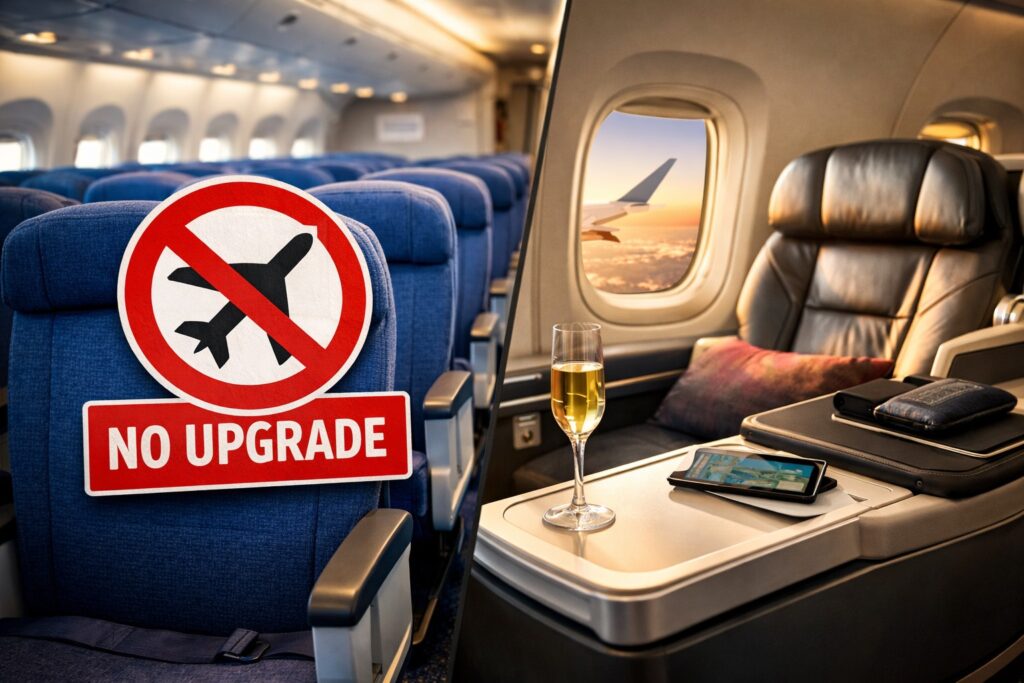
Traveling by air can be an exciting experience, but it can also come with frustrations that seem completely illogical, like being unable to upgrade your ticket to business or first class, even if you are willing to pay extra. You may wonder: “Why can’t I just pay more and get a better seat?” While it seems like money should solve every problem, the truth is more complex. Airline ticketing systems, fare rules, and operational constraints all play a role.
Understanding why some tickets cannot be upgraded will make you a smarter traveler and help you avoid disappointment at the airport.
1. Fare Classes and Their Restrictions
At the heart of the upgrade issue is the concept of fare classes. Airlines divide their tickets into categories that determine not only the price but also what is allowed with that ticket. A cheap economy ticket is often classified as “non-upgradeable,” meaning the airline explicitly restricts any option to move to a higher class.
These fare classes are not random, they are carefully designed by airlines to maximize revenue. Premium classes such as business or first class are limited, and allowing unrestricted upgrades could undermine ticket pricing strategies. Even if you’re ready to pay more, the ticket rules may prohibit upgrades altogether.
2. Revenue Management and Seat Inventory
Airlines rely heavily on revenue management systems to optimize their profits. Every seat on a flight is carefully accounted for. The airline decides, sometimes months in advance, how many seats to allocate to each fare class. Once a fare class is sold out or restricted for upgrade purposes, even if the cabin is not full, an upgrade may not be allowed.
This system ensures that airlines do not leave money on the table. Allowing unlimited upgrades could lead to high-paying passengers taking seats that could have been sold at a higher fare to someone else. It’s not about your willingness to pay—it’s about the airline’s strategy to balance pricing and occupancy.
3. Contractual and Loyalty Program Rules
Frequent flyers often hope their points or status can secure an upgrade, but even these privileges come with limitations. Airlines enforce contractual restrictions within their loyalty programs. Certain fare classes may simply be ineligible for upgrades through points or paid options.
This is why sometimes a passenger with top-tier status cannot upgrade a deeply discounted ticket. The airline’s contracts with ticket sellers, partners, and even loyalty program rules can override any willingness to pay. These rules are legally binding and strictly enforced to maintain fairness across passengers and avoid loopholes in pricing.
4. Ticket Type and Airline Policies
Not all tickets are created equal. Some tickets, such as those bought through online discount platforms or special promotions, are intentionally sold as non-upgradable. Airlines offer these tickets at lower prices but compensate for the lack of flexibility.
For example, a deeply discounted “basic economy” ticket often comes with strict conditions: no seat selection, no checked luggage, no refunds, and no upgrades. The ticket might cost hundreds less than standard economy, but it comes with these trade-offs. Understanding the type of ticket you are purchasing is crucial to avoid surprises at the gate.
5. Operational Limitations
Even when fare classes and policies theoretically allow upgrades, operational realities can prevent them. Aircraft configurations vary; some planes may have fewer business or first-class seats than others. If the flight is nearly full, upgrades may simply be impossible.
Additionally, last-minute operational changes such as equipment swaps, weight restrictions, or crew considerations may influence upgrade availability. Airlines prioritize safety and efficiency, and these constraints sometimes override even the most expensive or flexible ticket.
6. Timing and Advance Purchase
Upgrades are often dependent on timing. Airlines encourage early purchase of premium seats because it guarantees revenue. If you attempt to upgrade at the last minute, your chances may be limited. Many upgrades are allocated based on a combination of loyalty status, fare class, and booking date.
This means that even if you are willing to pay a higher price right before departure, the airline may not allow it because those seats were already set aside for revenue optimization. Patience and advance planning are often necessary for successful upgrades.
7. Misconceptions About Price
One common myth is that you can bypass restrictions simply by offering more money. While airlines do offer paid upgrades in many cases, price alone does not guarantee success. Your ticket’s fare rules, the specific flight’s inventory, and loyalty program restrictions all matter.
In some cases, even doubling the ticket price will not allow an upgrade because the fare class explicitly prohibits it. Airlines are careful to maintain the integrity of their pricing strategy. It may feel frustrating, but it ensures that premium fares retain their value for those willing to book them from the start.
8. How to Increase Your Upgrade Chances
While some tickets can never be upgraded, there are strategies to maximize your chances:
- Book flexible or full-fare economy tickets – These tickets are often eligible for upgrades, either through points or paid options.
- Join loyalty programs – Higher-tier members frequently receive priority for upgrades.
- Monitor upgrade offers early – Some airlines send upgrade offers by email before departure.
- Choose flights strategically – Less crowded flights or flights with aircraft having larger premium cabins increase your chances.
- Consider bid upgrades – Some airlines allow you to bid for upgrades. While not guaranteed, this method sometimes works even for discounted tickets.
While these methods do not guarantee an upgrade, they significantly improve your odds. The key is understanding the airline’s rules and planning accordingly.
9. The Bottom Line
The inability to upgrade some tickets is frustrating, but it is not arbitrary. It results from a combination of fare rules, revenue management, loyalty program policies, operational constraints, and strategic planning by airlines. Money alone cannot always change these limitations.
Being informed about fare classes, ticket types, and upgrade policies can save you from disappointment and help you make smarter travel choices. If upgrading is a priority, it’s often best to plan ahead, invest in eligible fare classes, and utilize loyalty programs effectively.
Airlines are businesses, and every seat represents a potential revenue opportunity. Understanding their perspective allows travelers to navigate the system strategically. While you cannot always pay your way to a better seat, knowledge, planning, and loyalty can often get you closer than you might expect.
Fill this FORM to book your flight today.
FORM

Other Articles

How Weather Affects Flight Delays More Than Airlines Admit
What “No Show” Really Means and How to Avoid It


No Comment! Be the first one.